Building Enclosure logo
search
cart
facebook twitter linkedin youtube instagram Spotify Podcasts Apple Podcasts Spotify Podcasts Apple Podcasts
  • Sign In
  • Create Account
  • Sign Out
  • My Account
Building Enclosure logo
  • NEWS
    • Breaking News
  • SECTIONS
    • Columns
    • Project Profiles
    • Trade Shows
    • Sponsor Insights
  • SYSTEM DESIGNS
    • Low-Slope Roofs
    • Pitched Roofs
    • Metal Roofing Materials
    • Waterproofing
    • Sustainability
    • Insulation
    • Exterior Claddings
    • Wall Systems
    • Building Envelope
  • BLOG
    • The BE Blog
  • MEDIA
    • Podcasts
    • Webinars
    • Quiz
    • Videos
    • Polls
    • Interactive Spotlights
    • Newsletter
    • Photo Galleries
  • DIRECTORIES
    • Directory: Blue Book
    • Directory: Roofing Resource
  • PRODUCTS
  • TECHNICAL
    • Codes
      • Waterproofing
      • Roofing
    • Details
      • Waterproofing
      • Roofing
  • CONTINUING ED
  • ABOUT
    • Advertise
      • Editorial Calendar
    • Contact
    • eMag Archive Issues
  • SIGN UP!
Breaking NewsProducts

Armstrong Expands Templok Energy Saving Ceilings for Schools

Armstrong Ceilings.png

Photo courtesy of Armstrong World Industries.

November 23, 2024

Armstrong® World Industries continues to expand its portfolio of Templok® Energy Saving Ceilings—an innovative product addressing demands for solutions that reduce energy consumption and carbon emissions in buildings—to support the needs of a variety of facility designs and functions. Armstrong recently introduced Templok to its School Zone® Fine Fissured™ portfolio after rolling out Ultima® Templok® and Calla® Templok® ceiling panels earlier in 2024. By integrating the technology of Phase Change Material (PCM) with Armstrong mineral fiber ceiling panels, all three products can reduce energy costs and consumption by as much as 15%.* In addition, the panels support higher Indoor Environmental Quality (IEQ) by enabling improved thermal comfort and are part of the Armstrong® Total Acoustics® product portfolio, offering enhanced sound-blocking and sound-absorption performance. 

The PCM technology in School Zone Fine Fissured ceiling panels—an economical, non-directional panel that is ideal for classrooms—helps address a growing number of challenges being faced by today’s school administrators and facility managers. Installing Templok panels in large surface areas of a given space supports improved thermal stability, reduced heating and cooling needs, and more efficient HVAC operation, helping create spaces that are more comfortable, more sustainable, and smarter in terms of building operations and resiliency.

“Tens of thousands of schools need to update or replace HVAC systems that are running inefficiently and driving up energy costs while falling short in achieving adequate thermal comfort,” said Alexandra Waltemyer, Business Leader, Energy Saving Ceilings, at Armstrong. “Unfortunately, limited budgets are preventing necessary upgrades. Students, faculty, and the planet are paying the price as climate change continues to drive temperature extremes during the school year. School Zone Fine Fissured Templok ceilings by Armstrong offer an economical way for schools to reduce energy costs and take the burden off aging HVAC systems by updating something every classroom and office needs—ceiling panels.”

Armstrong developed School Zone Fine Fissured Templok ceiling panels specifically for educational facilities—accounting for typical budget challenges as well as critical components for achieving IEQ that supports better student performance. PCM technology in School Zone Fine Fissured Templok ceiling panels regulates room temperature passively, so there is no need for an energy source, such as electricity, and no additional equipment to maintain. The ceiling panels also offer total noise control and floor plan versatility, delivering strong sound absorption (NRC 0.70) and exceptional sound blocking (CAC 40) for enhanced speech privacy. And, they have a mold- and mildew-resistant surface with a non-directional visual for fast, efficient installation.

Templok Solutions to Fit Any Space

Having Templok PCM technology available in the Ultima, Calla, and School Zone Fine Fissured ceilings demonstrates Armstrong’s commitment to providing energy saving ceiling solutions that meet the demands of any space. The options allow architects, designers, facility managers/operators, and contractors to address requirements such as heating and cooling needs, acoustical and privacy requirements, budget, and environmental priorities. All three Templok products fit into the thermal comfort portion of the WELL Building Standard™ and can contribute to energy and atmosphere credits for LEED®. Templok ceiling panels are also made in the U.S.A. of domestic and global content, and they are Build America, Buy America Act compliant.

Templok Ceilings are a key part of “Building Better Together,” an Armstrong initiative focused on industrywide collaboration to advance sustainable solutions to public health and climate change challenges. Since being introduced in January 2024, Templok ceiling panels have gained the attention of communities and government agencies dedicated to improving energy efficiency. In summer 2024, Ultima Templok was included in the U.S. General Services Administration’s Green Proving Ground (GPG) program. Ultima Templok ceiling panels were also installed in a community center as part of a validation study conducted with the U.S. Department of Energy Office of Energy Efficiency and Renewable Building.

For more information on Templok ceilings, visit www.armstrongceilings.com/energysavingceilings. 


* Cooling energy savings according to research estimates measured in lab tests. Results may vary.
 LEED® is a registered trademark of the U.S. Green Building Council; WELL Building Standard™ is a trademark of the International WELL Building Institute™; all other trademarks used herein are the property of AWI Licensing LLC and/or its affiliates

KEYWORDS: academic building carbon reduction ceiling panels

Share This Story

Looking for a reprint of this article?
From high-res PDFs to custom plaques, order your copy today!


Recommended Content

JOIN TODAY
to unlock your recommendations.

Already have an account? Sign In

  • bar graph shows LEED v4/LEED v5/LEED v6 in various colors

    When Will LEED v4 / v4.1 and LEED v5 Expire?

    The latest version of the LEED rating system, LEED v5, is...
    Sustainability
    By: Daniel Overbey
  • Celebrating Women In AEC-2026

    Celebrating Women in The AEC Industry Part 1

    A round-up of women in the design, engineering and...
    Sustainability
    By: Lindsay Lewis
  • KEE membrane application on a roof

    A Beginner’s Guide to Single-Ply Roofing Membranes

    While PVC and TPO appear extremely similar, the chemistry...
    Low-Slope Roofs
    By: Peter Gross
Manage My Account
  • Sign up for the Newsletter
  • Online Registration
  • Manage My Preferences
  • Registration Customer Service

More Videos

Sponsored Content

Sponsored Content is a special paid section where industry companies provide high quality, objective, non-commercial content around topics of interest to the Building Enclosure audience. All Sponsored Content is supplied by the advertising company and any opinions expressed in this article are those of the author and not necessarily reflect the views of Building Enclosure or its parent company, BNP Media. Interested in participating in our Sponsored Content section? Contact your local rep!

close
  • 2 construction workers and a DEXcell panel
    Sponsored byDEXcell Roof Boards

    Designing Low-Slope Roofs for Resilience

  • Bell Bank headquarters in Fargo, North Dakota
    Sponsored bySto Corp.

    Drained and Back-Ventilated Rainscreens vs Pressurized-Equalized Rainscreens

  • A construction worker using DEXcell roof boards
    Sponsored byDEXcell Roof Boards

    The Hidden Strength of Low-Slope Roof Systems: Why Roof Cover Boards Matter

Popular Stories

construction industry workers in hard hats stand around a city scape

Construction Industry Revolts Over New CSI Licensing Plan

a man wearing a mask installs insulation into a wall system

Quiet Rooms and Healthier Air: A Second Look at What Goes Inside the Wall Cavity

Canalino Elementary School and Canalino Family School exterior

Daylighting Design to Support Rapidly Growing Trend in Modular Building Construction

Building Enclosure Newsletter

BE Poll

Events

June 17, 2025

Addressing Condensation in Low-Slope Roof Assemblies

Credits: 1 AIA LU/HSW; 0.1 ICC CEU; 1 IIBEC CEH; 0.1 IACET CEU

On Demand In modern roofing systems, vapor retarders and air barriers do more than just minimize air leakage—they’re essential to maximizing performance and longevity. This engaging course dives into the next generation of moisture control: permeable vapor retarders and air barriers. Discover how these cutting-edge technologies are transforming low-slope roofing assemblies by improving energy efficiency, managing moisture, and boosting wind uplift resistance.

April 9, 2026

Strategies for High-Performance Below-Grade Waterproofing

Credits: 1 AIA LU/HSW ; 1 IIBEC CEH; 0.1 IACET CEU

On-Demand Designing a high-performance building enclosure requires more than just surface-level protection; it demands a rigorous, performance-based mastery of below-grade water and gas mitigation. This discussion will provide an expert-level analysis of below-grade waterproofing within the comprehensive framework of the high-performance building enclosure.

View All Submit An Event

Products

Plaster and Drywall Assemblies Manual

Plaster and Drywall Assemblies Manual

This is a comprehensive manual that goes beyond codes and standards, providing expert guidance in design, detailing, material selection and troubleshooting for plaster and drywall.

See More Products

Related Articles

  • Armstrong® Templok® Ceilings

    Armstrong Energy Saving Ceilings are Now Part of IES Virtual Environment Software

    See More
  • Armstrong.png

    Armstrong, IES Partner to Accelerate Adoption of Energy Saving Ceilings

    See More
  • A high school campus

    Energy Costs are Driving Efficient Designs to Approach Net Zero for Schools

    See More

Related Products

See More Products
  • net zero.jpg

    Net Zero Energy Design: A Guide for Commercial Architecture

  • energy modeling.jpg

    Energy Modeling and Computations in the Building Envelope

  • 1118458605.jpg

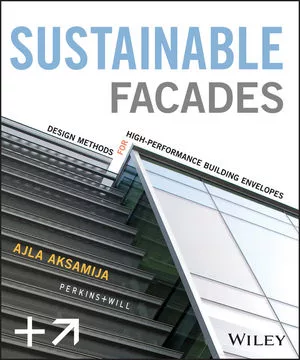
    Sustainable Facades: Design Methods for High-Performance Building Envelopes

See More Products
×

Enhance your expertise with unparalleled insights.

Join thousands of building professionals today. Shouldn’t you know what they know?

SUBSCRIBE TODAY!
  • RESOURCES
    • Advertise
    • Contact Us
    • Store
    • Want More
  • SIGN UP TODAY
    • Create Account
    • Newsletter
    • Customer Service
    • Manage Preferences
  • SERVICES
    • Marketing Services
    • Reprints
    • Market Research
    • List Rental
    • Survey/Respondent Access
  • STAY CONNECTED
    • LinkedIn
    • Facebook
    • Instagram
    • YouTube
    • X
  • PRIVACY
    • PRIVACY POLICY
    • TERMS & CONDITIONS
    • DO NOT SELL MY PERSONAL INFORMATION
    • PRIVACY REQUEST
    • ACCESSIBILITY

Copyright ©2026. All Rights Reserved BNP Media, Inc. and BNP Media II, LLC.

Design, CMS, Hosting & Web Development :: ePublishing