Driving Energy Efficiency Through Smarter Enclosures
Solutions that integrate seamlessly into existing systems—while delivering measurable ROI—are likely to define the future of building performance
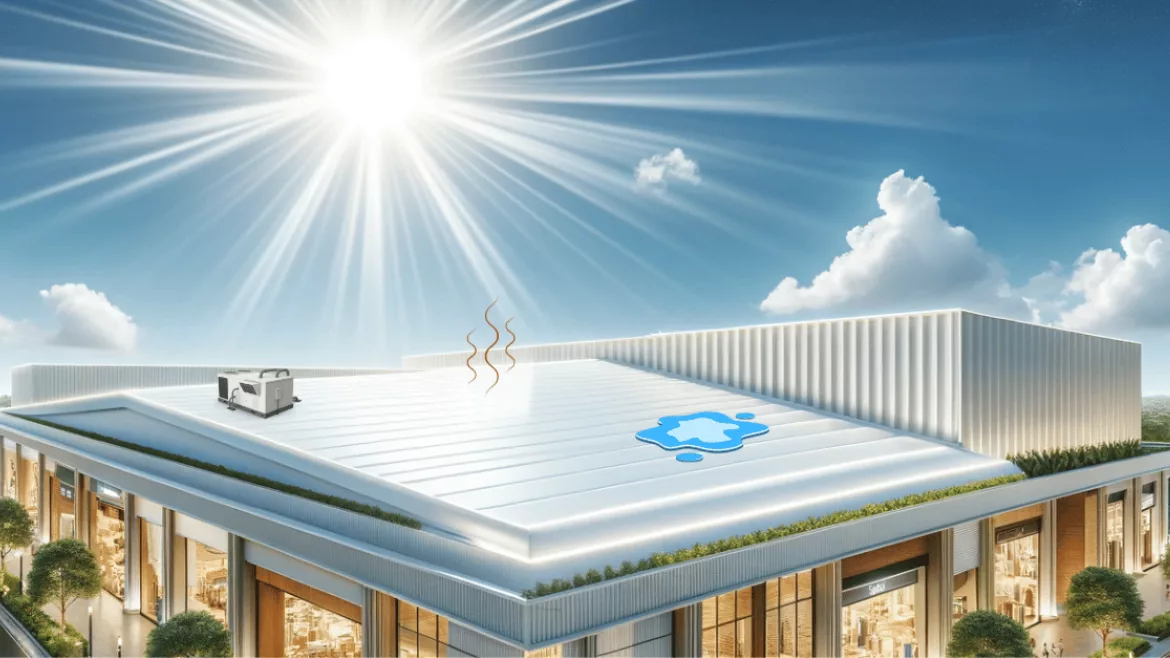
Image courtesy of NanoTech Materials
The building envelope substantially influences a building's life cycle operational and embodied carbon emissions. It comprises high-carbon-intensity materials such as aluminum, glass, gypsum, and insulation. Window-to-wall ratios, wall assemblies, shading, and glazing types have been shown to significantly impact total emissions.
Operationally, managing unwanted heat gain and loss through the building enclosure, including windows, represents over 30% of the primary energy consumed in United States residential and commercial buildings, translating to approximately 483.6 million metric tons (MMmt). This makes the envelope a critical building component in terms of embodied, operational, and total carbon emissions. A 2017 Global Status Report identified the built environment responsible for over 40 % of the world's total greenhouse gas (GHG) emissions.
When the building envelope fails, energy efficiency and structural integrity are compromised, which also influences aesthetics and maintenance costs. With more than 80 % of all currently inhabited houses still in use in 2050 (Dowson, Poole, Harrison, and Susman), retrofitting existing assets for energy efficiency has been a significant challenge for the construction industry. Focus has been mainly on minimizing heat transfer through walls, roofs, and foundations, using high-performance insulation, airtight construction, and efficient glazing, while also considering passive design strategies like orientation and shading. There is a rising concern that energy-efficient design strategies such as increasing air tightness measures for the building envelope negatively impact the quality of indoor environments.
AI Lands in Construction
Artificial Intelligence (AI) has transformed business operations across the construction industry, revolutionizing how projects are planned, executed, and managed. In the early 2000s, the use of AI grew exponentially, driven by increased computational power, big data, and sophisticated algorithms. The construction industry was introduced to design automation, robotics, and drones for predictive maintenance and material optimization. Early adopters experienced a profound impact on business with the ability to leverage the allocation of resources more efficiently.
As AI advanced, it transformed the construction industry by optimizing workflows, improving safety, and enhancing decision-making through applications like predictive maintenance, real-time site monitoring, and automated machinery. AI-enabled digital twins took the technology a giant leap forward for the industry.
Digital twins create virtual replicas of physical entities. The technology already has a place in building and construction, where it is used to simulate and monitor projects and enable real-time insights for improved planning, execution, and maintenance. Projects can be visualized in a 3D environment to facilitate early identification of potential issues and design conflicts and provide a comprehensive view of a project's progress.
When augmented with AI, digital twins are further revolutionizing building efficiencies,
Leveraging Advanced Technology and Engineering for Protecting the Building Envelope
According to The American Institute of Architects (AIA), nonresidential construction spending is expected to slow significantly in 2025. Although construction investments are expected to grow in multifamily housing, healthcare, and hospitality, challenges like labor shortages and material costs will persist. It signals the importance of making every dollar count.
ROOVIE AI is an artificial intelligence tool designed to address inefficiencies in how buildings are modeled and managed for energy performance. Traditional building models often rely on static data that quickly becomes outdated as systems age, weather patterns shift, and occupancy changes. ROOVIE AI solves this by generating dynamic digital twins—real-time virtual replicas of buildings—that integrate live weather data and simulate thermal performance using advanced physics and machine learning. This allows facility managers and decision-makers to see how energy is being used or wasted across a portfolio and identify where upgrades would have the greatest impact.
Beyond modeling, ROOVIE AI serves as an intelligent assistant for optimizing energy investments. It automatically identifies relevant local, state, and federal energy incentives, calculates financial returns, and even assists in completing paperwork—streamlining what would typically be a complex and time-consuming process. With capabilities like dynamic ROI forecasting and automated retrofit planning, ROOVIE AI is part of a broader movement to apply AI in construction and building operations, turning buildings into responsive, data-driven assets that can adapt to real-world conditions and sustainability demands.
Cutting Temps from the Roof Down
To further protect property investments and improve energy efficiency, commercial roof coatings have become a cornerstone of modern building design. These coatings—typically acrylic, polyurethane, or silicone—offer strong benefits including enhanced reflectivity, weather resistance, durability, and ease of application. Their primary purpose is to reduce heat absorption by reflecting sunlight and minimizing the thermal load transferred into the building, resulting in cooler indoor temperatures and reduced HVAC demand. With rising global temperatures and policy incentives like the 2022 Inflation Reduction Act, which offers energy efficiency tax credits of up to $5 per square foot, adoption of roof coatings is accelerating across the U.S.
The Solar Reflectance Index (SRI) was developed as a standardized metric to assess how effectively roofing and exterior materials manage heat from sunlight. By combining two key properties—solar reflectance (how much sunlight a material reflects) and thermal emittance (how efficiently a material radiates absorbed heat)—SRI provides a numerical scale from 0 to 100. A typical black surface has an SRI of 0, while a standard white reflective surface approaches 100. Materials with high SRI values are effective in reducing building cooling loads and are commonly used in “cool roofing” applications. However, while SRI is a useful benchmark, it primarily captures how much energy is reflected or emitted from the surface. It does not measure how much heat penetrates through the material into the structure—a critical limitation when evaluating overall thermal performance, especially in extreme heat environments.
Recent materials innovations, such as Insulative Ceramic Particle (ICP) technology, help address this gap by enhancing a roof’s ability not only to reflect and emit heat but also to resist its transfer entirely. ICP-integrated coatings leverage two advanced material properties: ultra-high emissivity and extremely low thermal conductivity. High emissivity improves the surface’s ability to re-radiate absorbed solar energy back into the atmosphere, while low thermal conductivity significantly slows down the movement of heat through the material itself. This dual-function approach adds a layer of thermal insulation to conventional roofing coatings, such as acrylics, silicones, and polyurethanes, without altering their mechanical performance. As a result, ICP-enhanced systems go beyond the SRI framework by not only managing surface temperatures but also physically reducing heat gain into the building, thereby improving energy efficiency and interior comfort in ways traditional SRI alone cannot capture.
Insulative Ceramic Particle™ (ICP) technology represents a next-generation advancement that enhances the performance of these traditional roof coating systems. Rather than acting as a standalone fourth type of coating, ICP is a patented additive that integrates seamlessly into existing carriers such as acrylics, polyurethanes, and silicones—without altering their mechanical properties, durability, or performance. ICP significantly improves the thermal barrier function of these coatings by reducing heat transfer through the roof, enabling more effective indoor temperature control. By combining high reflectivity with ultra-low thermal conductivity, ICP-enhanced coatings can deliver energy savings of 20% to 50%, all while maintaining the strength, aesthetics, and application characteristics of conventional commercial roof systems.
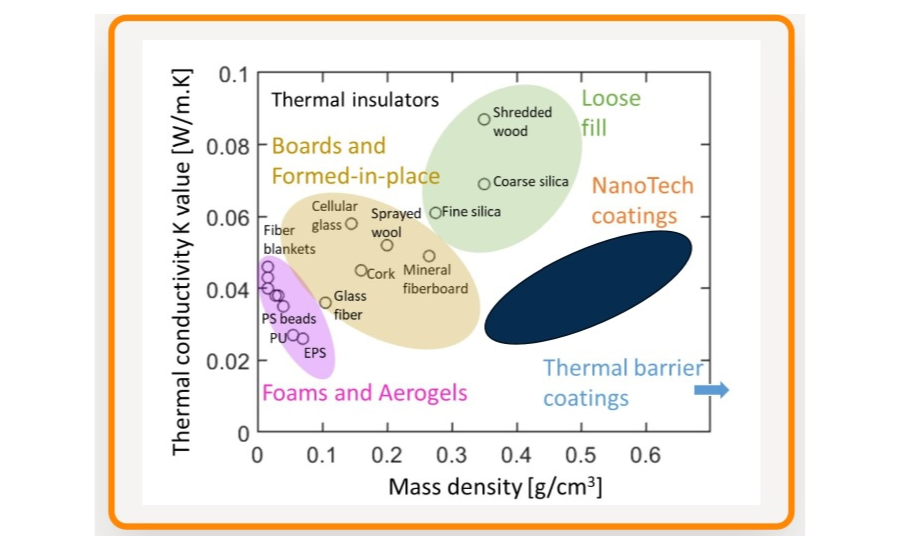 Image courtesy of NanoTech Materials
Case Example: Proof is in the Roof
The ICP Cool Roof Coat was applied to a Fortune 500 big box store with three specific goals: alleviate the burden on the HVAC system, significantly reduce the building's scope 2 Co2 footprint, and ultimately impact the company's bottom line.
The 180,000-square-foot retail facility had 30-foot ceilings and a trapezoidal metal roof. It faced substantial thermal management issues. The building's trapezoidal metal roof, which had never been coated, contributed to high internal temperatures. During initial baseline scans, the surface temperature of the uncoated roof reached a scorching 149°F, while the ceiling temperature underneath the batt insulation was recorded at 112.28°F (44.6°C). These conditions were measured with an ambient outside temperature of 90°F.
Such high internal temperatures meant that the store's HVAC system was under continual strain, working tirelessly to bring the internal temperature down from 112°F to a more comfortable 73°F for ground-level customers and employees. Excessive heat increases energy consumption and operational costs and poses potential risks to product integrity and customer comfort.
In addition, the HVAC system was the single biggest contributor to the facility's scope two carbon footprint – on average, HVAC accounts for 48% of a building's energy use. The parent company had recently pledged an aggressive Net Zero strategy to shareholders and knew that a dramatic reduction in energy use across its owned buildings portfolio was the fastest way to achieve this. As such, regional facility managers were under intense pressure to reduce their locations' overall energy use.
The coating application involved several steps. The roof surface was thoroughly cleaned to remove debris, dust, and any existing contaminants to ensure proper coating adhesion. The coating was applied evenly across the entire 180,000-square-foot roof using advanced spray equipment. Two layers of the coating were applied to achieve the desired thickness and uniformity. Throughout the application process, quality control checks were conducted to ensure the coating was applied correctly and consistently, which included verifying the thickness of the coating and inspecting for any missed spots or inconsistencies.
Post-application scans revealed a dramatic reduction in temperatures. The internal ceiling temperature dropped to a much more manageable 73°F, a stark contrast to the previous 112°F. This significant decrease in internal temperature had several key benefits. The HVAC system no longer had to work as hard to maintain indoor temperatures, leading to a 49% reduction in the cooling component of HVAC use. This not only lowered energy consumption but also extended the lifespan of the HVAC equipment. Lowering the HVAC load decreased electricity bills, providing a quick return on investment for the coating application.
By reducing energy consumption, the store also minimized its carbon footprint and contributed to its sustainability goals.
Conclusion
The convergence of advanced materials and intelligent systems is reshaping how the built environment responds to urgent energy and climate challenges. As this article illustrates, the building envelope remains one of the most critical levers for reducing operational carbon emissions—particularly through targeted retrofits that improve thermal management. Technologies like AI-enabled digital twins and materials science innovations such as ICP-enhanced coatings provide building operators with new, data-driven pathways to reduce heat gain, optimize HVAC use, and improve overall performance without compromising existing infrastructure.
As construction budgets tighten and climate targets grow more ambitious, solutions that integrate seamlessly into existing systems—while delivering measurable ROI—are likely to define the future of building performance. From improving occupant comfort to supporting corporate decarbonization goals, these tools offer a scalable and pragmatic response to the complex demands of 21st-century infrastructure. The opportunity now lies in accelerating their adoption and embedding this next generation thinking into every layer of the building design, maintenance, and retrofit process.
Looking for a reprint of this article?
From high-res PDFs to custom plaques, order your copy today!
.webp?height=740&t=1767036885&width=auto "Header - BE 1170x658 (002).png")

.webp?height=740&t=1755781744&width=auto "KEE(2).png")