Building Enclosure logo
search
cart
facebook twitter linkedin youtube instagram Spotify Podcasts Apple Podcasts Spotify Podcasts Apple Podcasts
  • Sign In
  • Create Account
  • Sign Out
  • My Account
Building Enclosure logo
  • NEWS
    • Breaking News
  • SECTIONS
    • Columns
    • Project Profiles
    • Trade Shows
    • Sponsor Insights
  • SYSTEM DESIGNS
    • Low-Slope Roofs
    • Pitched Roofs
    • Metal Roofing Materials
    • Waterproofing
    • Sustainability
    • Insulation
    • Exterior Claddings
    • Wall Systems
    • Building Envelope
  • BLOG
    • The BE Blog
  • MEDIA
    • Podcasts
    • Webinars
    • Quiz
    • Videos
    • Polls
    • Interactive Spotlights
    • Newsletter
    • Photo Galleries
  • DIRECTORIES
    • Directory: Blue Book
    • Directory: Roofing Resource
  • PRODUCTS
  • TECHNICAL
    • Codes
      • Waterproofing
      • Roofing
    • Details
      • Waterproofing
      • Roofing
  • CONTINUING ED
  • ABOUT
    • Advertise
      • Editorial Calendar
    • Contact
    • eMag Archive Issues
  • SIGN UP!
Breaking News

Armstrong Introduces Material Optimization Analysis to its ProjectWorks Design Service

Integration of in-house software with CAD specialist direction identifies material savings opportunities to help architects and designers increase project sustainability

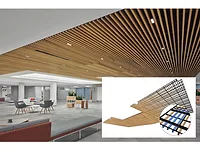
A project profile image of Armstrong ceiling panels

Image courtesy of Armstrong World Industries

March 20, 2025

Armstrong World Industries now offers a material optimization analysis as a standard component of the drawing package provided to architects and designers utilizing its complimentary ProjectWorks Design Service. The new feature uses the Armstrong in-house, automated design software to assess a ceiling layout and identify areas for realistic reusability of scrap produced by cut perimeter ceiling panels. The information provided gives architects and designers the opportunity to increase design efficiency, reduce product waste and cost, and elevate the sustainability value for clients. The material optimization analysis developed specifically for architects and designers complements the existing ProjectWorks material optimization report for contractors, which Armstrong also updated to better align with what architects and designers receive.

“It’s a lightbulb moment when an architect or designer sees a ProjectWorks material optimization analysis showing they could save not just a fraction of a percent of materials, but 10 percent, 15 percent or higher,” said Nick Friez, Manager of Digitalization, ProjectWorks, at Armstrong. “Being able to demonstrate this helps architects tell the sustainability story of their project. For contractors, optimization offers cost savings. By presenting both with viable material savings opportunities, ProjectWorks in essence facilitates the handshake between architects and contractors—helping both parties take the steps necessary for everyone to realize the benefits.”

The ProjectWorks material optimization analysis can be performed on all standard Armstrong ceiling panel materials including mineral fiber, fiberglass, metal, wood, and wood fiber. It is now a part of a comprehensive set of ProjectWorks deliverables—that include detailed layouts, coordinating finish schedules, material budgets, and 3D Revit® models—to help enhance project efficiency and accuracy. In addition, the material optimization analysis and report can contribute towards satisfying applicable green building credits and certifications.

Fine-tuned Algorithms Support Accuracy and Design Integrity

This new material optimization analysis utilizes Armstrong software that has evolved since the first ProjectWorks report was generated in 2021, and the algorithms built to support it come from feedback and insights across thousands of projects. The tool is fine-tuned as needed to ensure accuracy and account for the introduction of new products, changes in design and installation priorities, and more. Key for architects, designers, and contractors is the software’s ability to identify areas for “realistic scrap reusability,” which directly translates into reducing material, preserving design integrity, and placing practical expectations on the contractor.

“Our algorithms consider panel directionality, wood grain, edge detail, and more,” said Friez. “If we are optimizing a wood panel, for example, scrap generated from cut perimeter panels will only be used in another perimeter location if the grain direction aligns with adjacent panels. Moreover, recommendations don’t require the contractor to perform heroics on the job site. We look for panels being cut at the perimeter that can be reused in a standard way. Preserving the integrity of the finished design is important to the architect. Saving time and labor is important to the contractor. Delivering all these things is a priority for Armstrong.”
 

Professional Direction Ensures Feasibility and Confidence

As with all ProjectWorks services, the material optimization analysis pairs the power of digitalization with the human element. Armstrong CAD specialists provide their professional oversight of the software-generated analysis. This in-depth review may, for example, identify places where scrap reuse can be tweaked to make it better in terms of optimization, design quality, or both. If the material optimization percentage is too high, it may also raise a red flag to a CAD specialist that some element of the design should possibly be reconsidered. These professional collaborations, paired with the automated software, provide a proactive approach to identifying and addressing logistical challenges before products reach the project site, mitigating risk for architects, designers, and contractors while enhancing the project’s efficiency and quality.

ProjectWorks provides complimentary assistance to help simplify ceiling layouts and deliver comprehensive drawing packages that streamline the entire project process—from design and quoting through takeoffs and installation. To learn more visit armstrongceilings.com/projectworks.

KEYWORDS: apps and software architects CAD (Computer-Aided Design) ceiling panels design software

Share This Story

Looking for a reprint of this article?
From high-res PDFs to custom plaques, order your copy today!


Recommended Content

JOIN TODAY
to unlock your recommendations.

Already have an account? Sign In

  • bar graph shows LEED v4/LEED v5/LEED v6 in various colors

    When Will LEED v4 / v4.1 and LEED v5 Expire?

    The latest version of the LEED rating system, LEED v5, is...
    Sustainability
    By: Daniel Overbey
  • Celebrating Women In AEC-2026

    Celebrating Women in The AEC Industry Part 1

    A round-up of women in the design, engineering and...
    Sustainability
    By: Lindsay Lewis
  • KEE membrane application on a roof

    A Beginner’s Guide to Single-Ply Roofing Membranes

    While PVC and TPO appear extremely similar, the chemistry...
    Low-Slope Roofs
    By: Peter Gross
Manage My Account
  • Sign up for the Newsletter
  • Online Registration
  • Manage My Preferences
  • Registration Customer Service

More Videos

Sponsored Content

Sponsored Content is a special paid section where industry companies provide high quality, objective, non-commercial content around topics of interest to the Building Enclosure audience. All Sponsored Content is supplied by the advertising company and any opinions expressed in this article are those of the author and not necessarily reflect the views of Building Enclosure or its parent company, BNP Media. Interested in participating in our Sponsored Content section? Contact your local rep!

close
  • 2 construction workers and a DEXcell panel
    Sponsored byDEXcell Roof Boards

    Designing Low-Slope Roofs for Resilience

  • Bell Bank headquarters in Fargo, North Dakota
    Sponsored bySto Corp.

    Drained and Back-Ventilated Rainscreens vs Pressurized-Equalized Rainscreens

  • A construction worker using DEXcell roof boards
    Sponsored byDEXcell Roof Boards

    The Hidden Strength of Low-Slope Roof Systems: Why Roof Cover Boards Matter

Popular Stories

construction industry workers in hard hats stand around a city scape

Construction Industry Revolts Over New CSI Licensing Plan

Canalino Elementary School and Canalino Family School exterior

Daylighting Design to Support Rapidly Growing Trend in Modular Building Construction

construction workers on a roof, plane flies in background

Why Specifications Are Becoming the Next Critical Layer of Construction Compliance

Building Enclosure Newsletter

BE Poll

Events

June 17, 2025

Addressing Condensation in Low-Slope Roof Assemblies

Credits: 1 AIA LU/HSW; 0.1 ICC CEU; 1 IIBEC CEH; 0.1 IACET CEU

On Demand In modern roofing systems, vapor retarders and air barriers do more than just minimize air leakage—they’re essential to maximizing performance and longevity. This engaging course dives into the next generation of moisture control: permeable vapor retarders and air barriers. Discover how these cutting-edge technologies are transforming low-slope roofing assemblies by improving energy efficiency, managing moisture, and boosting wind uplift resistance.

April 9, 2026

Strategies for High-Performance Below-Grade Waterproofing

Credits: 1 AIA LU/HSW ; 1 IIBEC CEH; 0.1 IACET CEU

On-Demand Designing a high-performance building enclosure requires more than just surface-level protection; it demands a rigorous, performance-based mastery of below-grade water and gas mitigation. This discussion will provide an expert-level analysis of below-grade waterproofing within the comprehensive framework of the high-performance building enclosure.

View All Submit An Event

Products

Plaster and Drywall Assemblies Manual

Plaster and Drywall Assemblies Manual

This is a comprehensive manual that goes beyond codes and standards, providing expert guidance in design, detailing, material selection and troubleshooting for plaster and drywall.

See More Products

Related Articles

  • Armstrong-Revit-w-design-insert.jpg

    Armstrong Adds 3D Revit Models to its ProjectWorks Design and Pre-Construction Service

    See More
  • The American Institute of Architects

    Demand for Design Service Continues to Grow

    See More
  • C_RS_TcmDArtLi_Lounge_REND_A.jpg

    Armstrong Introduces Tectum DesignArt – Lines Finale PB

    See More

Related Products

See More Products
  • ecology.jpg

    Architecture and Systems Ecology: Thermodynamic Principles of Environmental Building Design, in three parts

  • tall building.jpg

    Tall Building Design: Steel, Concrete, and Composite Systems

  • heating cooling.jpg

    Heating, Cooling, Lighting: Sustainable Design Strategies Towards Net Zero Architecture, 5th Edition

See More Products
×

Enhance your expertise with unparalleled insights.

Join thousands of building professionals today. Shouldn’t you know what they know?

SUBSCRIBE TODAY!
  • RESOURCES
    • Advertise
    • Contact Us
    • Store
    • Want More
  • SIGN UP TODAY
    • Create Account
    • Newsletter
    • Customer Service
    • Manage Preferences
  • SERVICES
    • Marketing Services
    • Reprints
    • Market Research
    • List Rental
    • Survey/Respondent Access
  • STAY CONNECTED
    • LinkedIn
    • Facebook
    • Instagram
    • YouTube
    • X
  • PRIVACY
    • PRIVACY POLICY
    • TERMS & CONDITIONS
    • DO NOT SELL MY PERSONAL INFORMATION
    • PRIVACY REQUEST
    • ACCESSIBILITY

Copyright ©2026. All Rights Reserved BNP Media, Inc. and BNP Media II, LLC.

Design, CMS, Hosting & Web Development :: ePublishing