Building Enclosure logo
search
cart
facebook twitter linkedin youtube instagram Spotify Podcasts Apple Podcasts Spotify Podcasts Apple Podcasts
  • Sign In
  • Create Account
  • Sign Out
  • My Account
Building Enclosure logo
  • NEWS
    • Breaking News
  • SECTIONS
    • Columns
    • Project Profiles
    • Trade Shows
    • Sponsor Insights
  • SYSTEM DESIGNS
    • Low-Slope Roofs
    • Pitched Roofs
    • Metal Roofing Materials
    • Waterproofing
    • Sustainability
    • Insulation
    • Exterior Claddings
    • Wall Systems
    • Building Envelope
  • BLOG
    • The BE Blog
  • MEDIA
    • Podcasts
    • Webinars
    • Quiz
    • Videos
    • Polls
    • Interactive Spotlights
    • Newsletter
    • Photo Galleries
  • DIRECTORIES
    • Directory: Blue Book
    • Directory: Roofing Resource
  • PRODUCTS
  • TECHNICAL
    • Codes
      • Waterproofing
      • Roofing
    • Details
      • Waterproofing
      • Roofing
  • CONTINUING ED
  • ABOUT
    • Advertise
      • Editorial Calendar
    • Contact
    • eMag Archive Issues
  • SIGN UP!
Breaking NewsRoofing Codes

SPRI Announces Updates to 2025 RD-1 Performance Standard for Retrofit Drains

The updated document introduces several key changes designed to enhance clarity, improve testing methodologies, and expand practical guidance for users

SPRI.png
March 5, 2025

SPRI announced the release of the 2025 revision of the RD-1 standard, formally titled ANSI/SPRI RD-1 Performance Standard for Retrofit Drains. The updated document introduces several key changes designed to enhance clarity, improve testing methodologies, and expand practical guidance for users.

The RD-1 standard serves as a critical reference for professionals involved in the design, specification, and installation of retrofit roof drains, which are intended for use with existing drain plumbing on current roof structures. While it does not replace local stormwater drainage code requirements, the standard provides essential guidelines that complement code mandates and manufacturers’ installation instructions.

Key Updates to the 2025 RD-1 Standard

Reorganized Structure for Clarity

One of the most noticeable updates in the 2025 RD-1 revision is the restructuring of the “Test Method” section. Previously located within Section 5, this content now stands on its own as Section 6, enabling users to more easily locate and apply testing procedures. Additionally, minor grammatical improvements and reorganized content throughout the document contribute to clearer communication and streamlined usability.

Evolution in Testing Requirements

The 2025 revision introduces new alternative testing configurations designed to complement the existing 10-foot water column test. Users now have the option to perform tests with air pressure in conjunction with water, supported by clear diagrams. This hybrid testing method offers greater flexibility, accommodating the needs of diverse testing environments and adapting to modern requirements.

Expanded Flow Requirement Standards

Flow requirement standards have been updated to incorporate recommendations from the ASPE/IAPMO/ANSI Z1034-2015 testing standard. These updates are presented alongside traditional methods and historical formulas for calculating flow capacity. By including more comprehensive testing frameworks, the 2025 RD-1 better supports a wide range of practical applications compared to the 2019 edition.


Enhanced Commentary for Practical Use Cases

The commentary section of the RD-1 standard has been enriched with guidance tailored to real-world scenarios. Notably, specific design considerations for strainers in balcony and plaza drains are now included, addressing systems outside the traditional rooftop drain applications. This expanded commentary ensures the standard remains relevant to a broader range of use cases.

Refined Terminology and Focused Changes

Precision in language is a hallmark of the 2025 RD-1 revision. Updates include replacing "roofing manufacturers" with the more accurate term "roof system manufacturers" to better reflect current industry roles. Additionally, subtle but impactful edits throughout the document ensure consistency with current best practices in technical writing.

Additional Considerations

The task force behind the 2025 revision, chaired by Liam Donovan of OMG, dedicated significant focus to nuances such as testing variability, rainfall rate data, and the separation of design considerations and backflow seal testing standards into distinct documents. These deliberate updates aim to address user feedback and industry requirements while providing greater organizational clarity.

A New Standard for Consistency and Adaptability

The 2025 RD-1 revision represents a significant step forward in establishing clearer, more adaptable, and practically applicable standards for retrofit drains. By incorporating user-centric updates and aligning with contemporary needs, the revised document sets a stronger foundation for ensuring consistent performance and compliance across the industry.

KEYWORDS: ANSI (American National Standards Institute) building codes building standards drainage retrofitting single-ply roofing SPRI (Single Ply Roofing Industry)

Share This Story

Looking for a reprint of this article?
From high-res PDFs to custom plaques, order your copy today!


Recommended Content

JOIN TODAY
to unlock your recommendations.

Already have an account? Sign In

  • bar graph shows LEED v4/LEED v5/LEED v6 in various colors

    When Will LEED v4 / v4.1 and LEED v5 Expire?

    The latest version of the LEED rating system, LEED v5, is...
    Sustainability
    By: Daniel Overbey
  • Celebrating Women In AEC-2026

    Celebrating Women in The AEC Industry Part 1

    A round-up of women in the design, engineering and...
    Sustainability
    By: Lindsay Lewis
  • KEE membrane application on a roof

    A Beginner’s Guide to Single-Ply Roofing Membranes

    While PVC and TPO appear extremely similar, the chemistry...
    Low-Slope Roofs
    By: Peter Gross
Manage My Account
  • Sign up for the Newsletter
  • Online Registration
  • Manage My Preferences
  • Registration Customer Service

More Videos

Sponsored Content

Sponsored Content is a special paid section where industry companies provide high quality, objective, non-commercial content around topics of interest to the Building Enclosure audience. All Sponsored Content is supplied by the advertising company and any opinions expressed in this article are those of the author and not necessarily reflect the views of Building Enclosure or its parent company, BNP Media. Interested in participating in our Sponsored Content section? Contact your local rep!

close
  • HITT Construction headquarters
    Sponsored byBuilding Composites® LLC

    Pushing the Envelope

  • 2 construction workers and a DEXcell panel
    Sponsored byDEXcell Roof Boards

    Designing Low-Slope Roofs for Resilience

  • Bell Bank headquarters in Fargo, North Dakota
    Sponsored bySto Corp.

    Drained and Back-Ventilated Rainscreens vs Pressurized-Equalized Rainscreens

Popular Stories

graphic shows white arrows pointing to the right on a light green background

A Breakdown of Air Leakage Testing in LEED v5 BD+C

Open vs. closed cell foam in an attic

Open-Cell vs. Closed-Cell Spray Foam

skyscraper

NYC Tower Failure Offers Warning for Contractors

Building Enclosure Newsletter

BE Poll

Events

April 9, 2026

Strategies for High-Performance Below-Grade Waterproofing

Credits: 1 AIA LU/HSW ; 1 IIBEC CEH; 0.1 IACET CEU

On-Demand Designing a high-performance building enclosure requires more than just surface-level protection; it demands a rigorous, performance-based mastery of below-grade water and gas mitigation. This discussion will provide an expert-level analysis of below-grade waterproofing within the comprehensive framework of the high-performance building enclosure.

April 28, 2026

Roof Design Considerations That Prevent Installation Failures and Change Orders

Credit: 1 AIA LU/HSW; 1 IIBEC CEH; 0.1 ICC CEU

On-Demand This course provides visual examples of actual field conditions. Some good, some not so good; along with design suggestions that can cut installation costs and reduce construction change orders. Upon completion of this course, you will have a better understanding of the requirements the roofing contractor must meet to provide the specified roofing system warranty, and long-term value to the owner.

View All Submit An Event

Products

Plaster and Drywall Assemblies Manual

Plaster and Drywall Assemblies Manual

This is a comprehensive manual that goes beyond codes and standards, providing expert guidance in design, detailing, material selection and troubleshooting for plaster and drywall.

See More Products

Related Articles

  • Chadwick Collins, SPRI’s Technical Director, tells us all about what SPRI’s been working on behind the scenes and some new updates, including the 2025 revision of the RD-1 standard, formally titled ANSI/SPRI RD-1 Performance Standard for Retrofit Drains

    Updates to RD-1 Performance Standard for Retrofit Drains

    See More
  • SPRI Standard on Retrofit Roof Drains Re-Approved by ANSI

    See More
  • SPRI.png

    SPRI Announces Plans to Revise Design Standard for Edge Systems

    See More

Related Products

See More Products
  • 1118458605.jpg

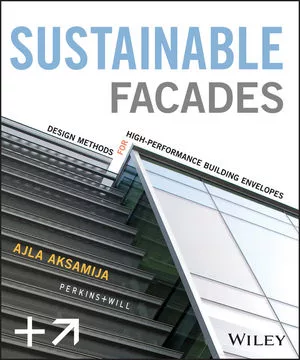
    Sustainable Facades: Design Methods for High-Performance Building Envelopes

  • bim-3e.jpg

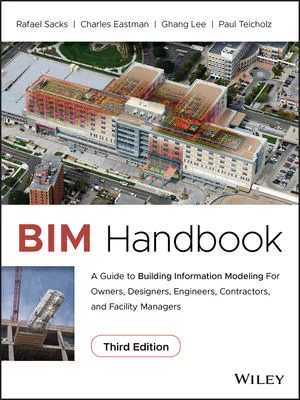
    BIM Handbook: A Guide to Building Information Modeling for Owners, Designers, Engineers, Contractors, and Facility Managers, 3rd Edition

  • smo-green-standard-edition-log-book.png

    Log Book - Green Standard Edition

See More Products

Events

View AllSubmit An Event
  • December 9, 2025

    Key Factors for Enclosure Resilience: Heat, UV, Water, and Air Performance.

    On-Demand The session will also examine various roof and wall assemblies, supported by lab tests and real-world data. Finally, we'll cover essential quality assurance protocols, including building enclosure commissioning and whole building airtightness testing, to ensure your designs perform as intended.
  • May 13, 2025

    Unlock Enhanced Building Performance: Improved Durability and Efficiency Using Air Barriers and Vapor Retarders

    Credits: 1 AIA LU/HSW; 0.1 ICC CEU; 1 IIBEC CEH; 0.1 IACET CEUOn-Demand This presentation will uncover the differences between air barriers and vapor retarders and the benefits of each to improving the durability and efficiency of your building enclosure. Additionally, it will discuss critical installation details as it relates to the roof and roof/wall interface. 
View AllSubmit An Event
×

Enhance your expertise with unparalleled insights.

Join thousands of building professionals today. Shouldn’t you know what they know?

SUBSCRIBE TODAY!
  • RESOURCES
    • Advertise
    • Contact Us
    • Store
    • Want More
  • SIGN UP TODAY
    • Create Account
    • Newsletter
    • Customer Service
    • Manage Preferences
  • SERVICES
    • Marketing Services
    • Reprints
    • Market Research
    • List Rental
    • Survey/Respondent Access
  • STAY CONNECTED
    • LinkedIn
    • Facebook
    • Instagram
    • YouTube
    • X
  • PRIVACY
    • PRIVACY POLICY
    • TERMS & CONDITIONS
    • DO NOT SELL MY PERSONAL INFORMATION
    • PRIVACY REQUEST
    • ACCESSIBILITY

Copyright ©2026. All Rights Reserved BNP Media, Inc. and BNP Media II, LLC.

Design, CMS, Hosting & Web Development :: ePublishing