How Fire Safety Innovation is Shaping Modern Wall Systems
New building codes compelled manufacturers to explore existing products to see how they could be modified to enhance fire safety
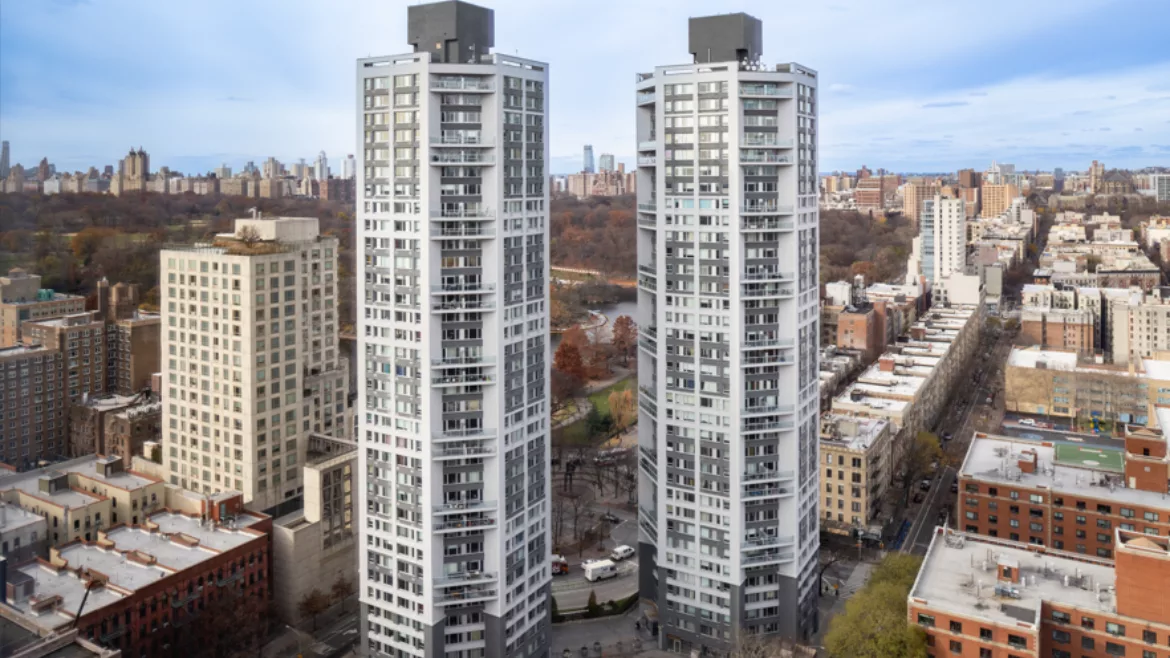
New fire safety codes, such as NYC BC 718.2 6, are shaping how high-rise buildings incorporate fire-resistant materials.
Fire Safety in the Twentieth Century
In the early 1900s, cities were expanding rapidly. As urban centers grew, high-rises climbed higher, and suburbs sprawled. While steel was used in building design for its strength, wood was also used because of its affordability. The focus on rapid urban development often outstripped attention to fire safety.
Several major urban fires in the late 19th and early 20th centuries, such as the Great Chicago Fire of 1871 and the San Francisco Earthquake and Fire of 1906, exposes the vulnerabilities of wood-framed buildings. In response, early fire testing focused on masonry and concrete, which were recognized for their superior fire resistance. Organizations such as the National Fire Protection Associate (NFPA), founded in 1869, emerged to create fire safety standards and advocate for fire-resistant construction.
By the mid-20th century, standardize fire tests became a key part of building regulations. The introduction of ASTM E119 in the 1920s established criteria for fire-resistant ratings of walls, floors, and roofs. As lightweight construction and synthetic materials gained popularity in the 1960s, concerns about fire spread and heat release rate grew, leading to stricter fire testing methods.1
NFPA 285 is Born and Becomes the Standard
During the energy crisis of the 1970’s, there was a push to make wall systems and buildings more energy efficient. As the complexity of these wall systems increased, so did concern about their safety. As a result, The Uniform Building Code (UBC) adopted UBC 17-6, a full-scale test to evaluate the flammability of exterior walls containing foam plastic. This landmark test would eventually be adopted by the National Fire Protection Association (NFPA) and renamed NFPA 285.2 NFPA 285 is an assembly test, not a component test. So, the emphasis shifted from how individual products perform to how the finished wall system performs. This was a defining moment in the construction industry, and it set the stage for more advanced building envelope solutions to emerge.
 Image provided by Sto Corp. The NFPA 285 test evaluates the fire performance of complete wall assemblies, ensuring compliance with modern building codes.
By the late 20th century, high-rise fires such as the First Interstate Bank Fire in Los Angeles (1988) highlighted the dangers of fire spread via building facades. The rise of combustible insulation materials prompted the development of NFPA 285 in the late 1900s to specifically address concerns about wall assemblies containing combustible components.
Another Turning Point: The Grenfell Tower Fire in London
In 2017, the Grenfell Tower fire was another pivotal moment in fire safety. Originating from a faulty refrigerator on the fourth floor that burst into flames, the fire ripped through the floor and raced up the side of the building at an unimaginable speed, feeding off the MCM cladding installed on the outside of the building3 (aluminum sheets bonded to a central polyethylene core).4
There were a lot of issues (flammable material used in the original building, smoke extraction device malfunctioning, water supply for the firefighters, apartment doors that did not meet current fire resistance standard) that led to the tragedy.5
In mere hours, the blaze claimed seventy-two lives and exposed critical flaws in the design and materials used in modern construction. This tragedy catalyzed sweeping changes in building regulations worldwide. Authorities and manufacturers alike recognized the urgency of designing wall systems that could actively mitigate fire risks.
A New Code Sparks a New Era in Fire Safety
In the wake of the Grenfell Tower fire, New York City introduced stricter fire safety requirements. The NYC Building Code (BC), section BC 718.2.6, now mandates fireblocking in exterior wall assemblies containing combustible components. New York City authorities enacted these changes because of the density of high-rise structures in the city and their belief that current NFPA 285 testing did not address all concerns regarding the spread of fire where foam plastic and other combustible materials are used in exterior wall assemblies. This comprehensive code is the first one in the US and could spark a nationwide trend where new codes could follow suit, requiring non-combustible fireblocking to be incorporated into EIFS, MCM, HPL, FRP, and any other cladding with foam plastic insulation.
 Image provided by Sto Corp. Illustration of fireblocking requirements in a multi-story building, highlighting key areas such as wall openings, slab edges, and occupancy group separations. These fireblocking measures align with the NYC Building Code (BC 718.2.6) to enhance fire safety and prevent vertical and horizontal fire spread in exterior wall assemblies.
Manufacturers Respond with Fire-Resistant Innovations
These new building codes compelled manufacturers to explore new solutions. They immediately began looking at existing products to see how they could be modified to enhance fire safety. But more importantly, they began looking at walls as an opportunity to layer in fire safety, just as they had layered in technology that helped reduce the risk of air and water intrusion.
As a result, new fire barrier solutions have emerged, including fire-resistant coatings, cementitious fireproofing, and fire-resistant boards. One of the most recent, most advanced fire-resistant technologies now included in wall assemblies is Sto Fireblocking, which enhances the safety and performance of wall assemblies, aligning with rigorous building codes and standards, while contributing to sustainable building practices without compromising aesthetic or functional goals. By addressing fire risks at the design stage, modern wall systems are not only safeguarding lives but also advancing the resilience and longevity of buildings in diverse environments.
 Image provided by Sto Corp. Detailed cross-section of fireblocking installation in a StoTherm® ci GPS system, showcasing key components such as StoGuard® Air and Water-Resistive barrier, Sto Lamella fireblocking, and GPS insulation. This assembly enhances fire resistance while maintaining energy efficiency and design flexibility.
EIFS: A Holistic Approach to Safety, Functionality, and Design
Modern Exterior Insulation and Finish Systems (EIFS) meets the new codes and is just as safe as other cladding options. Even though using mineral wool-a non-combustible insulation– on the whole building makes the system exempt from NPFA 285 testing, it still passes the test. In fact, no matter which type of insulation is used, EIFS is code-compliant and can be used in all construction types (I-V), Many believe that it is the best solution for achieving a balance between sustainability, fire safety, and design freedom.
Many used to think of EIFS as synthetic stucco. But that EIFS is so last century. Over the past 30 years, EIFS has undergone a transformation, emerging as a versatile, high-performing cladding system. Applied in multiple layers over exterior sheathing, today’s EIFS with drainage provides outstanding insulation, moisture and fire protection. Components (layers) include:
- An air and water-resistive barrier over the substrate that prevents moisture from infiltrating the system.
- An adhesive applied in vertical ribbons that adheres the insulation to the sheathing and provides a source of drainage between the AWRB and insulation board.
- A layer of insulation. Options include graphite-enhanced polystyrene (GPS), mineral wool, expanded polystyrene (EPS) or extruded polystyrene (XPS).
- A layer of fiberglass mesh with embedded base coat provides reinforcement. It will also help protect against cracks and crumbling due to shifting foundations, thermal expansion, and freeze/thaw cycles.
- The system finish furnishes the color, texture, and protective nature of the structures’ exterior surfaces. A primer coat may be recommended to improve finish coat coverage and promote uniform substrate absorption.
- When using foam plastics, mineral wool may be used at critical detail areas, such as rough openings, floor lines, etc., to meet the 2022 NY BC
A complete, pre-engineered system performs more efficiently, reduces long term costs, and is covered by a single warranty. Additional benefits of EIFS include:
• Easier & More Affordable to Transport – Lightweight cladding equals significant savings on transportation costs, easier and safer to maneuver around the job site, quicker and more straightforward installation
• Maintenance & Repair Savings – Damage can be repaired in targeted areas without removing heavy panels, minimizing waste and reducing costs.
• Enhanced Thermal Efficiency – With a layer of exterior continuous insulation, that thermal control layer will ensure a tighter building envelope, reducing HVAC load and lowering utility bills by as much as 30%.
• More Sustainable – In addition to transportations savings, lighter loads mean fewer trucks and lower fuel consumptions; Reducing the weight of materials shipped across multiple truckloads can significantly reduce environmental impacts and carbon emissions.
Lightweight cladding is especially ideal for retrofits, as it can be applied to a structurally sound existing building, eliminating the need for a costly tear-down. A refresh using EIFS allows you to modernize an old building, making it more visually appealing, energy efficient, and with advanced fire technology. But lightweight cladding makes sense on a new build, as well, as it has a lower deflection and puts less stress on the building's structure, making it a smart choice for both performance and design flexibility.
Fireblocking Technologies: Mineral Wool slabs vs mineral wool lamellas
Mineral wool is ideal when looking for non-combustible insulation. Lamellas are also made of mineral wool, but their application and performance differ from that of mineral wool slabs.
Mineral wool offers robust fire resistance, classified as non-combustible under ASTM E136 and CAN/ULC S114. It has a Flame Spread Index of 0 and a Smoke Development Index of ≤ 15 (Class A) or ≤ 10 (Class A), depending on specific product composition. Additional, when exposed to temperatures up to 750°C, mineral wool maintains its non-combustible properties, ensuring superior fire performance.6 Mineral wool slabs must be mechanically fasten it to the building structure, creating potential thermal breaks. Also, mineral wool cannot be rasped to create a plane surface which may pose aesthetic challenges when a fine or smooth finish is desired. .
While lamellas are also made from mineral wool, they offer numerous advantages. They can adhere directly without fasteners, eliminating thermal breaks, they can be rasped to provide a plane surface and, therefore, a better-looking finish, and they are precision cut (no tolerance allowed) so that if they are integrated with foam plastic insulation, they blend seamlessly. These properties make Lamellas a superior choice for many applications.
These materials have been used successfully in Europe for decades, setting the benchmark for fire safety in wall systems. While lamellas are combustible, they meet the NFPA standard. And as new and stricter codes emerge, manufacturers are ready to respond by integrating more mineral wool (via lamellas or slabs) into the systems.
The Role of Fire Innovation in Sustainable Wall Claddings
Fire innovation is finally having its moment, and not a second too soon. The increasing emphasis on fire safety in building construction has driven significant advancements in wall system design, integrating solutions that prioritize occupant protection, property preservation, and code compliance. We now understand that fire safety needs to encompass all aspects of a building’s interior/exterior materials and equipment to avoid another Grenfell.
Sustainability and fire safety is a delicate balance to achieve. There is no perfect solution. While some fire-resistant materials may have a slightly higher carbon footprint, their energy efficiency and life-saving potential often outweigh these concerns. No single solution is a perfect, design professionals and building owners now have an array of tools to balance aesthetics, functionality, and safety. These innovations not only safeguard occupants but also enhance the resilience and longevity of buildings in an ever-changing world—a vital achievement for the future of construction.
1The History of Fire Protection and Life Safety in Building Construction, 11/19/2024, The Real Estate Inspection Company Blog.
2NFPA 285 Testing and Design Information: History and Roots, 7/13/2023, North American Modern Building Alliance Blog.
3Days Before Grenfell Anniversary, Giant Warnings of Fire Safety Appear in U.K., 6/13/2019, The New York Times.
4 Grenfell Tower Inquiry report by Professor Luke Bisby (Professor of Fire & Structure at University of Edinburgh, UK): https://www.grenfelltowerinquiry.org.uk/evidence/professor-luke-bisby
5 Grenfell Tower Inquiry report by Doctor Barbara Lane (Fire Safety Specialist): https://www.grenfelltowerinquiry.org.uk/evidence/dr-barbara-lane
6 ROCKWOOL® Frontrock™ Technical Data Sheet: www.rockwool.com
Looking for a reprint of this article?
From high-res PDFs to custom plaques, order your copy today!

.webp?height=740&t=1767036885&width=auto "Header - BE 1170x658 (002).png")

.webp?height=740&t=1755781744&width=auto "KEE(2).png")