How Certified Insulation and Wall Systems Work Together to Improve Indoor Air Quality
Today’s best envelope systems leverage certified, low-emission insulation to support energy efficiency and better indoor air
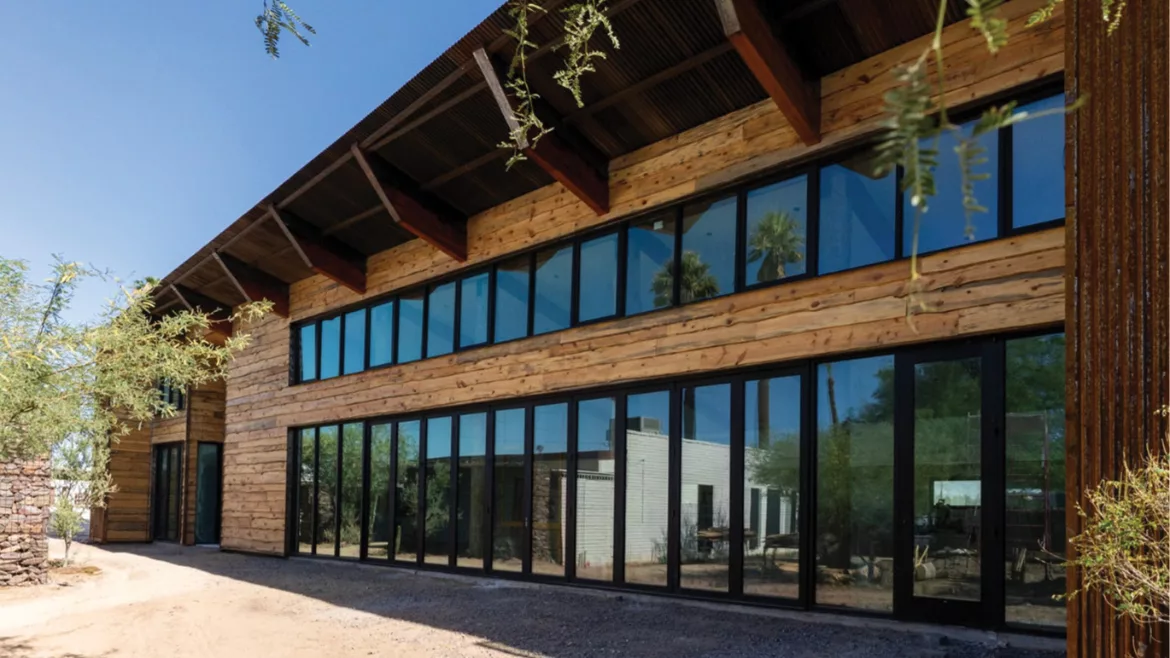
Sonoran Studio in Phoenix, designed to meet the Living Building Challenge,uses formaldehyde-free fiberglass insulation to support both energy performance and material health goals.
As colder weather forces occupants indoors and energy demands rise, wall systems play a central role in balancing indoor environmental quality, thermal comfort, and building durability. The industry is increasingly focused on how enclosure assemblies perform, not just to keep heat in or out, but to maintain healthier indoor air and support occupant wellness all year round.
This shift reflects a broader movement across the built environment. The #1 trend in sustainable building is no longer just about reducing energy use or cutting carbon. It is increasingly about people - our health, our well-being, and our future. Innovators across the sector are demonstrating that planetary health and human health are inherently linked. From smart sensors that monitor and improve indoor environments to entire buildings designed around occupant well-being, the next generation of high-performance design is centered on healthier indoor spaces.
This represents the “second wave” of sustainability: a movement where energy performance and material health are treated as interconnected, and it is in this context that the building envelope becomes a primary component of human-centric building practices. Certified insulation products, such as Certified Asthma & Allergy Friendly® fiberglass insulation, demonstrate that material health and high thermal performance can coexist within modern wall systems. These solutions provide measurable benefits for indoor air quality (IAQ) while supporting the long-term resilience and efficiency of buildings.
This article explores how properly designed wall systems can reduce airborne particulates, improve thermal continuity, minimise condensation risk, and contribute to healthier indoor environments across seasons.
The Role of Certified Insulation in Modern Wall Assemblies
A common assumption is that insulation’s contribution to building performance ends with its R-value. But as code cycles push toward higher-performing envelopes, insulation must be evaluated not just for thermal performance, but for its impact on IAQ and enclosure durability.
Certified insulation has been independently verified for low-VOC emissions, reduced dust, and mold resistance, helping limit allergen exposure and supporting healthier indoor spaces. Knauf’s Performance+® insulation, for example, is manufactured with a formaldehyde-free, plant-based binder, reducing chemical emissions while maintaining thermal and acoustic performance.
This combination (verified material health plus robust building science) helps insulation serve as both a thermal component and an IAQ asset within the wall structure.
Thermal Continuity, Comfort, and Occupant Wellness
Thermal continuity is fundamental to keeping interiors comfortable during heating and cooling seasons. Poorly fitted or compressed insulation can create cold spots that increase condensation risk and force mechanical systems to work harder.
Certified insulation delivers its designed R-value by maintaining consistent contact with the cavity framing and both the interior and exterior sheathing, reducing thermal heat transfer and limiting temperature swings. This continuity directly supports occupant wellness by lowering the likelihood of cold spots, condensation, mold, and microbial growth - conditions that can significantly impact indoor air quality. When combined with independent verification for low chemical emissions and mold resistance, Certified insulation contributes to healthier and more stable indoor environments.
For building professionals focused on durability and comfort, aligning proper insulation installation with stable interior surface temperatures (and selecting materials independently verified for low emissions) is essential, especially during colder months.
Dispelling Misconceptions About Fiberglass and IAQ
There is a persistent misconception that all fiberglass insulation is dusty, irritating, or detrimental to air quality. In fact, it is product formulation and certification that actually matters. Knauf’s formaldehyde-free, Certified Asthma & Allergy Friendly® fiberglass insulation provides measurable IAQ advantages by reducing emissions and minimizing airborne particulates. These properties distinguish modern, third-party-verified fiberglass from legacy products and highlight the importance of material transparency in enclosure design.
Another misconception is that air-permeable insulation is less effective than air-impermeable options. In truth, when air-permeable insulation is installed with proper air sealing/air barriers, its performance can be equivalent. Building Science Corporation’s Thermal Metric Report (2013) found that air-sealed wall assemblies exhibit nearly identical thermal performance regardless of insulation type, provided the installed R-value is equivalent. In practice, this means designers can achieve comparable thermal performance while also benefiting from controlled air leakage and the IAQ advantages of a well-sealed, air-permeable assembly.
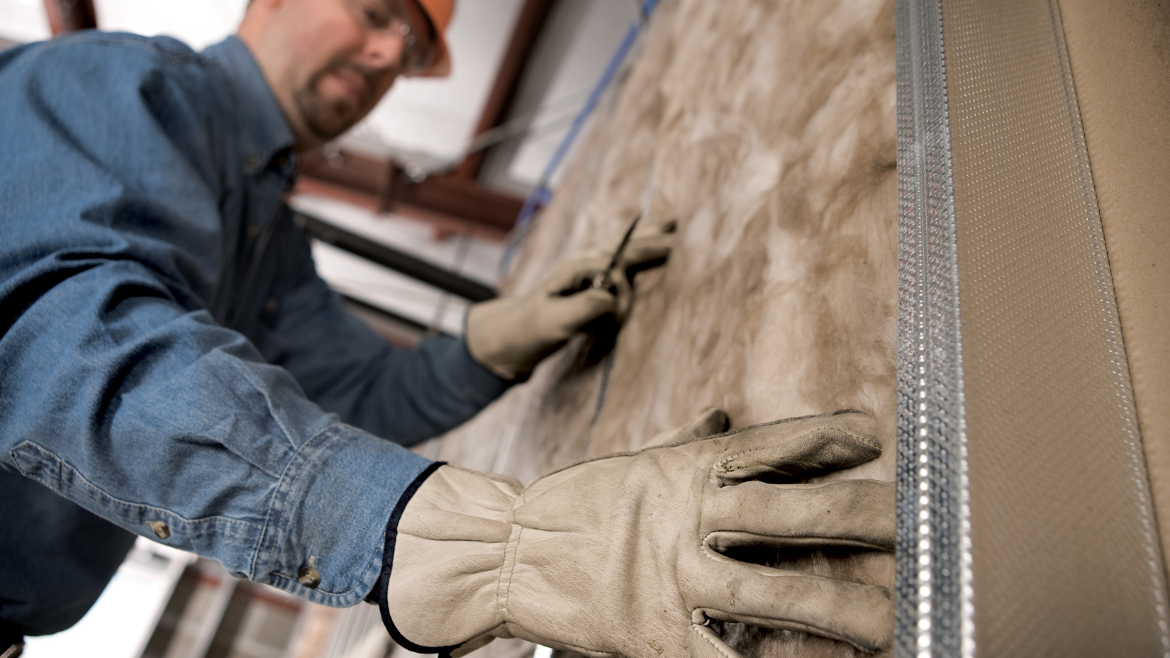
Installers increasingly expect low-emission, formaldehyde-free insulation to support healthier working conditions and improve overall indoor environmental quality.
Photo courtesy of Knauf Insulation.
Aligning Air Barriers and Thermal Layers for Durable Assemblies
A high-performing wall system requires alignment between its air barrier and thermal layer. Gaps, voids, or misalignment can create thermal anomalies, increase moisture risk, and undermine the function of otherwise high-quality insulation.
Key considerations include:
- Continuous air barrier alignment to reduce infiltration and exfiltration
- Correct sizing and placement of insulation
- Avoiding compression and gaps in batt and blanket installations
- Ensuring proper density and depth when using blowing wool products.
- Training installers to ensure consistent workmanship across enclosure components
These practices support tighter assemblies, reduce energy use, and promote healthier indoor environments across the building’s lifespan.
Climate, Moisture, and Vapor Management: Designing for Seasonal Realities
Seasonal change introduces different enclosure challenges. In colder months, greater temperature differentials across the wall can drive condensation within assemblies if thermal continuity is compromised. With climate change, we can expect more extreme temperatures and more extreme differentials, placing even greater stress on wall systems.
Certified insulation helps mitigate wintertime moisture risks by:
- Maintaining interior surface temperatures above dew point
- Reducing cold spots where condensation may form
- Supporting vapor control strategies by aligning thermal and air control layers
Proper air sealing is critical. Air carries moisture (and pollutants) so controlling air movement is essential to limiting condensation, improving IAQ, and preventing mold. Building science fundamentals still apply: heat moves hot to cold; moisture moves wet to dry; air moves from high to low pressure. In winter, these forces intensify, heightening the importance of enclosure continuity.
Regional factors also influence enclosure strategies. In freeze/thaw environments, maintaining stable interior surface temperatures helps prevent moisture cycling and material deterioration. In coastal or humid regions, mold-resistant, low-emission insulation can help reduce IAQ risks. Where outdoor pollution is significant, a well-sealed enclosure paired with filtered ventilation keeps contaminants out.
A Collaborative Enclosure Approach: The Sonoran Studio Example
One example of coordinated enclosure design comes from the Phoenix-based Sonoran Studio project, a project that is on track to become Arizona’s first certified Living Building. The design team paired continuous exterior insulation with plant-based, formaldehyde-free fiberglass insulation in the stud cavities to meet stringent energy and material health requirements.
By exceeding Climate Zone 2 thermal expectations, the project was able to reduce mechanical loads, downsize equipment, and improve IAQ with a combination of material selection, thermal continuity, and proper air sealing. This project demonstrates how enclosure collaboration (between insulation, air control, and vapor control) can deliver net-positive performance even in one of the most challenging climates.
Best Practices for Year-Round IAQ and Energy Efficiency
Across new builds and retrofits, several strategies consistently strengthen both wall performance and IAQ:
-
Seal penetrations and maintain continuous air barriers
This reduces uncontrolled air movement, pollutant entry, and moisture-laden infiltration. -
Use Certified low-emission materials
Low-VOC, formaldehyde-free materials limit emissions that can accumulate in tighter buildings. -
Ensure correct insulation installation
Eliminate gaps, compression, and misalignment to maintain the intended R-value and surface temperature continuity. -
Ventilate with controlled, conditioned air
Mechanical ventilation with effective filtration brings in outdoor air while managing contaminants.
When these elements work together, they support year-round durability, efficiency, and occupant wellness.
Beyond Energy: Acoustic Comfort and Material Transparency
Certified insulation products also support occupant health in ways that extend beyond energy savings. Sound absorption contributes to acoustic comfort, particularly in multifamily and commercial buildings. Low-VOC formulations reduce chemical exposure, while mold-resistant properties help support healthier indoor environments.
Transparency initiatives, including ingredient disclosure platforms, Red List compliance, and third-party certifications, are increasingly valued across the building sector. Certified Asthma & Allergy Friendly® insulation aligns with LEED and WELL criteria through its material health attributes and contribution to improved IAQ and reduced operational carbon.
These advancements reflect a larger industry trend: treating IAQ, acoustic quality, and material safety as core components of building performance.
Future Trends: Integrating Performance, Health, and Sustainability
Emerging trends in insulation and enclosure design point toward a future where resilience, occupant wellness, and sustainability are treated as interconnected goals. As the industry enters what many describe as a “second wave” of sustainability, material health and indoor environmental quality are becoming just as important as energy performance. This shift acknowledges that healthier buildings contribute directly to both human well-being and broader environmental outcomes.
Key developments shaping this next phase include:
- Formaldehyde-free, low-emission materials becoming the industry norm, driven not only by occupant wellness goals but also by installer expectations for healthier working conditions.
- Greater transparency across supply chains, with designers and specifiers seeking clearer information about how products impact both IAQ and environmental performance.
- Durable, high-performance assemblies that integrate air sealing, insulation, and vapor control as standard practice, ensuring enclosures support comfort, moisture management, and long-term resilience.
- Increasing influence of health-focused certifications, which help project teams verify that materials contribute to healthier indoor environments while supporting energy and sustainability goals.
Across the sector, there is a shared understanding that the building envelope is central to creating indoor spaces that support human health. Because there is only one opportunity to get enclosure design right, the choice of insulation and air-sealing strategies has a lasting impact. Certified, low-emission insulation and well-executed air barrier systems remain among the most effective ways to deliver comfort, efficiency, and healthier indoor environments, helping ensure that the buildings we create today perform for decades to come.
Conclusion
As building enclosures evolve toward tighter, more efficient assemblies, insulation selection and installation really count, not just for thermal performance, but for occupant health and long-term durability. Certified insulation products bring independently verified IAQ and material health benefits to wall systems, while strong air sealing and vapor management practices help ensure these benefits are realized throughout a building’s lifespan.
For designers, builders, and specifiers planning for colder seasons, climate change and long-term resilience, the combination of Certified insulation + well-designed air and vapor control strategies delivers measurable gains in comfort, IAQ, and energy performance. Together, these elements form the foundation of modern, occupant-centered wall systems.
Looking for a reprint of this article?
From high-res PDFs to custom plaques, order your copy today!
.webp?height=740&t=1767036885&width=auto "Header - BE 1170x658 (002).png")

.webp?height=740&t=1755781744&width=auto "KEE(2).png")
.webp?height=200&t=1766503602&width=200 "HVAC(1).png")
.webp?height=200&t=1782473009&width=200 "insulation(16).png")