Building Enclosure logo
search
cart
facebook twitter linkedin youtube instagram Spotify Podcasts Apple Podcasts Spotify Podcasts Apple Podcasts
  • Sign In
  • Create Account
  • Sign Out
  • My Account
Building Enclosure logo
  • NEWS
    • Breaking News
  • SECTIONS
    • Columns
    • Project Profiles
    • Trade Shows
    • Sponsor Insights
  • SYSTEM DESIGNS
    • Low-Slope Roofs
    • Pitched Roofs
    • Metal Roofing Materials
    • Waterproofing
    • Sustainability
    • Insulation
    • Exterior Claddings
    • Wall Systems
    • Building Envelope
  • BLOG
    • The BE Blog
  • MEDIA
    • Podcasts
    • Webinars
    • Quiz
    • Videos
    • Polls
    • Interactive Spotlights
    • Newsletter
    • Photo Galleries
  • DIRECTORIES
    • Directory: Blue Book
    • Directory: Roofing Resource
  • PRODUCTS
  • TECHNICAL
    • Codes
      • Waterproofing
      • Roofing
    • Details
      • Waterproofing
      • Roofing
  • CONTINUING ED
  • ABOUT
    • Advertise
      • Editorial Calendar
    • Contact
    • eMag Archive Issues
  • SIGN UP!
Breaking News

Guardian Glass Attains Third-Party Verified Health Product Declarations

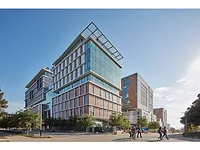
Built Work Photography.png

Photo courtesy of Built Work Photography

November 22, 2024

Guardian Glass announced that it has attained third-party verified Health Product Declarations (HPD) for three product categories: uncoated float glass, vacuum (sputter) coated glass, and Guardian UltraMirror™. By publishing HPDs, Guardian supports architects and designers’ ability to achieve points in various environmental building certifications for their building products. The HPDs can contribute 1.5 LEED® credits under LEED v4.1 MR Credit: Building Product Disclosure and Optimization- Material Ingredients Option 1 (Material Ingredient Reporting)– 0.5 credits more than Guardian’s previous non-third party verified HPD versions. They can also contribute to satisfying features under the WELL Building Standard v1 (e.g., Feature 97: Material Transparency). 

The Health Product Declaration (HPD) Open Standard provides a framework for product manufacturers to disclose the materials used in their products and the associated health information. Guardian Glass prepared the HPDs according to the ingredients used to manufacture the products. Each ingredient disclosed was screened against the HPD Priority Hazard Lists and the GreenScreen® for Safer Chemicals tools. These tools evaluate the ingredients as present in the manufacturing stage only; they do not assess the chemistry of the product across all stages of a product’s lifecycle. An HPD does not evaluate the exposure or health risk of using or handling the product. These documents, available for download on the Guardian Glass website, complement lifecycle-based reports such as Environmental Product Declarations (EPDs).


The Benefits of Third-Party Verified HPDs

Not all HPDs are third-party verified. Manufacturers can choose to have ‘unverified’ or ‘self-declared’ HPDs. The verification process involved an independent, third-party (in this case GreenCircle Certified* is an approved verifier by the Health Product Declaration Collaborative) evaluating supporting documentation from Guardian Glass and its suppliers, including purchase orders, safety data sheets, certificates of analysis, supplier declarations, and laboratory testing. The process verified the accuracy and completeness of the ingredient disclosures in the prepared HPDs.

Andrea Elena Santa Cruz, Environmental Stewardship Engineer, at Guardian Glass commented: “Attaining third-party verified Health Product Declarations not only demonstrates our commitment to transparency – which creates trust among new and existing customers – but also our ongoing commitment to support architects and designers who strive to achieve environmental building certifications such as LEED ®and WELL.”


*GreenCircle Certified was established in 2009 after its founders encountered many unsubstantiated claims about products in the marketplace. GreenCircle is an internationally recognized third-party certification entity whose thorough evaluation process provides independent verification that sustainability claims related to an organization’s products and operations are honest, valid and verified.

KEYWORDS: glass LEED WELL Building Standard

Share This Story

Looking for a reprint of this article?
From high-res PDFs to custom plaques, order your copy today!


Recommended Content

JOIN TODAY
to unlock your recommendations.

Already have an account? Sign In

  • bar graph shows LEED v4/LEED v5/LEED v6 in various colors

    When Will LEED v4 / v4.1 and LEED v5 Expire?

    The latest version of the LEED rating system, LEED v5, is...
    Sustainability
    By: Daniel Overbey
  • Celebrating Women In AEC-2026

    Celebrating Women in The AEC Industry Part 1

    A round-up of women in the design, engineering and...
    Building Envelope
    By: Lindsay Lewis
  • KEE membrane application on a roof

    A Beginner’s Guide to Single-Ply Roofing Membranes

    While PVC and TPO appear extremely similar, the chemistry...
    Low-Slope Roofs
    By: Peter Gross
Manage My Account
  • Sign up for the Newsletter
  • Online Registration
  • Manage My Preferences
  • Registration Customer Service

More Videos

Sponsored Content

Sponsored Content is a special paid section where industry companies provide high quality, objective, non-commercial content around topics of interest to the Building Enclosure audience. All Sponsored Content is supplied by the advertising company and any opinions expressed in this article are those of the author and not necessarily reflect the views of Building Enclosure or its parent company, BNP Media. Interested in participating in our Sponsored Content section? Contact your local rep!

close
  • HITT Construction headquarters
    Sponsored byBuilding Composites® LLC

    Pushing the Envelope

  • 2 construction workers and a DEXcell panel
    Sponsored byDEXcell Roof Boards

    Designing Low-Slope Roofs for Resilience

  • Bell Bank headquarters in Fargo, North Dakota
    Sponsored bySto Corp.

    Drained and Back-Ventilated Rainscreens vs Pressurized-Equalized Rainscreens

Popular Stories

graphic shows white arrows pointing to the right on a light green background

A Breakdown of Air Leakage Testing in LEED v5 BD+C

Open vs. closed cell foam in an attic

Open-Cell vs. Closed-Cell Spray Foam

skyscraper

NYC Tower Failure Offers Warning for Contractors

Building Enclosure Newsletter

BE Poll

Events

April 9, 2026

Strategies for High-Performance Below-Grade Waterproofing

Credits: 1 AIA LU/HSW ; 1 IIBEC CEH; 0.1 IACET CEU

On-Demand Designing a high-performance building enclosure requires more than just surface-level protection; it demands a rigorous, performance-based mastery of below-grade water and gas mitigation. This discussion will provide an expert-level analysis of below-grade waterproofing within the comprehensive framework of the high-performance building enclosure.

April 28, 2026

Roof Design Considerations That Prevent Installation Failures and Change Orders

Credit: 1 AIA LU/HSW; 1 IIBEC CEH; 0.1 ICC CEU

On-Demand This course provides visual examples of actual field conditions. Some good, some not so good; along with design suggestions that can cut installation costs and reduce construction change orders. Upon completion of this course, you will have a better understanding of the requirements the roofing contractor must meet to provide the specified roofing system warranty, and long-term value to the owner.

View All Submit An Event

Products

Plaster and Drywall Assemblies Manual

Plaster and Drywall Assemblies Manual

This is a comprehensive manual that goes beyond codes and standards, providing expert guidance in design, detailing, material selection and troubleshooting for plaster and drywall.

See More Products

Related Articles

  • GAF Announces Health Product Declarations at Greenbuild 2013

    See More
  • vit_ucsd-torrey-pines-1.jpg

    Vitro Architectural Glass Updates Environmental Product Declarations to Meet Low Embodied Carbon Standards

    See More
  • First North American Environmental Product Declarations

    See More

Related Products

See More Products
  • 1118749847.jpg

    The Gypsum Construction Handbook, 7th Edition

  • bim-3e.jpg

    BIM Handbook: A Guide to Building Information Modeling for Owners, Designers, Engineers, Contractors, and Facility Managers, 3rd Edition

  • Event Listing

See More Products

Events

View AllSubmit An Event
  • July 14, 2026

    Comparing Environmental Product Declarations (EPDs) for Structural Materials

    Credits: 1 AIA LU/HSW; 0.1 ICC CEU On-Demand This presentation will explain what an EPD is, how it is developed using product category rules, and how it shows environmental impacts of typical construction products. We will then look at how various industries develop EPDs,  what different types of EPDs are available, and how these can be used in the life cycle assessment of a building project.
View AllSubmit An Event
×

Enhance your expertise with unparalleled insights.

Join thousands of building professionals today. Shouldn’t you know what they know?

SUBSCRIBE TODAY!
  • RESOURCES
    • Advertise
    • Contact Us
    • Store
    • Want More
  • SIGN UP TODAY
    • Create Account
    • Newsletter
    • Customer Service
    • Manage Preferences
  • SERVICES
    • Marketing Services
    • Reprints
    • Market Research
    • List Rental
    • Survey/Respondent Access
  • STAY CONNECTED
    • LinkedIn
    • Facebook
    • Instagram
    • YouTube
    • X
  • PRIVACY
    • PRIVACY POLICY
    • TERMS & CONDITIONS
    • DO NOT SELL MY PERSONAL INFORMATION
    • PRIVACY REQUEST
    • ACCESSIBILITY

Copyright ©2026. All Rights Reserved BNP Media, Inc. and BNP Media II, LLC.

Design, CMS, Hosting & Web Development :: ePublishing