Building Enclosure logo
search
cart
facebook twitter linkedin youtube instagram Spotify Podcasts Apple Podcasts Spotify Podcasts Apple Podcasts
  • Sign In
  • Create Account
  • Sign Out
  • My Account
Building Enclosure logo
  • NEWS
    • Breaking News
  • SECTIONS
    • Columns
    • Project Profiles
    • Trade Shows
    • Sponsor Insights
  • SYSTEM DESIGNS
    • Low-Slope Roofs
    • Pitched Roofs
    • Metal Roofing Materials
    • Waterproofing
    • Sustainability
    • Insulation
    • Exterior Claddings
    • Wall Systems
    • Building Envelope
  • BLOG
    • The BE Blog
  • MEDIA
    • Podcasts
    • Webinars
    • Quiz
    • Videos
    • Polls
    • Interactive Spotlights
    • Newsletter
    • Photo Galleries
  • DIRECTORIES
    • Directory: Blue Book
    • Directory: Roofing Resource
  • PRODUCTS
  • TECHNICAL
    • Codes
      • Waterproofing
      • Roofing
    • Details
      • Waterproofing
      • Roofing
  • CONTINUING ED
  • ABOUT
    • Advertise
      • Editorial Calendar
    • Contact
    • eMag Archive Issues
  • SIGN UP!
Project ProfilesSustainability

Architects Helps Universities Conserve Earth’s Resources Through Environmentally Responsible Designs
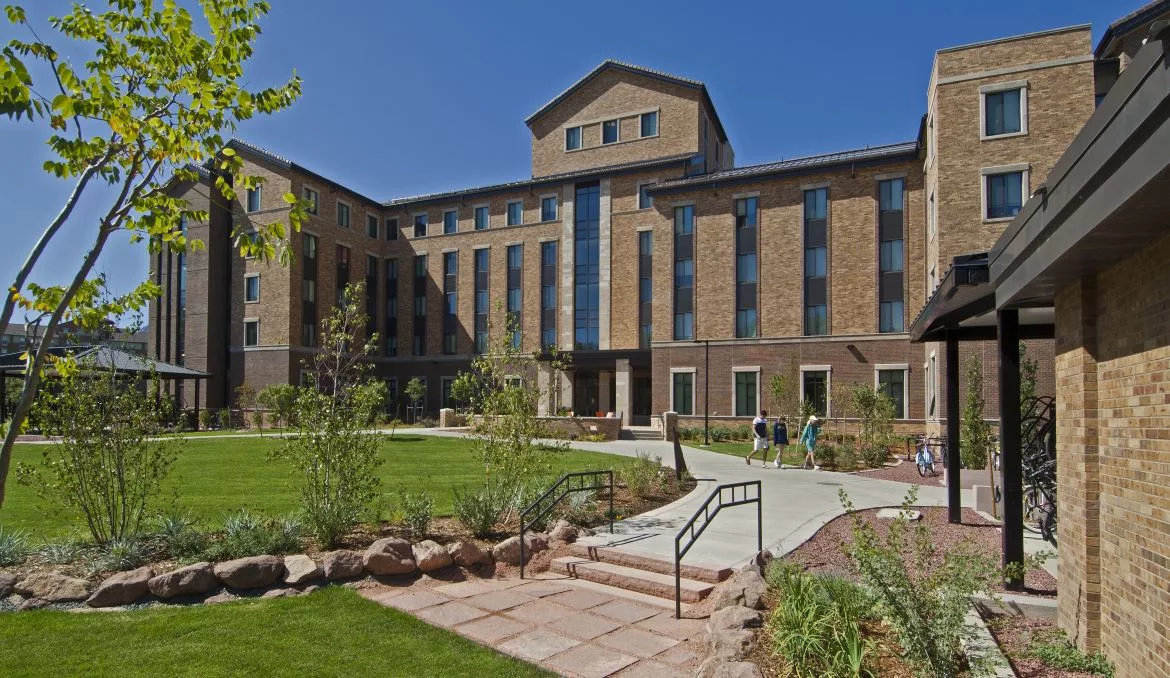
WilliamsVillage_East__1318_LG.jpg
April 18, 2022

Colleges and universities today are looking for sustainable facilities, and a number of them choose to participate in the LEED (Leadership in Energy and Environmental Design) process to obtain a measurable level of sustainability.  

LEED is a green building certification program used worldwide. Developed by the non-profit U.S. Green Building Council (USGBC) in 1993, LEED includes a set of rating systems for the design, construction, operation and maintenance of green buildings. The goal of the program is to help building owners and operators be environmentally responsible and use resources efficiently. Buildings can qualify for four levels of certification based on a point system, with higher points earned correlating to greater energy efficiency: Certified (40-49 points), Silver (50-59 points), Gold (60-79 points) and Platinum (80 or more points). 

“LEED provides a framework for healthy, highly efficient, and cost-saving green buildings, and university officials choose this framework to substantiate the sustainable level of their facility,” said KWK Principal Paul Wuennenberg. “Attaining a LEED certification demonstrates environmentally responsible building practices.”

KWK Architects recently designed residence halls at the University of Missouri and University of Colorado - Boulder that achieved the highest level of sustainability certification, LEED Platinum. 

KWK, along with associate architect Lawrence Group, designed Brooks and Bluford Halls at the University of Missouri in Columbia to achieve a LEED v2009 Platinum certification. While the client requirement for the new 198,000 square-foot, 570-bed residence hall project was LEED Certified minimum, the KWK project team was dedicated to achieving the highest rating within the tight budget, and the team looked to maximize energy efficiency in the buildings to achieve this goal.  

The sustainable, energy-saving features of the buildings include total enthalpy heat recovery for the ventilation systems, demand-controlled ventilation using CO2 and occupancy sensors, high-efficiency LED lighting, daylighting controls, occupancy setback control of lighting and HVAC systems, and variable air volume (VAV) kitchen exhaust and makeup air systems. Additionally, the exterior envelopes of the buildings are high performance.

“The University of Missouri boasts a campus-wide system to furnish its buildings with heating, cooling and power. The campus’ steam system is fed by a combined heating and power central utility plant. This plant uses a biomass boiler for steam production. Not only does this biomass boiler produce steam for power through steam turbine generators, it also produces steam for chilled water through steam turbine chillers. Power for the university grid is provided by solar photovoltaic (PVs) arrays and wind turbines. These features, combined with a detailed and realistic building operation schedule, space loads and equipment efficiencies in the building energy model, allowed the project to earn all available points under the Optimize Energy Performance Credit,” said Wuennenberg. 

With the site of the residence halls just north of the football stadium, it was important for the project to have a recognizable, sustainability feature on one of the buildings. The design team looked to roof-top solar panels for Brooks Hall; with its large, south-facing sloping roof, it was a good fit for the building. 

“Roof-top solar panels on Brooks Hall pre-heat water for the domestic hot water system and provide an important sustainability element for the campus to achieve the LEED Platinum certification,” said Wuennenberg. 

At the University of Colorado Boulder, the new 700-bed, seven-story Williams Village North Residence Hall achieved a LEED Platinum v4 certification; the first residence hall of its size in North America to achieve this rating.

Some of the building’s sustainability features include numerous windows to let in natural light, plus windows with electrochromic glazing that automatically adjust the shading level based on the time of day and year. Windows in the student rooms feature magnets that turn the heating and cooling systems on and off when the windows are opened or closed. Vacancy sensors in each room also control lighting and heating and cooling levels depending on when students are in their rooms. A black switch in each student room also turns off “phantom loads” when electronics are left plugged in and not in use.  

A pond that uses ditch water from snowmelt supplies the hall with water and saves the campus an estimated 13 million gallons of water per year. Other renewable energy features of the building include solar panels, LED lighting, thermostats in each student room, low-flow toilets and urinals, door closers and a VRF HVAC system.

“A multitude of the energy efficient features we designed into the building focus not only on saving energy, but also encourage students to get involved in energy saving practices,” said Wuennenberg. “The hall features several recycling areas for student trash and floors are grouped into sustainability teams that compete to use the least amount of water and energy. Winning teams are awarded throughout the semester.”

For more information about KWK Architects’ student housing projects, visit https://www.kwkarchitects.com/markets/details/student-housing. 

KEYWORDS: daylighting LEED solar energy sustainable design

Share This Story

Looking for a reprint of this article?
From high-res PDFs to custom plaques, order your copy today!


Recommended Content

JOIN TODAY
to unlock your recommendations.

Already have an account? Sign In

  • bar graph shows LEED v4/LEED v5/LEED v6 in various colors

    When Will LEED v4 / v4.1 and LEED v5 Expire?

    The latest version of the LEED rating system, LEED v5, is...
    Sustainability
    By: Daniel Overbey
  • Celebrating Women In AEC-2026

    Celebrating Women in The AEC Industry Part 1

    A round-up of women in the design, engineering and...
    Building Envelope
    By: Lindsay Lewis
  • KEE membrane application on a roof

    A Beginner’s Guide to Single-Ply Roofing Membranes

    While PVC and TPO appear extremely similar, the chemistry...
    Low-Slope Roofs
    By: Peter Gross
Manage My Account
  • Sign up for the Newsletter
  • Online Registration
  • Manage My Preferences
  • Registration Customer Service

More Videos

Sponsored Content

Sponsored Content is a special paid section where industry companies provide high quality, objective, non-commercial content around topics of interest to the Building Enclosure audience. All Sponsored Content is supplied by the advertising company and any opinions expressed in this article are those of the author and not necessarily reflect the views of Building Enclosure or its parent company, BNP Media. Interested in participating in our Sponsored Content section? Contact your local rep!

close
  • 2 construction workers and a DEXcell panel
    Sponsored byDEXcell Roof Boards

    Designing Low-Slope Roofs for Resilience

  • Bell Bank headquarters in Fargo, North Dakota
    Sponsored bySto Corp.

    Drained and Back-Ventilated Rainscreens vs Pressurized-Equalized Rainscreens

  • A construction worker using DEXcell roof boards
    Sponsored byDEXcell Roof Boards

    The Hidden Strength of Low-Slope Roof Systems: Why Roof Cover Boards Matter

Popular Stories

a man wearing a mask installs insulation into a wall system

Quiet Rooms and Healthier Air: A Second Look at What Goes Inside the Wall Cavity

Canalino Elementary School and Canalino Family School exterior

Daylighting Design to Support Rapidly Growing Trend in Modular Building Construction

construction workers on a roof, plane flies in background

Why Specifications Are Becoming the Next Critical Layer of Construction Compliance

Building Enclosure Newsletter

BE Poll

Events

June 17, 2025

Addressing Condensation in Low-Slope Roof Assemblies

Credits: 1 AIA LU/HSW; 0.1 ICC CEU; 1 IIBEC CEH; 0.1 IACET CEU

On Demand In modern roofing systems, vapor retarders and air barriers do more than just minimize air leakage—they’re essential to maximizing performance and longevity. This engaging course dives into the next generation of moisture control: permeable vapor retarders and air barriers. Discover how these cutting-edge technologies are transforming low-slope roofing assemblies by improving energy efficiency, managing moisture, and boosting wind uplift resistance.

April 9, 2026

Strategies for High-Performance Below-Grade Waterproofing

Credits: 1 AIA LU/HSW ; 1 IIBEC CEH; 0.1 IACET CEU

On-Demand Designing a high-performance building enclosure requires more than just surface-level protection; it demands a rigorous, performance-based mastery of below-grade water and gas mitigation. This discussion will provide an expert-level analysis of below-grade waterproofing within the comprehensive framework of the high-performance building enclosure.

View All Submit An Event

Products

Plaster and Drywall Assemblies Manual

Plaster and Drywall Assemblies Manual

This is a comprehensive manual that goes beyond codes and standards, providing expert guidance in design, detailing, material selection and troubleshooting for plaster and drywall.

See More Products

Related Articles

  • Williams Village

    Architects Helps Universities Conserve Earth’s Resources

    See More
  • Environmentally Responsible Design Is Walk in the Park

    See More
  • Odor Free, Environmentally Responsible Roof System Products

    See More

Related Products

See More Products
  • 978-0-7643-3022-3.jpg

    Award-winning Green Roof Designs: Green Roofs for Healthy Cities

  • 1118458605.jpg

    Sustainable Facades: Design Methods for High-Performance Building Envelopes

  • energy modeling.jpg

    Energy Modeling and Computations in the Building Envelope

See More Products
×

Enhance your expertise with unparalleled insights.

Join thousands of building professionals today. Shouldn’t you know what they know?

SUBSCRIBE TODAY!
  • RESOURCES
    • Advertise
    • Contact Us
    • Store
    • Want More
  • SIGN UP TODAY
    • Create Account
    • Newsletter
    • Customer Service
    • Manage Preferences
  • SERVICES
    • Marketing Services
    • Reprints
    • Market Research
    • List Rental
    • Survey/Respondent Access
  • STAY CONNECTED
    • LinkedIn
    • Facebook
    • Instagram
    • YouTube
    • X
  • PRIVACY
    • PRIVACY POLICY
    • TERMS & CONDITIONS
    • DO NOT SELL MY PERSONAL INFORMATION
    • PRIVACY REQUEST
    • ACCESSIBILITY

Copyright ©2026. All Rights Reserved BNP Media, Inc. and BNP Media II, LLC.

Design, CMS, Hosting & Web Development :: ePublishing