American Bird Conservancy Doubles Capacity to Test Bird-Friendly Glass
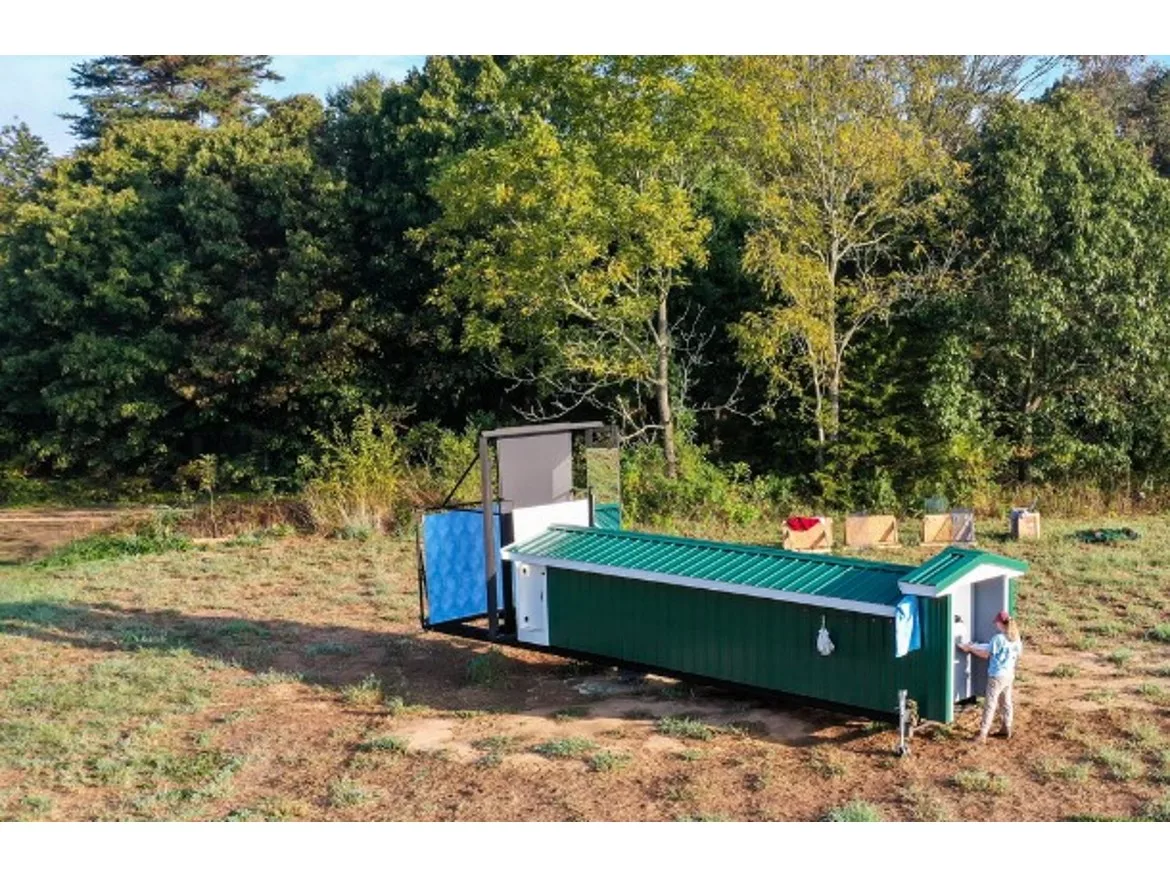
Meghan McHenry, a 2021 graduate of Washington College, operates the test tunnel at Foreman’s Branch Bird Observatory. Photo courtesy of Washington College
American Bird Conservancy (ABC) has joined forces with Washington College in Maryland to double its capacity to test and rate glass and other materials for their ability to deter bird collisions. The move will help ABC meet high demand for testing from glass manufacturers — a vital component of the organization’s work to reduce the threat of window collisions for birds.
“It was easy to say yes to this partnership because of how incredible it is for bird conservation,” said Michael Hardesty, Director of the River and Field Campus at Washington College. “The glass testing program represents the full spectrum of science moving to action.”
The glass testing tunnel at Washington College’s Foreman’s Branch Bird Observatory (FBBO) in Chestertown, Maryland began operations last fall. Along with ABC’s existing test site at Carnegie Museum of Natural History’s Powdermill Avian Research Center in Rector, Pennsylvania, the new tunnel is one of just two facilities in North America that can test glass and provide a “bird-friendly” rating, called a Material Threat Factor. This rating system makes it easier for governments to enact bird-friendly policies and for architects to design buildings that are safer for birds.
“The tunnels may look funny on the outside, but inside is scientific apparatus that lets birds demonstrate for us what glass materials they see and what they will avoid,” said Christine Sheppard, Director of ABC’s Glass Collisions Program.
Collisions with glass kill birds every day of the year in the U.S., but the problem can be especially pronounced during the spring and fall migration seasons. At these times, the number of birds in the country swells due to the presence of billions of birds that spend their summers in the Arctic and their winters in Latin America and the Caribbean. Windows are among the deadliest threats that migratory birds meet on their journeys, killing up to a billion in the U.S. each year. Birds perceive reflections in a glass surface as reality, and when they fly toward a reflected tree or open sky, their mistake is often deadly.
Luckily, there are ways to make glass safer for birds. Visible markers that birds can see, spaced about two inches apart, can deter birds from trying to fly through glass. The challenge is finding a balance between human aesthetic preferences and birds’ need for a visual hint that glass is solid — a challenge made more difficult because humans’ forward vision is superior to that of most birds. The good news is that most bird-friendly patterns are barely noticeable to people. ABC’s glass testing tunnels help inform the production of minimalist patterns that will still save birds’ lives.
ABC began testing glass with its first tunnel in 2010, well before the glass industry believed there was a market for bird-friendly glass. In each trial, a bird — caught locally using safe and reliable methods by licensed staff — is released into one end of the 24-foot-long tunnel. The bird flies toward the light at the other end, where two different panes of glass — a test pane and a clear glass pane — present a choice. By studying the birds’ flight paths, ABC is able to assign the glass a Material Threat Factor score based on how many times birds fly toward the test pane; avoidance of the pane indicates that the birds can see and avoid the glass. (Note: Tested birds safely bounce off a mist net before reaching the glass, ensuring that no birds are harmed during testing. After a single test flight, each bird is released back into the wild.)
ABC’s tunnels have been used to test products from a number of countries in addition to the U.S., including Brazil, Germany, Turkey, South Korea, and the United Kingdom.
Demand for bird-friendly materials is growing as people become aware of the contribution glass collisions have made to alarming declines in bird populations. ABC’s rating system is becoming the standard for bird-friendly glass in North America, even forming the basis for city-level bird-friendly building legislation. In 2019, New York City passed legislation stating that all glass used at elevations under 75 feet on new buildings must have a Threat Factor of 25 or lower. LEED, the world’s leading green building certification system, now grants buildings a credit toward certification if they meet a requirement based on ABC’s rating system.
Washington College’s FBBO is an ideal place for ABC’s second testing tunnel. The site is on the migration route of frequent-collider species like the White-throated Sparrow, and researchers band more birds during migration here than at any other banding station in the country. The station has a rotating team of banders who monitor 92 nets spread over 55 acres. A Tunnel Technician employed by Washington College records and reviews videos of each flight, noting which pane of glass the bird flew toward, its flight patterns, and other reactions to the glass.
Before expanding operations to include the new tunnel at FBBO, ABC was able to test 20–30 glass samples each year at Powdermill. With the expanded program, ABC hopes to more than double annual testing capacity. Already last fall, technicians at FBBO tested 12 samples and found 10 to deserve the bird-friendly rating. This spring, 15 samples have been scheduled for testing between March and May. ABC plans to test 40 samples in total this year. The increased capacity provided by the second tunnel will be critical as demand for bird-friendly glass continues to boom.
“At ABC we have always thought that sustainable buildings can’t really be sustainable if they are killing birds, and we are excited to see the world’s designers start to agree,” Sheppard said. “Every building created with bird-friendly glass represents hope for birds and a more sustainable way of life.”Looking for a reprint of this article?
From high-res PDFs to custom plaques, order your copy today!
.webp?height=740&t=1767036885&width=auto "Header - BE 1170x658 (002).png")

.webp?height=740&t=1755781744&width=auto "KEE(2).png")