Coating Considerations for Architectural Aluminum
More than 80 percent of the information processed by the human brain is visual. Color helps with focus, orientation, recognition and recall. Color is one of the top features people notice, and react to, when they look at a building, a room or an object. Design and building professionals carefully consider not only the correct hue, but also understand the importance of specifying colorful coatings with appropriate performance, longevity and sustainability.
Defining and distinguishing a building envelope’s form, finished architectural aluminum can be seen in numerous product applications. These include façade and wall panel systems, canopies and sun shades, soffits and trim, entry and garage doors, and framing members of curtainwall, storefront, window and entrance systems.
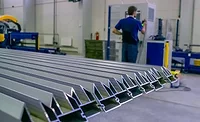
Prior to receiving their colorful coatings and finishes, the aluminum material may be supplied as flat sheets or as extruded profiles in linear, angled and curved shapes. Factory-applied, durable finishes maintain the manufactured products’ intended look and specified performance with minimal maintenance. Finishes that offer a unique appearance, texture or weathering performance provide manufacturers with a strategic advantage in appealing to building owners and design professionals who want their buildings to make an enduring, architectural statement.
For exterior applications with architectural-grade high performance, there are two main finishing types for aluminum products: 70 percent polyvinylidene fluoride (PVDF) resin-based painted coatings and anodize finishes.
Sparkle, Shimmer and Shine
For an eye-catching, dynamic finish choice, architectural aluminum systems painted with mica and metallic coatings bring sparkle, shimmer and shine to practically any color. The reflective quality of these specialty coatings appears to change throughout the day and the seasons.
The light reflectance of the aluminum flakes within the mica and metallic coating gives the finish its lively appearance. The size and reflectivity of the flakes in the coating, their orientation and the degree to which they are all oriented in the paint coating will affect the brightness of the color. Typically, darker colors do not provide as much sparkle and bling as the lighter colors. Be aware that bright, semi-transparent colors, such as silver metallics, also tend to present the greatest potential for variation.
A full-service, single-source finishing provider can provide building envelope system manufacturers with the most effective options to reduce visible variation, especially when applying these coatings on large surfaces like a metal panel system.
Emphasizing Elemental Elegance
Until recently, the color palette for architectural anodize finishes has been very limited. Anodize finishes emphasize the natural metallic look of aluminum. Expanding beyond clear, bronze and champagne, at least one finishing service provider has developed two tawny tones to widen this color range—Copper Anodize and Bordeaux Anodize.
When true copper is impractical, Copper Anodize finish on aluminum can present an economical simulation. Unlike real copper, the anodize will not patina. It retains its elemental metallic look, exceptional hardness and long-lasting durability.
Building on the success of Copper Anodize, the newest color innovation is Bordeaux Anodize. This brings a rich, burgundy color to the anodize spectrum. Both Copper Anodize and Bordeaux Anodize provide the versatility to meet either a contemporary or historic aesthetic, while delivering industry-leading performance, without any concern of copper run-off stains on the building envelope.
Tactile, Textured and Timely
Adding fine aggregate to high-performance PVDF resin-based architectural coatings creates a tactile quality. Terra cotta painted colors gain authenticity with a gritty stone-like feel. Mimicking the look and feel of true terra cotta, these specialty textured coatings for aluminum offer a more economical option.
Spattercoat finishing offers similar benefits for projects seeking the availability and durability advantages of aluminum with the appearance of marble, stone, brick or other materials. Customized to the project’s individual criteria, the specialty finishing process begins by first painting the entire exposed aluminum surface with the specified PVDF resin-based undercoat color. On top of this, additional colors of paint are layered using a spattered technique. The paint spatters can be many or few, large or small, thick or thin to produce the desired three-dimensional, textured effect.
Finished aluminum products also are lighter weight than real stone, which also makes them easier to install. These building products can come in a large variety of shapes and sizes, and be delivered in a short lead time.
Custom Creations
When one of the 50,000 colors or available specialty finishes still do not quite fit the project’s requirements, finishers with an in-house blending laboratory can scan samples of anything from a piece of metal to a swatch of fabric, and then formulate the recipe of tints and bases to create a match. Paint coatings can align with an organizational logo, school colors, team uniforms or company brand.
Finishing service providers with computer-controlled mix and match color systems and quality assurance processes may be approved partners with high-performance paint manufacturers. These systems, processes and partnerships not only achieve a precisely verified color match, but do so with confidence that the color will be consistent and meet the paint specification for the project’s requirements.
Proven Performance
The most significant factors influencing the exterior performance of an aluminum finish are geography and functionality. For example, building envelopes in coastal geographies should be specified with finishes that are proven to resist salt spray. This consideration also can be important for buildings in cold weather climates located near high-volume vehicle traffic where salt is used to de-ice winter roads. Regardless of geography and climate, the functionality of a door means that people are likely to be pulling, pushing and bumping the finished aluminum many more times per day than they would an out-of-reach wall panel.
Whether selecting a custom match, standard color or specialty coating, specify factory-applied 70 percent PVDF coatings to meet the performance requirements of the industry-leading standard, AAMA 2605. Tested to exhibit outstanding resistance to humidity, color change, chalk, gloss loss and chemicals, these durable finishes need minimal maintenance to keep their intended appearance.
For applications where the finished aluminum will be installed in high-traffic, high-touch and high-visibility areas, coatings infused with antimicrobial performance also can be specified. These coatings prevent or limit the growth of mold, mildew and other microbes that can produce unpleasant odors and unsightly stains on metal building products’ surfaces. The protection that is built into these antimicrobial coatings during the manufacturing process works continuously for the useful lifetime of the coating.
Where painted finishes are applied in layers on top of the aluminum substrate, anodize is integral to the aluminum substrate. By electrochemically controlling, accelerating and enhancing oxidation, the anodizing process produces a uniform, hard, protective finish.
Anodized aluminum’s surface hardness is comparable to a sapphire – the second hardest substance on earth. This characteristic makes anodize an excellent choice for use in high-traffic areas where abrasion- and wear-resistant properties are important. For best-in-class performance, specify Class I anodize to meet AAMA 611 industry standards.
Sustainability Strides
Supporting projects’ sustainability goals, many building envelope systems can be manufactured with recycled aluminum billet. Selected coating and anodize finishes can minimize small surface defects, such as die lines, flow lines or minor imperfections that are common in secondary billet.
Because high-performance liquid paint solvents contain volatile organic compounds (VOCs), environmentally responsible finishers safely capture and eliminate these at their facilities using a 100 percent air capture system and regenerative thermal oxidizing equipment. The painted aluminum cures under factory-controlled conditions before the finished material is installed on the jobsite.
There are no applicable VOCs associated with anodized aluminum. It is an inert, non-combustible material that is 100 percent recyclable and poses no health risks. Recognizing these attributes and anodized aluminum products’ 40-year life expectancy, at least one anodize finishing provider recently earned a Declare Label as Living Building Challenge™ (LBC) Red List Free from the International Living Future Institute.
Examining building materials’ complex chemical analysis and raw material source location information, the Declare Label provides ingredient transparency in an easy-to-use “nutrition label” format. Declare LBC Red List Free indicates full compliance with the highest level criteria. This means the manufacturer has disclosed 100 percent of product ingredients plus residuals present at or above 100 ppm in the final product and the product does not contain any Red List chemicals.
Declare LBC Red List Free products are recognized by the U.S. Green Building Council's LEED Rating System, the International WELL Building Standard, and the U.S. Environmental Protection Agency's Recommendations of Specifications, Standards and Ecolabels for Federal Purchasers.
Regardless of the certification program, the geographical or functional performance requirements, or the precise color selection, working closely with aluminum product manufacturers and architectural finishing service providers will ensure optimal results.
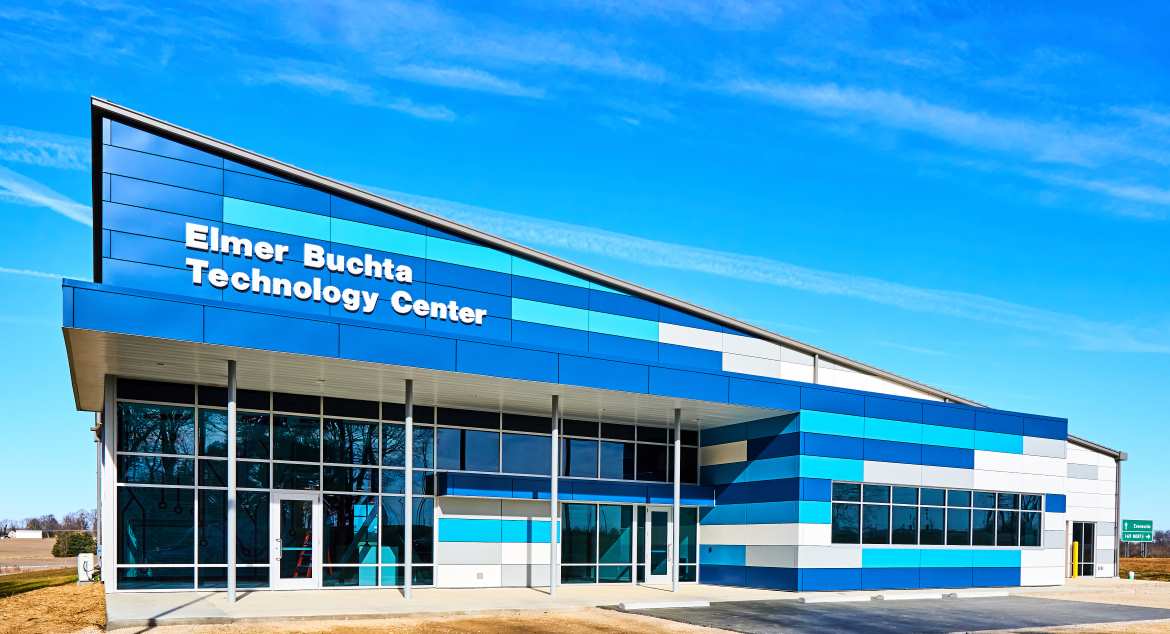
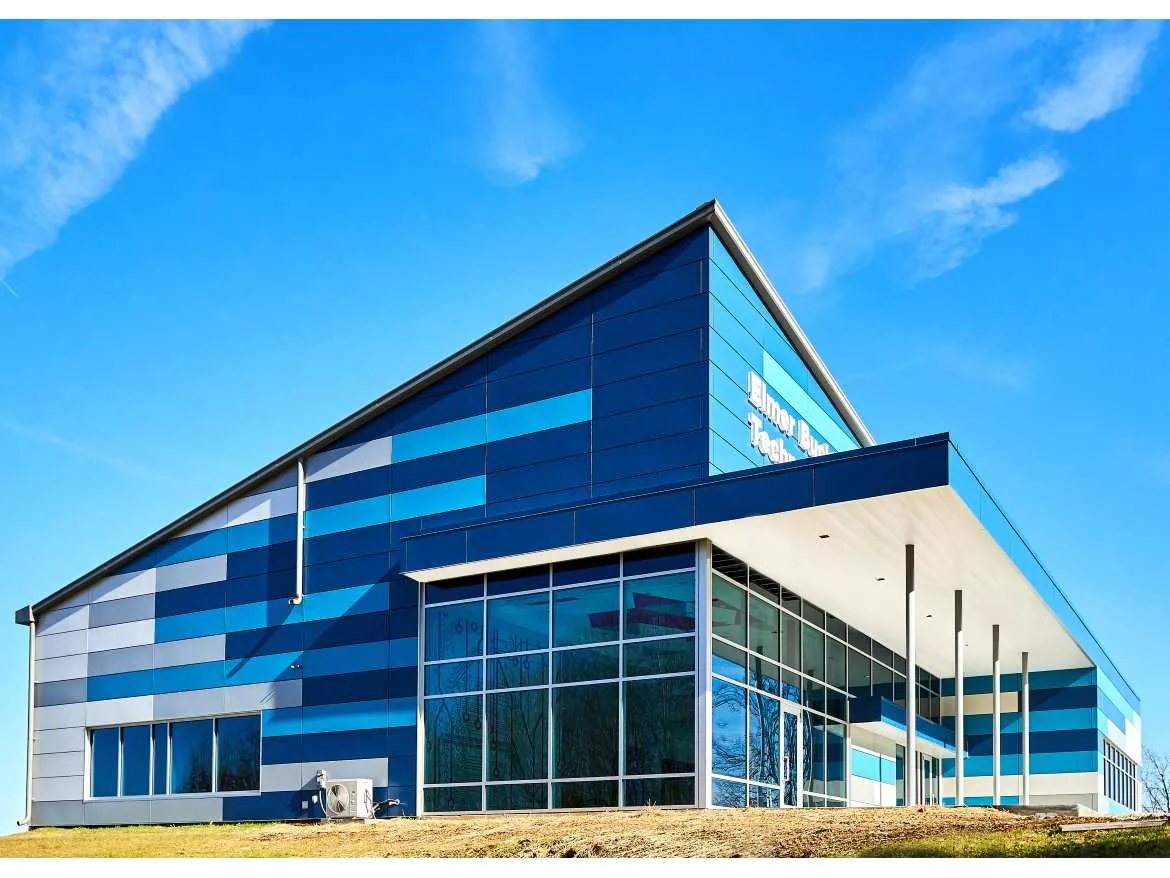
The new Elmer Buchta Entrepreneurship & Technology Center (EBETC) in Pike County, Indiana, features a cheerful multi-colored exterior designed by Hafer. The metal rainscreen wall panel system manufactured John W. McDougall Company Inc. was finished by Linetec using four different colors: Bone White, Cityscape Gray, a darker Regal Blue and a lighter Siam Blue. Two 70 percent PVDF-resin based architectural coating systems were applied under factory-controlled conditions—Duranar® by PPG for the white, and Fluropon® by Sherwin-Williams for the gray and blues. All 629 panels were installed by Midwest Roofing-Sheet Metal in coordination with general contractor Jasper Lumber Co., Inc.
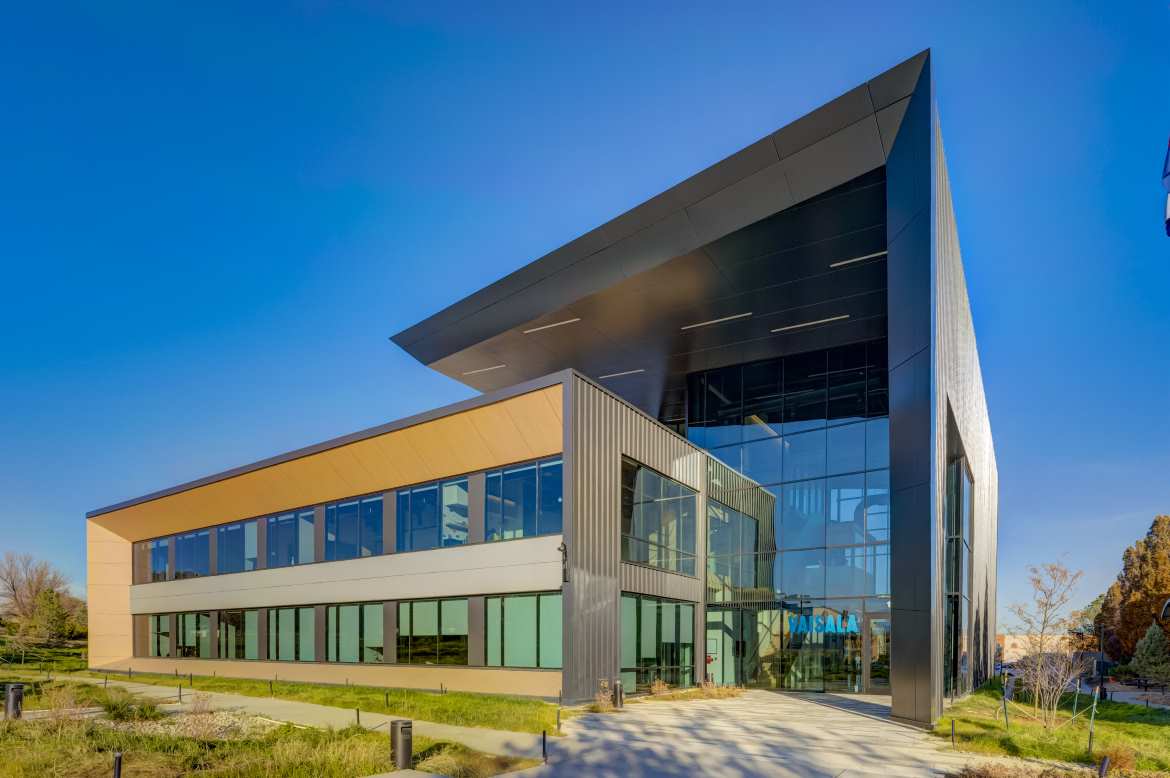
Vaisala’s new offices in Louisville, Colorado, blends Scandinavian style and sustainable, net-zero-ready functionality. Designed by OZ Architecture, the two-story, 35,000-square-foot building serves as the North American headquarters for a global leader in weather, environmental and industrial measurements. High-performance curtainwall and window wall systems from Tubelite Inc. support the energy-efficient building envelope. Linetec finished the aluminum framing in three-coat black 70 percent PVDF resin-based architectural coating, contributing to the building’s crisp, modern, minimalist appearance and durable exterior. Photo courtesy of Matt Puckett, Tubelite Inc.
Looking for a reprint of this article?
From high-res PDFs to custom plaques, order your copy today!
.webp?height=740&t=1767036885&width=auto "Header - BE 1170x658 (002).png")

.webp?height=740&t=1755781744&width=auto "KEE(2).png")
.webp?height=200&t=1770323953&width=200 "FGIA(16).png")
.webp?height=200&t=1689862206&width=200 "Project 5 White Plains NY office (002).jpg")