Building Enclosure logo
search
cart
facebook twitter linkedin youtube instagram Spotify Podcasts Apple Podcasts Spotify Podcasts Apple Podcasts
  • Sign In
  • Create Account
  • Sign Out
  • My Account
Building Enclosure logo
  • NEWS
    • Breaking News
  • SECTIONS
    • Columns
    • Project Profiles
    • Trade Shows
    • Sponsor Insights
  • SYSTEM DESIGNS
    • Low-Slope Roofs
    • Pitched Roofs
    • Metal Roofing Materials
    • Waterproofing
    • Sustainability
    • Insulation
    • Exterior Claddings
    • Wall Systems
    • Building Envelope
  • BLOG
    • The BE Blog
  • MEDIA
    • Podcasts
    • Webinars
    • Quiz
    • Videos
    • Polls
    • Interactive Spotlights
    • Newsletter
    • Photo Galleries
  • DIRECTORIES
    • Directory: Blue Book
    • Directory: Roofing Resource
  • PRODUCTS
  • TECHNICAL
    • Codes
      • Waterproofing
      • Roofing
    • Details
      • Waterproofing
      • Roofing
  • CONTINUING ED
  • ABOUT
    • Advertise
      • Editorial Calendar
    • Contact
    • eMag Archive Issues
  • SIGN UP!
Project ProfilesSustainability

America’s First CLT Academic Building
UMass Amherst
Photo courtesy of Albert Vecerka/Esto.
UMass Amherst 2
Photo courtesy of Albert Vecerka/Esto.
UMass Amherst 3
Photo courtesy of Albert Vecerka/Esto.
UMass Amherst
UMass Amherst 2
UMass Amherst 3
May 12, 2017

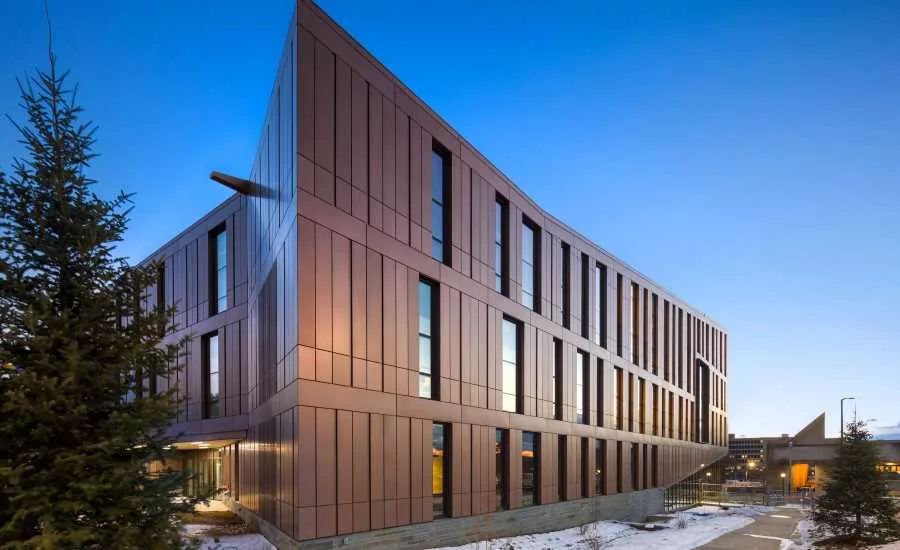
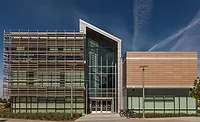
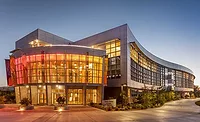
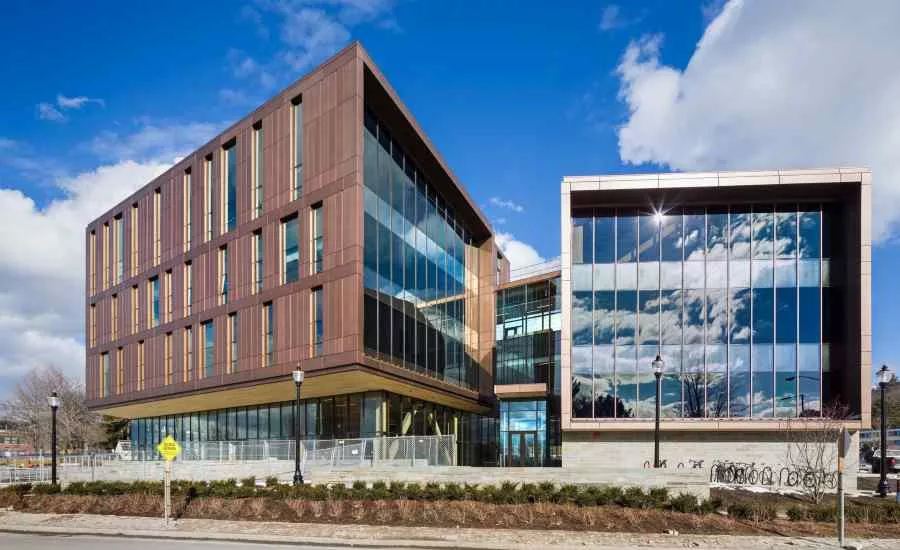
Leers Weinzapfel Associates recently completed the Design Building at the University of Massachusetts Amherst, the first Cross Laminated Timber (CLT) academic building in the U.S. and the largest installation of wood concrete composites in North America. The $52M, 87,500-square-foot project, made possible through supplemental funding from the Massachusetts State Legislature, is a dynamic space of exchange, collaboration, and experiment. Uniting the university’s departments of Architecture, Landscape Architecture and Regional Planning, and the Building and Construction Technology program under one roof for the first time, the structure itself is a teaching tool for prescient sustainable design.
 
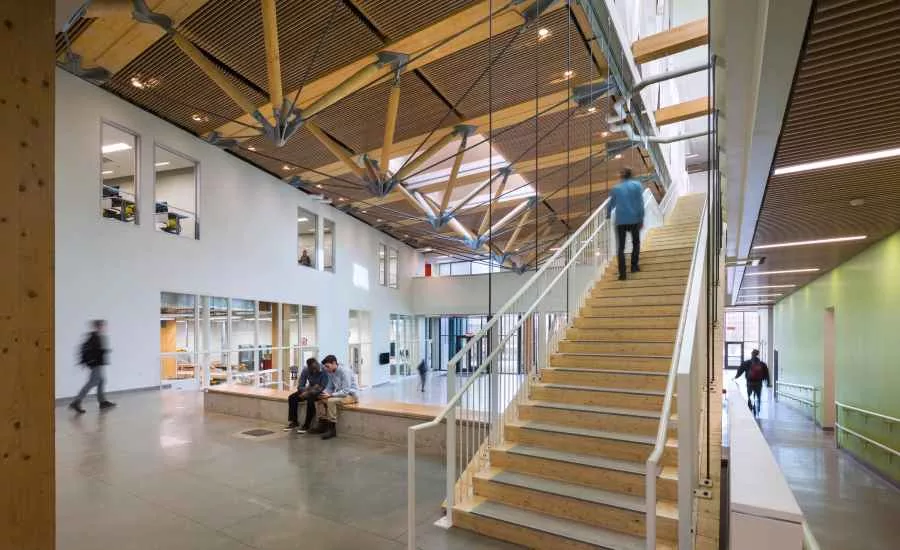
The building is organized around a skylit central commons that brings students together for lectures, exhibits, presentations, and informal gatherings. Studios, maker spaces and classrooms surround the central space that opens onto the street as a showcase for the design disciplines. The commons is capped by a green roof that comprises an outdoor learning environment and experimental space for the landscape department.
 
A demonstration of the construction process itself, columns and beams of glue-laminated wood, a floor of composite, exposed cross laminated timber plank and cast in place concrete, and the lobby’s “zipper truss”  (developed in consultation with Equilibrium Consulting) all exemplify innovative timber engineering.  
 
The building’s highly-efficient envelope of copper-colored, anodized aluminum panels and vertical windows suggests the colors and patterns of the region’s forests and trees. Surrounding landscaping by Stephen Stimpson Associates makes extensive use of native plants and paving materials. Dedicated mechanical equipment is zoned for optimal efficiency, and extensive glazing and skylights provide maximum daylight to the building’s interior, reducing the need for artificial lighting. Storm water management directs roof runoff to a “spring source” at the top of the site, filtering the water through bio-swales and timber dams to the site’s lower end and back to the Connecticut River. Suffolk was construction manager for the project, which is targeting LEED Gold certification.
 
“We imagined this building as a teaching tool for the design disciplines,” says Leers Weinzapfel Principal Andrea Leers, FAIA. “I know from my own teaching experience that there’s nothing more potent than being able to talk with students about the space around you—in this case, the building’s collaborative configuration, innovative structure, considered material and detailing choices, environmentally-driven site, and synergistic landscape concepts that define the project.”
 
“The Design Building is an extraordinary mixing bowl for the disciplines that focus on the design of the built environment,” says Steve Schreiber, FAIA, professor and chair, UMass Amherst Department of Architecture. “Students and faculty alike now productively collaborate in the beautiful light-filled common areas, studios, shops, and seminar rooms. Positioned in the center of campus, the building is a critical link in the university’s arts necklace”

KEYWORDS: green roofing wood

Share This Story

Looking for a reprint of this article?
From high-res PDFs to custom plaques, order your copy today!


Recommended Content

JOIN TODAY
to unlock your recommendations.

Already have an account? Sign In

  • bar graph shows LEED v4/LEED v5/LEED v6 in various colors

    When Will LEED v4 / v4.1 and LEED v5 Expire?

    The latest version of the LEED rating system, LEED v5, is...
    Sustainability
    By: Daniel Overbey
  • Celebrating Women In AEC-2026

    Celebrating Women in The AEC Industry Part 1

    A round-up of women in the design, engineering and...
    Sustainability
    By: Lindsay Lewis
  • KEE membrane application on a roof

    A Beginner’s Guide to Single-Ply Roofing Membranes

    While PVC and TPO appear extremely similar, the chemistry...
    Low-Slope Roofs
    By: Peter Gross
Manage My Account
  • Sign up for the Newsletter
  • Online Registration
  • Manage My Preferences
  • Registration Customer Service

More Videos

Sponsored Content

Sponsored Content is a special paid section where industry companies provide high quality, objective, non-commercial content around topics of interest to the Building Enclosure audience. All Sponsored Content is supplied by the advertising company and any opinions expressed in this article are those of the author and not necessarily reflect the views of Building Enclosure or its parent company, BNP Media. Interested in participating in our Sponsored Content section? Contact your local rep!

close
  • 2 construction workers and a DEXcell panel
    Sponsored byDEXcell Roof Boards

    Designing Low-Slope Roofs for Resilience

  • Bell Bank headquarters in Fargo, North Dakota
    Sponsored bySto Corp.

    Drained and Back-Ventilated Rainscreens vs Pressurized-Equalized Rainscreens

  • A construction worker using DEXcell roof boards
    Sponsored byDEXcell Roof Boards

    The Hidden Strength of Low-Slope Roof Systems: Why Roof Cover Boards Matter

Popular Stories

construction industry workers in hard hats stand around a city scape

Construction Industry Revolts Over New CSI Licensing Plan

a man wearing a mask installs insulation into a wall system

Quiet Rooms and Healthier Air: A Second Look at What Goes Inside the Wall Cavity

Canalino Elementary School and Canalino Family School exterior

Daylighting Design to Support Rapidly Growing Trend in Modular Building Construction

Building Enclosure Newsletter

BE Poll

Events

June 17, 2025

Addressing Condensation in Low-Slope Roof Assemblies

Credits: 1 AIA LU/HSW; 0.1 ICC CEU; 1 IIBEC CEH; 0.1 IACET CEU

On Demand In modern roofing systems, vapor retarders and air barriers do more than just minimize air leakage—they’re essential to maximizing performance and longevity. This engaging course dives into the next generation of moisture control: permeable vapor retarders and air barriers. Discover how these cutting-edge technologies are transforming low-slope roofing assemblies by improving energy efficiency, managing moisture, and boosting wind uplift resistance.

April 9, 2026

Strategies for High-Performance Below-Grade Waterproofing

Credits: 1 AIA LU/HSW ; 1 IIBEC CEH; 0.1 IACET CEU

On-Demand Designing a high-performance building enclosure requires more than just surface-level protection; it demands a rigorous, performance-based mastery of below-grade water and gas mitigation. This discussion will provide an expert-level analysis of below-grade waterproofing within the comprehensive framework of the high-performance building enclosure.

View All Submit An Event

Products

Plaster and Drywall Assemblies Manual

Plaster and Drywall Assemblies Manual

This is a comprehensive manual that goes beyond codes and standards, providing expert guidance in design, detailing, material selection and troubleshooting for plaster and drywall.

See More Products

Related Articles

  • The Finishing Touch on NVCC’s New Academic Building

    See More
  • valspar

    New Eco-Friendly, Technology-Rich Academic Building

    See More
  • valspar

    New Energy-Efficient Academic Building

    See More

Related Products

See More Products
  • building codes illustated.jpg

    Building Codes Illustrated: A Guide to Understanding the 2021 International Building Code, 7th Edition

  • ninteeth century.jpg

    Sustainable Building Design: Learning from nineteenth-century innovations

See More Products
×

Enhance your expertise with unparalleled insights.

Join thousands of building professionals today. Shouldn’t you know what they know?

SUBSCRIBE TODAY!
  • RESOURCES
    • Advertise
    • Contact Us
    • Store
    • Want More
  • SIGN UP TODAY
    • Create Account
    • Newsletter
    • Customer Service
    • Manage Preferences
  • SERVICES
    • Marketing Services
    • Reprints
    • Market Research
    • List Rental
    • Survey/Respondent Access
  • STAY CONNECTED
    • LinkedIn
    • Facebook
    • Instagram
    • YouTube
    • X
  • PRIVACY
    • PRIVACY POLICY
    • TERMS & CONDITIONS
    • DO NOT SELL MY PERSONAL INFORMATION
    • PRIVACY REQUEST
    • ACCESSIBILITY

Copyright ©2026. All Rights Reserved BNP Media, Inc. and BNP Media II, LLC.

Design, CMS, Hosting & Web Development :: ePublishing