Metal Roofs
Retrofitting flat roofs with sloped metal roofs is a concept that is tailor-made for these declining economic times. Interestingly, of the 40 billion square feet of roofing annually installed in the United States, only a fraction of that amount entails retrofitting roofs with sloped metal systems.
Retrofitting flat roofs with sloped metal roofs is a concept that is tailor-made for these declining economic times. Interestingly, of the 40 billion square feet of roofing annually installed in the United States, only a fraction of that amount entails retrofitting roofs with sloped metal systems. Yet, replacement and repair continue to account for approximately 75 percent of all roofing work, and industry sources suggest that some 30 billion square feet of roofs needed major repairs in 2009.
Most roof retrofit work entails adding slope to an existing flat roof, a decision that can generate a strong return-on-investment in the form of lower energy costs and little or no maintenance for decades. In most circumstances, a new roof can be installed without having to remove the existing flat roof.
A slope as low as one-quarter inch per foot is sufficient to satisfy most metal roof warranties and can be achieved by installing light-gauge steel columns in varying lengths. After the columns are installed, steel purlins are positioned between each of the columns and the necessary bracing is installed. A new metal standing seam roof panel system is then placed on top of this subframing system. When the job is completed, it’s almost like having a small metal building sitting atop the original roof.
 Life and Recyclability
If properly maintained, the exterior surface should last at least 30 to 50 years and reflect up to approximately 80 percent of the solar energy that would normally penetrate the building. Adding unfaced fiberglass insulation in the newly created cavity can further increase the building’s ability to conserve the energy used to control temperatures in the interior spaces.
In today’s market, the cost of adding a sloped metal roof system over an existing roof is, in most cases, less than the cost of other removal and replacement options.
Metal framing systems, roof panels and trim are often manufactured from recycled materials and are themselves more than 80 percent recyclable.
 Benefits of a Metal-Over-Sloped
Retrofit
Benefits of a Metal-Over-Sloped
Retrofit
Owners who may not be looking to add slope but simply want to replace their existing sloped metal roof can do so, again without the expense and hassle of removing the original roof. It’s simply a matter of positioning a light-gauge structural member, notched to span over the original roof’s ribs or corrugation, directly over the building’s framing system. The member is attached to the roof purlins through the bottom flange of the structural member and the existing roof sheet. A new standing seam metal roof is then attached to the new member. The cavity between the old and new roofs can be used to add insulation, which should allow the retrofit process to begin paying for itself quickly.
Another reason to consider re-roofing over an existing sloped system is that the existing roof often fails to meet current code requirements for wind uplift. For metal roofs installed on pre-engineered buildings, the standard 5-foot purlin spacing often will not satisfy panel clip spacing requirements in edge and corner conditions in order to meet design loads established in current building codes.
In metal roofs installed over solid metal decks, the panel’s clips are often mispositioned to satisfy uplift loads and panel capacities. Placing the new structural members properly can correct these deficiencies without the need to remove the existing roof.
A metal-over-sloped retrofit also introduces the possibility of utilizing the newly created cavity between the old and new metal roof surface to provide natural convective cooling. This phenomenon is known as above sheathing ventilation (ASV). By providing a continuous air gap from the eave to a ridge and venting the warmer air, the energy efficiency of the new roof assembly can be improved. Tests at Oak Ridge National Laboratory have demonstrated that this natural ventilation can reduce heat flow into the building by up to 30 percent. It costs practically nothing, yet it yields significant savings.
Other systems can be added to metal-over-sloped retrofits to reduce energy consumption. One system that works on a principle similar to ASV is solar thermal heat recovery, which uses air heating and ventilation collectors integrated into a photovoltaic system. The collectors use air as the heat-transfer circulating fluid. Building owners who install such systems are eligible for federal solar energy tax credits valued at up to 30 percent of the entire roof system, with no dollar limit. When combined with a special accelerated depreciation, the tax credits can pay for more than half of the retrofit improvements.
Another energy saving system that can be integrated into a metal-over-sloped retrofit is solar water heating, which can help to serve the hot water requirements of the building and thereby reduce energy consumption. In fact, solar water heating can be incorporated into a solar thermal heat recovery system. With either of these systems, the new metal roof can easily accommodate the necessary solar energy hardware.
Whether adding slope to an existing flat roof or re-roofing an existing sloped metal roof, a professional engineer should be engaged to perform the necessary structural calculations. Choose someone who is familiar with light-gauge framing and metal roof structural components and testing.
 Putting it All Together
Adding a structural metal roof to an existing building is a smart decision because the system will last for decades. It is also an environmentally responsible choice since metal roofs are manufactured from recycled materials, and the system itself is considered almost 100 percent recyclable. Moreover, a metal roofing system allows the use of additional insulation and the installation of solar panels that reduce reliance on electric energy.
When taken together, these factors can enable a metal roof to pay for itself quickly and to continue generating a return on investment for the building owner well into the future.
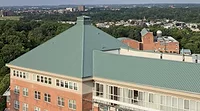
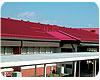
Adding a sloped metal roof to an existing flat
roof can generate a strong return on investment in the form of lower energy
costs and little or no maintenance for decades. All photos courtesy of The
Metal Initiative.
Retrofitting flat roofs with sloped metal roofs is a concept that is tailor-made for these declining economic times. Interestingly, of the 40 billion square feet of roofing annually installed in the United States, only a fraction of that amount entails retrofitting roofs with sloped metal systems. Yet, replacement and repair continue to account for approximately 75 percent of all roofing work, and industry sources suggest that some 30 billion square feet of roofs needed major repairs in 2009.
Most roof retrofit work entails adding slope to an existing flat roof, a decision that can generate a strong return-on-investment in the form of lower energy costs and little or no maintenance for decades. In most circumstances, a new roof can be installed without having to remove the existing flat roof.
A slope as low as one-quarter inch per foot is sufficient to satisfy most metal roof warranties and can be achieved by installing light-gauge steel columns in varying lengths. After the columns are installed, steel purlins are positioned between each of the columns and the necessary bracing is installed. A new metal standing seam roof panel system is then placed on top of this subframing system. When the job is completed, it’s almost like having a small metal building sitting atop the original roof.
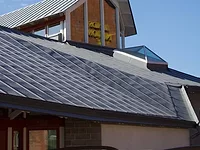
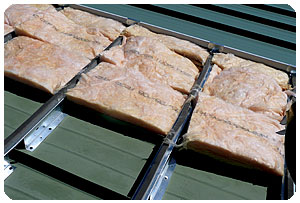
The cavity between an old and new roof can be
used to insert insulation, allowing the retrofit process to begin paying for
itself quickly.
If properly maintained, the exterior surface should last at least 30 to 50 years and reflect up to approximately 80 percent of the solar energy that would normally penetrate the building. Adding unfaced fiberglass insulation in the newly created cavity can further increase the building’s ability to conserve the energy used to control temperatures in the interior spaces.
In today’s market, the cost of adding a sloped metal roof system over an existing roof is, in most cases, less than the cost of other removal and replacement options.
Metal framing systems, roof panels and trim are often manufactured from recycled materials and are themselves more than 80 percent recyclable.
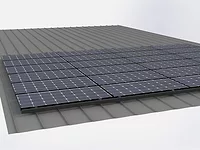
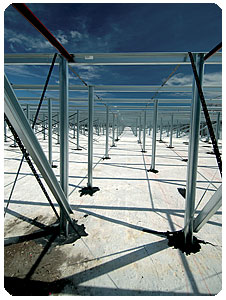
New metal standing-seam roof panel system
sub-framing sits atop the original roof.
Owners who may not be looking to add slope but simply want to replace their existing sloped metal roof can do so, again without the expense and hassle of removing the original roof. It’s simply a matter of positioning a light-gauge structural member, notched to span over the original roof’s ribs or corrugation, directly over the building’s framing system. The member is attached to the roof purlins through the bottom flange of the structural member and the existing roof sheet. A new standing seam metal roof is then attached to the new member. The cavity between the old and new roofs can be used to add insulation, which should allow the retrofit process to begin paying for itself quickly.
Another reason to consider re-roofing over an existing sloped system is that the existing roof often fails to meet current code requirements for wind uplift. For metal roofs installed on pre-engineered buildings, the standard 5-foot purlin spacing often will not satisfy panel clip spacing requirements in edge and corner conditions in order to meet design loads established in current building codes.
In metal roofs installed over solid metal decks, the panel’s clips are often mispositioned to satisfy uplift loads and panel capacities. Placing the new structural members properly can correct these deficiencies without the need to remove the existing roof.
A metal-over-sloped retrofit also introduces the possibility of utilizing the newly created cavity between the old and new metal roof surface to provide natural convective cooling. This phenomenon is known as above sheathing ventilation (ASV). By providing a continuous air gap from the eave to a ridge and venting the warmer air, the energy efficiency of the new roof assembly can be improved. Tests at Oak Ridge National Laboratory have demonstrated that this natural ventilation can reduce heat flow into the building by up to 30 percent. It costs practically nothing, yet it yields significant savings.
Other systems can be added to metal-over-sloped retrofits to reduce energy consumption. One system that works on a principle similar to ASV is solar thermal heat recovery, which uses air heating and ventilation collectors integrated into a photovoltaic system. The collectors use air as the heat-transfer circulating fluid. Building owners who install such systems are eligible for federal solar energy tax credits valued at up to 30 percent of the entire roof system, with no dollar limit. When combined with a special accelerated depreciation, the tax credits can pay for more than half of the retrofit improvements.
Another energy saving system that can be integrated into a metal-over-sloped retrofit is solar water heating, which can help to serve the hot water requirements of the building and thereby reduce energy consumption. In fact, solar water heating can be incorporated into a solar thermal heat recovery system. With either of these systems, the new metal roof can easily accommodate the necessary solar energy hardware.
Whether adding slope to an existing flat roof or re-roofing an existing sloped metal roof, a professional engineer should be engaged to perform the necessary structural calculations. Choose someone who is familiar with light-gauge framing and metal roof structural components and testing.
Adding a structural metal roof to an existing building is a smart decision because the system will last for decades. It is also an environmentally responsible choice since metal roofs are manufactured from recycled materials, and the system itself is considered almost 100 percent recyclable. Moreover, a metal roofing system allows the use of additional insulation and the installation of solar panels that reduce reliance on electric energy.
When taken together, these factors can enable a metal roof to pay for itself quickly and to continue generating a return on investment for the building owner well into the future.
Looking for a reprint of this article?
From high-res PDFs to custom plaques, order your copy today!
.webp?height=740&t=1767036885&width=auto "Header - BE 1170x658 (002).png")

.webp?height=740&t=1755781744&width=auto "KEE(2).png")