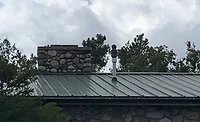
Details for Standing Seam Metal Roofs
As is the case with other roof systems, flashings and penetrations are the most common points of moisture intrusion on standing seam metal roof systems.
As is the case with other roof systems, flashings and penetrations are the most common points of moisture intrusion on standing seam metal roof systems. The elimination of moisture entry can be achieved through the proper application of flashings at all vertical transitions and penetrations. This article addresses application requirements at the most common flashing points and provides suggested techniques. Flashing application should be in compliance with the metal system manufacturer’s latest printed specifications.
The most critical component of a standing seam metal roof system - other than metal panel seams - is at vertical transitions and penetrations. Industry analysis has indicated that leaks in metal roof systems predominantly occur at metal panel joints and terminations.
Exterior Gutters
The most important design and application issue at exterior gutters is the deflection of water backing up under the panels. This can occur from clogged gutters or - more commonly - from the application of undersized gutters. Gutter width should be determined by a calculation that considers the average rainfall rate in the geographic area and the size and slope of the roof area. Larger gutter widths will accommodate more flow and are less likely to back up during heavy precipitation events. The application of heated gutter strips and snow guards can eliminate ice buildup in colder climates. The application of gutter guards in heavily wooded areas further reduces the threat of water backup caused by gutters becoming clogged with vegetation and debris.
The most common application technique at these points is the insertion of a trapezoidal closure between the gutter and the panels. This is typically fabricated from foam or plastic and should be installed in accordance with the metal system manufacturer’s latest printed specifications. The most important application element is in providing an adequate seal through adhesion. This eliminates the potential of wind blow-off or moisture infusion at unadhered openings.
Gables, Rakes and Ridges
The critical issue regarding the application of gable or rake trims is that they are designed to move with the free-flowing metal panels. This is typically accomplished by attaching cleats to the wall panels that allow for the trim to expand with the panel.
Standing seam metal roof panels are typically through-fastened at the eave, which causes thermal movement to accumulate at the ridge. Openings that occur from this type of movement are eliminated with the application of metal ridge covers that are attached to the metal panels. The metal ridge covers are fabricated to accommodate movement and flex as the panels expand and contract. The panel closures serve as weatherproofing protection and - when properly installed - eliminate moisture intrusion.
Penetrations
The applicator should always use penetration materials provided by the metal system manufacturer and apply these materials in accordance with the manufacturer’s requirements. The most important material component is the use of proper adhesives.
Asphalt-based adhesives and cutbacks are typically not compatible with metal systems and should be avoided even in emergency repair situations. Consult the manufacturer for proper application and repair materials. Most manufacturers allow the use of rubber bootjacks for all round penetrations, eliminating the application of pitch pans. It is critical that all penetration materials are applied within the flat pan area of the metal panel and are not extended on to the rib.
Roof Curbs
There are two common types of roof curbs used with metal roof systems. The nonstructural units are designed with the same configuration as the metal panel and move with the panel. These types of curbs are utilized on lighter units such as skylights and hatches. Structural units are applied to support heavier equipment such as HVAC units. In these cases a double curb is used with a structural curb secured to the panels and a second floating curb applied over the panels to accommodate movement.
The flashing termination is similar in both instances. At the high side transition point of the curb, an end cap and water diverter must be applied to divert water channeled from the metal panels away from the curb.
End Wall Transitions
In instances where metal roof systems are installed on structures that have parapet or adjoining walls, a two-piece flashing is used for the parallel transition. In this detail the metal base flashing assembly is secured directly to the parallel metal panel and set freely up the wall. The base flashing becomes part of the metal panel and moves with the panel. A metal counterflashing is secured to the wall and covers the base flashing. The independence of the two flashing materials allows for appropriate expansion and contraction.
Some manufacturers require the use of nonmetallic membranes at high-side transitions. These flexible membrane materials are applied to the top of the metal panel closure and are secured to the perpendicular wall. The flexible membranes are typically manufactured with a metallic apron flashing that provides added moisture protection and accommodates foot traffic. These types of materials are also considered to act as air seals.
The proper application of materials at these vulnerable points will eliminate moisture intrusion and prevent against costly callbacks, leading to a satisfied client and a successful project.
John A. D’Annunzio is president of Paragon Roofing Technology Inc. in Southfield, Michigan.
For more information, call 248 936 8744, e-mail john_paragon@ameritech.net, or visit www.paragonroofingtech.com.
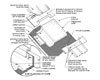
Equipment curb and cricket flashing for penetrations 24 inches or greater. (Detail Courtesy of the Western States Roofing Contractors Association.)
As is the case with other roof systems, flashings and penetrations are the most common points of moisture intrusion on standing seam metal roof systems. The elimination of moisture entry can be achieved through the proper application of flashings at all vertical transitions and penetrations. This article addresses application requirements at the most common flashing points and provides suggested techniques. Flashing application should be in compliance with the metal system manufacturer’s latest printed specifications.
The most critical component of a standing seam metal roof system - other than metal panel seams - is at vertical transitions and penetrations. Industry analysis has indicated that leaks in metal roof systems predominantly occur at metal panel joints and terminations.
Exterior Gutters
The most important design and application issue at exterior gutters is the deflection of water backing up under the panels. This can occur from clogged gutters or - more commonly - from the application of undersized gutters. Gutter width should be determined by a calculation that considers the average rainfall rate in the geographic area and the size and slope of the roof area. Larger gutter widths will accommodate more flow and are less likely to back up during heavy precipitation events. The application of heated gutter strips and snow guards can eliminate ice buildup in colder climates. The application of gutter guards in heavily wooded areas further reduces the threat of water backup caused by gutters becoming clogged with vegetation and debris.
The most common application technique at these points is the insertion of a trapezoidal closure between the gutter and the panels. This is typically fabricated from foam or plastic and should be installed in accordance with the metal system manufacturer’s latest printed specifications. The most important application element is in providing an adequate seal through adhesion. This eliminates the potential of wind blow-off or moisture infusion at unadhered openings.
Gables, Rakes and Ridges
The critical issue regarding the application of gable or rake trims is that they are designed to move with the free-flowing metal panels. This is typically accomplished by attaching cleats to the wall panels that allow for the trim to expand with the panel.
Standing seam metal roof panels are typically through-fastened at the eave, which causes thermal movement to accumulate at the ridge. Openings that occur from this type of movement are eliminated with the application of metal ridge covers that are attached to the metal panels. The metal ridge covers are fabricated to accommodate movement and flex as the panels expand and contract. The panel closures serve as weatherproofing protection and - when properly installed - eliminate moisture intrusion.
Penetrations
The applicator should always use penetration materials provided by the metal system manufacturer and apply these materials in accordance with the manufacturer’s requirements. The most important material component is the use of proper adhesives.
Asphalt-based adhesives and cutbacks are typically not compatible with metal systems and should be avoided even in emergency repair situations. Consult the manufacturer for proper application and repair materials. Most manufacturers allow the use of rubber bootjacks for all round penetrations, eliminating the application of pitch pans. It is critical that all penetration materials are applied within the flat pan area of the metal panel and are not extended on to the rib.
Roof Curbs
There are two common types of roof curbs used with metal roof systems. The nonstructural units are designed with the same configuration as the metal panel and move with the panel. These types of curbs are utilized on lighter units such as skylights and hatches. Structural units are applied to support heavier equipment such as HVAC units. In these cases a double curb is used with a structural curb secured to the panels and a second floating curb applied over the panels to accommodate movement.
The flashing termination is similar in both instances. At the high side transition point of the curb, an end cap and water diverter must be applied to divert water channeled from the metal panels away from the curb.
End Wall Transitions
In instances where metal roof systems are installed on structures that have parapet or adjoining walls, a two-piece flashing is used for the parallel transition. In this detail the metal base flashing assembly is secured directly to the parallel metal panel and set freely up the wall. The base flashing becomes part of the metal panel and moves with the panel. A metal counterflashing is secured to the wall and covers the base flashing. The independence of the two flashing materials allows for appropriate expansion and contraction.
Some manufacturers require the use of nonmetallic membranes at high-side transitions. These flexible membrane materials are applied to the top of the metal panel closure and are secured to the perpendicular wall. The flexible membranes are typically manufactured with a metallic apron flashing that provides added moisture protection and accommodates foot traffic. These types of materials are also considered to act as air seals.
The proper application of materials at these vulnerable points will eliminate moisture intrusion and prevent against costly callbacks, leading to a satisfied client and a successful project.
John A. D’Annunzio is president of Paragon Roofing Technology Inc. in Southfield, Michigan.
For more information, call 248 936 8744, e-mail john_paragon@ameritech.net, or visit www.paragonroofingtech.com.
Looking for a reprint of this article?
From high-res PDFs to custom plaques, order your copy today!
.webp?height=740&t=1767036885&width=auto "Header - BE 1170x658 (002).png")

.webp?height=740&t=1755781744&width=auto "KEE(2).png")