What's Cool About Garden Roofing?
Designing and choosing a sustainable roofing system is not a new idea to architects. Garden roofing systems give architects another avenue of design while providing building owners the best of all worlds - beauty, innovation and energy efficiency.
Designing and choosing a sustainable roofing system is not a new idea to architects. Garden roofing systems give architects another avenue of design while providing building owners the best of all worlds - beauty, innovation and energy efficiency.
Types of Garden Roofs
There are three varieties of garden roofs: intensive, semi-intensive and extensive systems. A few differences between the three systems are the amounts of soil and growth medium used and plant types.
Intensive systems can require 10 inches or more of soil and growth medium. These systems are usually directly applied over the entire roof deck and consist of many layers: root barriers, water retention liners, complex irrigation systems, soil, fabric and vegetation. These systems can accommodate full gardens with trees, shrubs and other voluminous plants, and require irrigation and the ability to hold a large reservoir. Since there are usually larger plants on intensive roofs, these systems require more watering and monitoring so there are no stray seedlings growing where they shouldn’t be.
Semi-intensive systems require between 6 to 10 inches of soil and growth medium. This type usually contains a reservoir layer larger than extensive systems but less comprehensive than the complicated irrigation and reservoirs of intensive systems. The vegetation this system can accommodate includes grasses, bulbs, perennials, small shrubs and smaller varieties of evergreens.
An extensive system requires less than 6 inches of soil and growth medium and is the least dense option of the three systems. The types of plants typically used for extensive systems are hardy plants, small shrubs and mosses that are drought resistant and can stand up to high winds and other harsh weather. Some extensive garden roofs are designed to only need once-a-year weeding and an application of time-release fertilizers. Some extensive systems on the market are cultivated in modular garden trays with preassembled layers of soil, simple irrigation and plants, which allows allocation of the vegetated trays into any desired layout.
When choosing a garden roof, the building’s weight-bearing capacity is the primary consideration. As such, lightweight EPDM and TPO membranes fully adhered to a high-density cover board can serve as a durable, reliable foundation to protect the roof from high foot traffic often associated with garden systems. A single-ply membrane will also create an all-important watertight barrier for the rooftop under the garden system.
Intensive systems are heavier, but with more soil you are afforded more options when it comes to plant variety. Semi-intensive systems are often seen as the compromise of the two ends of the garden roofing spectrum by supplying more planting options than extensive systems while not being as heavy and complicated as intensive systems.
Extensive systems are low-weight bearing and are available in tray systems. Transporting lightweight extensive modular garden trays is simpler than transporting numerous materials to compose a traditional built-in garden system. If you specify extensive modular garden tray systems, it is best to seek out trays that are pre-vegetated, grown off-site and monitored until maturity. Development of built-in sprinkler systems providing consistent watering to grow vegetation onsite until maturity are in the works, but pre-vegetated, grown offsite modules are the best option currently available.
No matter the system, it is best to choose mature vegetation whenever possible because mature vegetation that covers about 95 percent of soil will require less maintenance in the long run. Whatever system is installed, choose plants that will acclimate to the environment and help maintain the desired soil coverage on your rooftop garden.
As with all roof systems, rooftop access by maintenance personnel remains a concern. Using extensive modular garden trays with painted pavers that blend with the landscaping is an easy and functional way to disguise footpaths and give the illusion of a seamless vegetated roof. Also, if any roofing substrate issues arise, modular garden trays can be easily removed to allow maintenance workers to gain access immediately.
 Green Benefits
Some important green benefits of garden roof systems are energy savings, reducing noise filtration, filtering stormwater runoff and bettering the surrounding environment.
Installation of vegetated roofing for your project, especially in an urban setting, can increase energy savings. Garden roofs act as insulation to help lower building temperatures in the warmer months by providing natural shade, and they increase heat retention in the colder months. Decreasing building temperatures can lead to reduced cooling costs, with energy savings depending on building size, climate and type of green roof. According to Environment Canada, a department funded by the Canadian federal government that monitors conservation of natural and renewable resources and coordinates environmental policies and programs, a garden roof with about 10 centimeters (3.9 inches) of growth would reduce cooling needs by 25 percent. In addition, garden roofs can increase a building’s thermal efficiency. Research by the School of Construction and the Environment at British Columbia Institute of Technology conducted field experiments that found a 6-inch extensive green roof can prevent heat losses by 26 percent compared to a traditional roofing membrane.
Garden roofs not only provide benefits to the building owner and occupants but also to the surrounding environment. Many state and local governments offer building certification credit incentives through the LEED Green Building Rating System to reduce Urban Heat Island Effect (UHIE) and encourage green roof projects. UHIE commonly occurs in major metropolitan areas because natural land cover is replaced with pavement, buildings and other infrastructures. This can cause temperatures to increase as much as 10 degrees Fahrenheit above the natural land surroundings, according to the EPA. Vegetative roofing can also reinstate the natural cooling effects of shading and evaporation in an urban environment.
 Another way garden roofs benefit the surrounding community is by re-oxygenating the air. According to the city of Chicago’s “Green Roof Fact Sheet,” one square meter (10.76 square feet) of vegetated roof can remove about 0.2 kilogram of particles from the air every year and improve air quality.
Garden roofs can help purify and reduce stormwater runoff because bacteria and fungi in plant roots trigger an ecological process that employs natural filtering methods while absorbing excess rainwater. Intensive systems tend to have higher water retention and filtration because of large amounts of soil. Extensive systems retain less water because they have less soil and do not require intricate irrigation systems.
Cost Advantages
Garden systems do initially cost more per square foot than other traditional roofing systems. However, if maintained properly, the vegetation can help extend the roof life expectancy up to twice as long as traditional roofs without garden systems.
Vegetated garden roofs can reduce thermal and ultraviolet (UV) degradation, which protects the roofing membrane and lengthens the life of the roofing system. What may cost you more up front will be a big cost savings in the long term.
Where cost or warranty considerations are a concern, check with the roofing membrane manufacturer on options for installing a suitable substrate now that will allow the owner the flexibility to upgrade to a garden roof system as funds become available and without any warranty disruption.
Aesthetic Benefits
Some have steered clear of garden roofing options because past systems had a reputation of showing unattractive gridlike patterns, but they have now been redeemed by the next generation of live modular garden tray systems. Some extensive modular garden trays permit plants to grow taller so that the trays themselves are virtually hidden. Plus, some companies make modular trays out of recyclable materials.
A vegetated system can be installed alongside pavers to create a cohesive garden patio that can be an amenity to a building. Rooftop gardens provide building owners with additional usable square footage; this is especially important when space is limited in cities.
Garden roofing is now at the forefront of cool roofing advancements. Aesthetic beauty, long-term capital savings and environmental benefits make garden roofing systems a great choice for nearly any building.
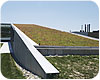
Rooftop gardens provide building owners with additional usable square footage. This is especially important when space is limited in cities. Multi-tiered buildings with vegetative roofing offer occupants and viewers aesthetic beauty in an urban environment. Photo courtesy of Firestone Building Products.
Designing and choosing a sustainable roofing system is not a new idea to architects. Garden roofing systems give architects another avenue of design while providing building owners the best of all worlds - beauty, innovation and energy efficiency.
Types of Garden Roofs
There are three varieties of garden roofs: intensive, semi-intensive and extensive systems. A few differences between the three systems are the amounts of soil and growth medium used and plant types.
Intensive systems can require 10 inches or more of soil and growth medium. These systems are usually directly applied over the entire roof deck and consist of many layers: root barriers, water retention liners, complex irrigation systems, soil, fabric and vegetation. These systems can accommodate full gardens with trees, shrubs and other voluminous plants, and require irrigation and the ability to hold a large reservoir. Since there are usually larger plants on intensive roofs, these systems require more watering and monitoring so there are no stray seedlings growing where they shouldn’t be.
Semi-intensive systems require between 6 to 10 inches of soil and growth medium. This type usually contains a reservoir layer larger than extensive systems but less comprehensive than the complicated irrigation and reservoirs of intensive systems. The vegetation this system can accommodate includes grasses, bulbs, perennials, small shrubs and smaller varieties of evergreens.
An extensive system requires less than 6 inches of soil and growth medium and is the least dense option of the three systems. The types of plants typically used for extensive systems are hardy plants, small shrubs and mosses that are drought resistant and can stand up to high winds and other harsh weather. Some extensive garden roofs are designed to only need once-a-year weeding and an application of time-release fertilizers. Some extensive systems on the market are cultivated in modular garden trays with preassembled layers of soil, simple irrigation and plants, which allows allocation of the vegetated trays into any desired layout.
When choosing a garden roof, the building’s weight-bearing capacity is the primary consideration. As such, lightweight EPDM and TPO membranes fully adhered to a high-density cover board can serve as a durable, reliable foundation to protect the roof from high foot traffic often associated with garden systems. A single-ply membrane will also create an all-important watertight barrier for the rooftop under the garden system.
Intensive systems are heavier, but with more soil you are afforded more options when it comes to plant variety. Semi-intensive systems are often seen as the compromise of the two ends of the garden roofing spectrum by supplying more planting options than extensive systems while not being as heavy and complicated as intensive systems.
Extensive systems are low-weight bearing and are available in tray systems. Transporting lightweight extensive modular garden trays is simpler than transporting numerous materials to compose a traditional built-in garden system. If you specify extensive modular garden tray systems, it is best to seek out trays that are pre-vegetated, grown off-site and monitored until maturity. Development of built-in sprinkler systems providing consistent watering to grow vegetation onsite until maturity are in the works, but pre-vegetated, grown offsite modules are the best option currently available.
No matter the system, it is best to choose mature vegetation whenever possible because mature vegetation that covers about 95 percent of soil will require less maintenance in the long run. Whatever system is installed, choose plants that will acclimate to the environment and help maintain the desired soil coverage on your rooftop garden.
As with all roof systems, rooftop access by maintenance personnel remains a concern. Using extensive modular garden trays with painted pavers that blend with the landscaping is an easy and functional way to disguise footpaths and give the illusion of a seamless vegetated roof. Also, if any roofing substrate issues arise, modular garden trays can be easily removed to allow maintenance workers to gain access immediately.
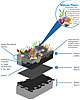
Extensive systems are low weight bearing and are even available in tray systems. This modular system diagram is courtesy of LiveRoof, LLC.
Some important green benefits of garden roof systems are energy savings, reducing noise filtration, filtering stormwater runoff and bettering the surrounding environment.
Installation of vegetated roofing for your project, especially in an urban setting, can increase energy savings. Garden roofs act as insulation to help lower building temperatures in the warmer months by providing natural shade, and they increase heat retention in the colder months. Decreasing building temperatures can lead to reduced cooling costs, with energy savings depending on building size, climate and type of green roof. According to Environment Canada, a department funded by the Canadian federal government that monitors conservation of natural and renewable resources and coordinates environmental policies and programs, a garden roof with about 10 centimeters (3.9 inches) of growth would reduce cooling needs by 25 percent. In addition, garden roofs can increase a building’s thermal efficiency. Research by the School of Construction and the Environment at British Columbia Institute of Technology conducted field experiments that found a 6-inch extensive green roof can prevent heat losses by 26 percent compared to a traditional roofing membrane.
Garden roofs not only provide benefits to the building owner and occupants but also to the surrounding environment. Many state and local governments offer building certification credit incentives through the LEED Green Building Rating System to reduce Urban Heat Island Effect (UHIE) and encourage green roof projects. UHIE commonly occurs in major metropolitan areas because natural land cover is replaced with pavement, buildings and other infrastructures. This can cause temperatures to increase as much as 10 degrees Fahrenheit above the natural land surroundings, according to the EPA. Vegetative roofing can also reinstate the natural cooling effects of shading and evaporation in an urban environment.
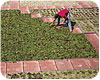
Using extensive modular garden trays with painted pavers that blend with the landscaping is an easy and functional way to disguise footpaths and give the illusion of a seamless vegetated roof. Photo courtesy of Firestone Building Products.
Garden roofs can help purify and reduce stormwater runoff because bacteria and fungi in plant roots trigger an ecological process that employs natural filtering methods while absorbing excess rainwater. Intensive systems tend to have higher water retention and filtration because of large amounts of soil. Extensive systems retain less water because they have less soil and do not require intricate irrigation systems.
Cost Advantages
Garden systems do initially cost more per square foot than other traditional roofing systems. However, if maintained properly, the vegetation can help extend the roof life expectancy up to twice as long as traditional roofs without garden systems.
Vegetated garden roofs can reduce thermal and ultraviolet (UV) degradation, which protects the roofing membrane and lengthens the life of the roofing system. What may cost you more up front will be a big cost savings in the long term.
Where cost or warranty considerations are a concern, check with the roofing membrane manufacturer on options for installing a suitable substrate now that will allow the owner the flexibility to upgrade to a garden roof system as funds become available and without any warranty disruption.
Aesthetic Benefits
Some have steered clear of garden roofing options because past systems had a reputation of showing unattractive gridlike patterns, but they have now been redeemed by the next generation of live modular garden tray systems. Some extensive modular garden trays permit plants to grow taller so that the trays themselves are virtually hidden. Plus, some companies make modular trays out of recyclable materials.
A vegetated system can be installed alongside pavers to create a cohesive garden patio that can be an amenity to a building. Rooftop gardens provide building owners with additional usable square footage; this is especially important when space is limited in cities.
Garden roofing is now at the forefront of cool roofing advancements. Aesthetic beauty, long-term capital savings and environmental benefits make garden roofing systems a great choice for nearly any building.
Looking for a reprint of this article?
From high-res PDFs to custom plaques, order your copy today!
.webp?height=740&t=1767036885&width=auto "Header - BE 1170x658 (002).png")

.webp?height=740&t=1755781744&width=auto "KEE(2).png")