Building Enclosure logo
search
cart
facebook twitter linkedin youtube instagram Spotify Podcasts Apple Podcasts Spotify Podcasts Apple Podcasts
  • Sign In
  • Create Account
  • Sign Out
  • My Account
Building Enclosure logo
  • NEWS
    • Breaking News
  • SECTIONS
    • Columns
    • Project Profiles
    • Trade Shows
    • Sponsor Insights
  • SYSTEM DESIGNS
    • Low-Slope Roofs
    • Pitched Roofs
    • Metal Roofing Materials
    • Waterproofing
    • Sustainability
    • Insulation
    • Exterior Claddings
    • Wall Systems
    • Building Envelope
  • BLOG
    • The BE Blog
  • MEDIA
    • Podcasts
    • Webinars
    • Quiz
    • Videos
    • Polls
    • Interactive Spotlights
    • Newsletter
    • Photo Galleries
  • DIRECTORIES
    • Directory: Blue Book
    • Directory: Roofing Resource
  • PRODUCTS
  • TECHNICAL
    • Codes
      • Waterproofing
      • Roofing
    • Details
      • Waterproofing
      • Roofing
  • CONTINUING ED
  • ABOUT
    • Advertise
      • Editorial Calendar
    • Contact
    • eMag Archive Issues
  • SIGN UP!
Metal Roofing MaterialsPitched Roofs

What About Roofs in the South?
By Paul Scelsi
Ice Dams
November 2, 2015

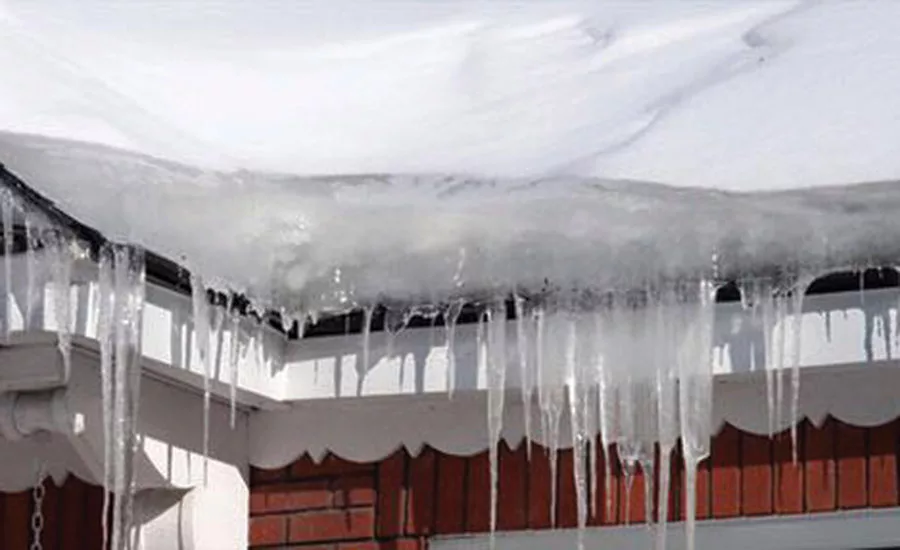
There’s no denying that cold temperatures, snowfall and eventual ice dams are more frequent, harsh and obvious in northern climates. But that does not remove the need for balanced attic ventilation – and attic insulation – during the winter in Texas, Georgia, Florida or any “southern” climate. So the next time a homeowner dismisses the contractor’s recommendation to improve the airflow inside the attic for year-round benefits, remind them that Mother Nature isn’t picky about the zip code of a house it visits or the month on the calendar.

“I live in the South, too. And although we obviously don’t get the same amount of snow and ice as the North, we do get an occasional heavy snow and a few ice storms,” said Jake Jacobson, vice president of SF5 Construction in Little Elm, Texas.

“I have seen ice on the north side of the roof in early fall. Not only is this adequate time for a potential leak to occur, but when the ice melts rapidly, the falling icicles create a dangerous situation,” Jacobson tells homeowners. “It only takes one storm to create an ice dam that could cause a leak.”

Then there’s the matter of dealing with the water vapor that the occupants of a house generate and where that water vapor goes in the winter.

On average, a family of four generates two to four gallons of water vapor each day just by living inside the house (Moisture Control in Buildings, Heinz R. Trechsel). One study measured up to six gallons! (Cooperative Extension Service of Clemson University, Linda L. Redmann).

If that warm water vapor (which is naturally drawn to the colder attic air during the cooler months of the year up north and down south) condenses on colder surfaces inside the attic, it can drip onto the insulation, potentially reducing the insulation’s R-Value.

“To help fight condensation from forming on the attic side of the roof’s deck (the iced tea effect), it’s important to ventilate the attic in the winter,” says Dean Estoll, project manager at Mike Huddleston Roofing Systems in Mansfield, Texas. “That condensation could lead to a variety of issues including mold and deterioration of the rafters or roof deck.”

If nothing else, remind homeowners that it’s already necessary to properly balance the attic ventilation system to help fight heat buildup. By default, the balanced system will now also fight potential winter-time problems.

“Here in the South, most homeowners know it’s important to ventilate their attic for heat purposes, but it’s also important to ventilate for moisture as well, and that’s primarily a winter-time issue,” says Nathan Speers, sales manager at Atlanta Reroof Specialists in Roswell, Ga. “By properly ventilating your attic in the summer, Mr. Homeowner, we can keep it cooler to fight heat buildup and also fight the moisture in the winter.”

Jacobson emphasized that geography shouldn’t trump common sense when it comes to roof systems.

“It doesn’t matter if you have a house in northern Quebec or southern Texas, proper attic ventilation is proper attic ventilation,” he said. 

KEYWORDS: attics gutters residential building snow and ice ventilation

Share This Story

Looking for a reprint of this article?
From high-res PDFs to custom plaques, order your copy today!


Paul Scelsi is Trade Marketing Manager at Air Vent and the leader of its “Ask the Expert™” seminars. He is also chairman of the Roof Assembly Ventilation Coalition, a division of the Asphalt Roofing Manufacturers Association which represents vent manufacturers, the design community and property owners regarding best practices for roof ventilation in the regulatory arena. For more information, visit www.ravcoalition.org.

Recommended Content

JOIN TODAY
to unlock your recommendations.

Already have an account? Sign In

  • bar graph shows LEED v4/LEED v5/LEED v6 in various colors

    When Will LEED v4 / v4.1 and LEED v5 Expire?

    The latest version of the LEED rating system, LEED v5, is...
    Sustainability
    By: Daniel Overbey
  • Celebrating Women In AEC-2026

    Celebrating Women in The AEC Industry Part 1

    A round-up of women in the design, engineering and...
    Sustainability
    By: Lindsay Lewis
  • KEE membrane application on a roof

    A Beginner’s Guide to Single-Ply Roofing Membranes

    While PVC and TPO appear extremely similar, the chemistry...
    Low-Slope Roofs
    By: Peter Gross
Manage My Account
  • Sign up for the Newsletter
  • Online Registration
  • Manage My Preferences
  • Registration Customer Service

More Videos

Sponsored Content

Sponsored Content is a special paid section where industry companies provide high quality, objective, non-commercial content around topics of interest to the Building Enclosure audience. All Sponsored Content is supplied by the advertising company and any opinions expressed in this article are those of the author and not necessarily reflect the views of Building Enclosure or its parent company, BNP Media. Interested in participating in our Sponsored Content section? Contact your local rep!

close
  • 2 construction workers and a DEXcell panel
    Sponsored byDEXcell Roof Boards

    Designing Low-Slope Roofs for Resilience

  • Bell Bank headquarters in Fargo, North Dakota
    Sponsored bySto Corp.

    Drained and Back-Ventilated Rainscreens vs Pressurized-Equalized Rainscreens

  • A construction worker using DEXcell roof boards
    Sponsored byDEXcell Roof Boards

    The Hidden Strength of Low-Slope Roof Systems: Why Roof Cover Boards Matter

Popular Stories

a man wearing a mask installs insulation into a wall system

Quiet Rooms and Healthier Air: A Second Look at What Goes Inside the Wall Cavity

Canalino Elementary School and Canalino Family School exterior

Daylighting Design to Support Rapidly Growing Trend in Modular Building Construction

construction workers on a roof, plane flies in background

Why Specifications Are Becoming the Next Critical Layer of Construction Compliance

Building Enclosure Newsletter

BE Poll

Events

June 17, 2025

Addressing Condensation in Low-Slope Roof Assemblies

Credits: 1 AIA LU/HSW; 0.1 ICC CEU; 1 IIBEC CEH; 0.1 IACET CEU

On Demand In modern roofing systems, vapor retarders and air barriers do more than just minimize air leakage—they’re essential to maximizing performance and longevity. This engaging course dives into the next generation of moisture control: permeable vapor retarders and air barriers. Discover how these cutting-edge technologies are transforming low-slope roofing assemblies by improving energy efficiency, managing moisture, and boosting wind uplift resistance.

April 9, 2026

Strategies for High-Performance Below-Grade Waterproofing

Credits: 1 AIA LU/HSW ; 1 IIBEC CEH; 0.1 IACET CEU

On-Demand Designing a high-performance building enclosure requires more than just surface-level protection; it demands a rigorous, performance-based mastery of below-grade water and gas mitigation. This discussion will provide an expert-level analysis of below-grade waterproofing within the comprehensive framework of the high-performance building enclosure.

View All Submit An Event

Products

Plaster and Drywall Assemblies Manual

Plaster and Drywall Assemblies Manual

This is a comprehensive manual that goes beyond codes and standards, providing expert guidance in design, detailing, material selection and troubleshooting for plaster and drywall.

See More Products

Related Articles

  • A SOUTH FORTY featuring Duvall Decker

    National Building Museum Presents Contemporary Architecture in the American South

    See More
  • Life on Roofs in the United States

    See More
  • What's Cool About Garden Roofing?

    See More

Related Products

See More Products
  • energy modeling.jpg

    Energy Modeling and Computations in the Building Envelope

  • 978-0-7643-3022-3.jpg

    Award-winning Green Roof Designs: Green Roofs for Healthy Cities

  • 0-7643-2189-7.jpg

    Green Roofs: Ecological Design and Construction

See More Products

Events

View AllSubmit An Event
  • August 12, 2025

    Sustainable Steel Framing in the Building Envelope

    Credits: 1 AIA LU/HSW; 0.1 ICC CEU; 1 IIBEC CEH On-Demand In this webinar, participants will get a taste of what it takes to make steel today, in the cleaner, high-tech factories that are very different from the steel mills of decades ago, and will see how their specification language and design practices can help reduce the carbon footprint of buildings using steel framing.
View AllSubmit An Event
×

Enhance your expertise with unparalleled insights.

Join thousands of building professionals today. Shouldn’t you know what they know?

SUBSCRIBE TODAY!
  • RESOURCES
    • Advertise
    • Contact Us
    • Store
    • Want More
  • SIGN UP TODAY
    • Create Account
    • Newsletter
    • Customer Service
    • Manage Preferences
  • SERVICES
    • Marketing Services
    • Reprints
    • Market Research
    • List Rental
    • Survey/Respondent Access
  • STAY CONNECTED
    • LinkedIn
    • Facebook
    • Instagram
    • YouTube
    • X
  • PRIVACY
    • PRIVACY POLICY
    • TERMS & CONDITIONS
    • DO NOT SELL MY PERSONAL INFORMATION
    • PRIVACY REQUEST
    • ACCESSIBILITY

Copyright ©2026. All Rights Reserved BNP Media, Inc. and BNP Media II, LLC.

Design, CMS, Hosting & Web Development :: ePublishing