Ecosystem Services and the Emergence of Site Commissioning
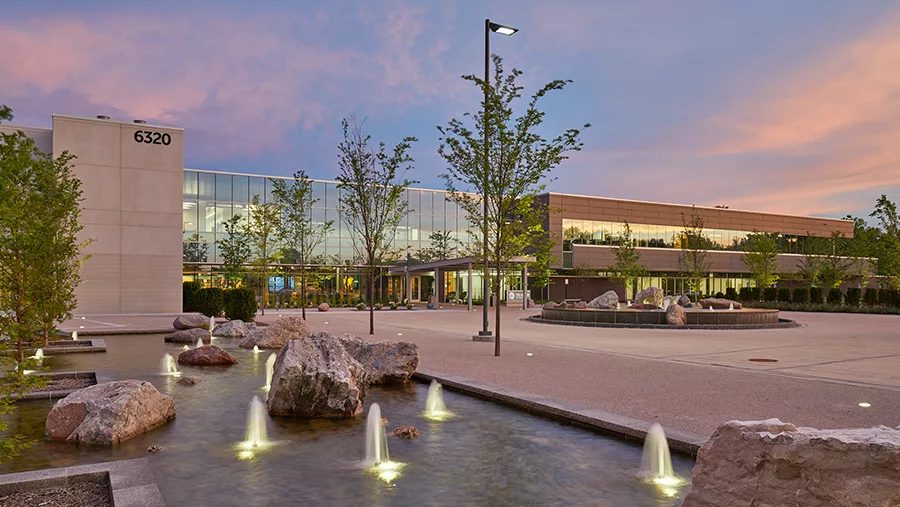
What is the public health, safety, and welfare stake in landscape design?
It is a question that the design profession has long considered; and yet recent legislative and regulatory threats to landscape architecture stand as evidence that the profession needs to be better articulate the health, safety, and welfare stake of sites to those outside of the vocational body.
The American Society of Landscape Architects (ASLA) upholds and clarifies that, "Landscape architecture affects public health, safety, and welfare through design, analysis, management, and stewardship of the natural and built environment."
As evidenced by the recent Landscape Architecture Technical Information Series (LATIS) white paper, A Landscape Performance + Metrics Primer for Landscape Architects: Measuring Landscape Performance on the Ground, emerging research is demonstrating that the quality of human life relies on the ecosystem and social services that our natural and built systems offer. These services are increasingly being lessened in the built environment through diminished green space, reduced biodiversity, poor air quality, lack of solar access, increased noise pollution, contaminated aquifers, and a general shortage of stimuli pertaining to our innate affinity for nature, among other deficiencies.
Recently, there has been an increasing focus within the site/building design community on quantifying ecosystem and social services in order to utilize data to better communicate the value of outdoor spaces of both the built and natural variety. The ability to measure, verify, and leverage such data is critical to convey the multifaceted value of sustainable landscape solutions and effectively articulate the value proposition of measuring and verifying landscape performance metrics in order to better ensure the delivery of ecosystem and social services. This is not unlike the emerging imperative in the green building community toward measurement and verification of performance metrics.
Defining Ecosystem Services
Ecosystem services (which is presumed here to include social services) may seem to be an esoteric term covering an expansive scope regarding the benefits people derive from the natural ecological processes working around us. The European Environment Agency (EEA) maintains a "common classification of ecosystem services" (or CICES) and The Economics of Ecosystems and Biodiversity (TEEB) Ecological and Economic Foundations (2010) offers further definition of the breadth and scope of ecosystem services. However, the U.S. General Services Administration (GSA) offered an especially cogent definition in a recent white paper, which is adapted in Figure 1.
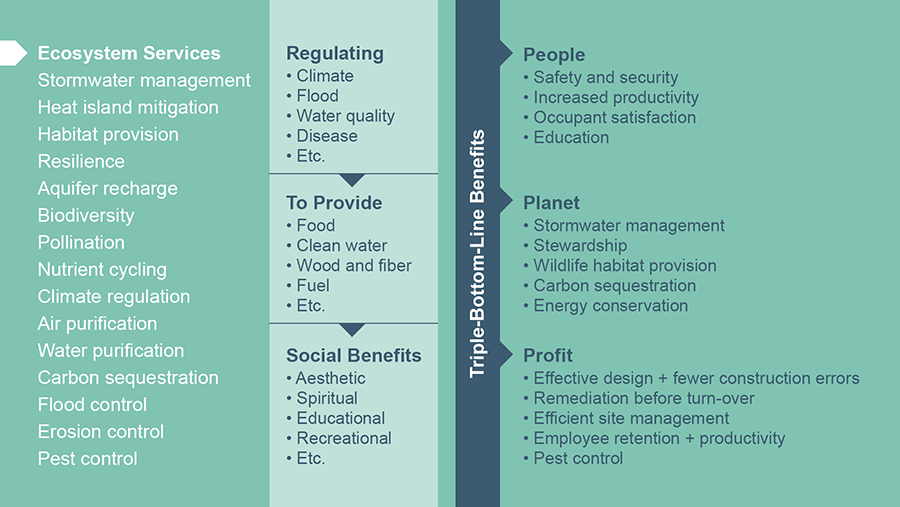
Figure 1: Ecosystem Services and Benefits.
Adapted from U.S. General Services Administration (GSA) Site Commissioning White Paper (2017). Figure by Daniel Overbey.
Categorizing Ecosystem Services
As clarified by the GSA and reinforced by EEA and TEEB, ecosystem services are generally categorized into four different groups:
- Provisioning: goods delivered by ecosystems (e.g. food, water, wood, medicine);
- Regulating: direct environmental benefits of ecosystems (e.g. climate regulation, water purification, pollination, erosion control);
- Cultural: direct social benefits (e.g. tourism, recreation, spirituality); and
- Supporting: ecological functions that sustain other services (e.g. biodiversity, habitat).
Computer modeling can be utilized to measure certain services, such as carbon sequestration or direct economic returns. Modeling tools include Urban Forest Effects Model (UFORE), i-Tree Eco, and other platforms. Collectively, these tools offer a more holistic approach to the cost-benefit of land development and management solutions.
HSW Implications of Ecosystem Services
Ecosystem services cultivate ecological health. As such, these services constitute the unobtrusive foundation of daily life and herein lies the more direct public health, safety, and welfare implication. Consider the following examples:
- Trees help regulate local climate by providing shade an acting as windbreaks. [Ex: According to data from NASA, the presence or scarcity of vegetation is an essential factor in urban heating.]
- Through evaporation, transpiration, and the uptake and storage of carbon, plants moderate the climate of the world and provide a breathable atmosphere. [Ex: See the quantified ecological benefits of tree via the New York City Street Tree Map.]
- Thousands of different pollinator species visit their respective flowers and promote the growth of myriad plants and crops. [Ex: According to Forbes, pollinators contribute between $235 and $577 billion dollars worth of annual global food production.]
- Soils and vegetation purify stormwater as it seeps through to groundwater and underground aquifers. [Ex: According to the EPA, natural attenuation through biological processes effectively remediate groundwater and reduce human health risks by cleaning natural water sources.]
- Emerging research is indicating significant metal health benefits form regular access to natural environments [Ex: A recent New York Times piece examined the mental health benefits of "forest bathing."] [Ex: A study from the University of Adelaide suggests that native flora in urban environments may be a cost effective way to improve public health.] [Ex: A recent IUCN assessment of London’s green spaces found that the city saves $452 million USD per year from improved mental health and $710 million USD per year due to better physical health.]
- Noise mitigating impacts of certain landscape solutions can offer ecosystem and human health benefits [Ex: The New Yorker recently examined research showing that noise pollution is detrimental to human and environmental health]
The list could go on. Ecosystem services occur at a variety of scales and habitats ranging from equatorial rainforests to city parks. Yet, because these services occur largely unseen in the backdrop of our day-to-day experiences, they can be difficult to measure and monetize - therefore, causing their value to be often ignored during project design and budgeting.
The solution? Ecosystem services must be measured in order to effectively articulate their total value proposition.
Landscap e Performance Metrics and Site Commissioning
Leveraging a range to tools and solutions available today, the site/building design and construction community is positioned to effectively assess landscape performance and determine how that information can be best used to improve the design and management of the landscape to sustain or improve performance over time.
The concept of "site commissioning" (Site Cx) is an emerging practice - and new facet relating to a comprehensive or "total building commissioning" (TBC) process.
Mechanical and envelope commissioning are becoming common in model codes, standards, and rating systems. For instance, the 2018 International Green Construction Code (IgCC) and LEED v4/v4.1 require a basic level of commissioning for a building's mechanical systems; and both prompt project teams to define building enclosure performance requirements. Building enclosure commissioning (BECx) in accordance with NIBS Guideline 3 remains optional in both IgCC and LEED; however, IgCC does require building envelope air-tightness testing. However, neither IgCC or LEED make mention of landscape performance metrics - at least, not yet.
For those interested in folding landscape performance metrics into a project's commissioning plan, there are a range of reasonable ongoing field measurements to consider during the execution of a site/building project. The GSA's Site Commissioning White Paper offers a detailed introduction into Site Cx along with an assessment metrics chart that includes data types, performance levels, phase engagement, and monitoring frequency.
GSA's assessment metrics are categorized by four core attributes and three supporting attributes:
- Water (core)
- Soil (core)
- Vegetation (core)
- Materials (core)
- Habitat (supporting)
- Human Health + Wellness (supporting)
- Climate (supporting)
Some landscape performance metrics, such soil storage capacity, can only be assessed during construction. However, most others metrics may be monitored annually, if not quarterly or continuously, including:
- Water Usage
- Water Quality
- Soil Chemical Properties
- Soil Physical Properties
- Plant Coverage
- Species Richness
- Pollinator Biodiversity
- Porous Pavement Permeability
- Safety
- Heat Island Effect
- Carbon Sequestration
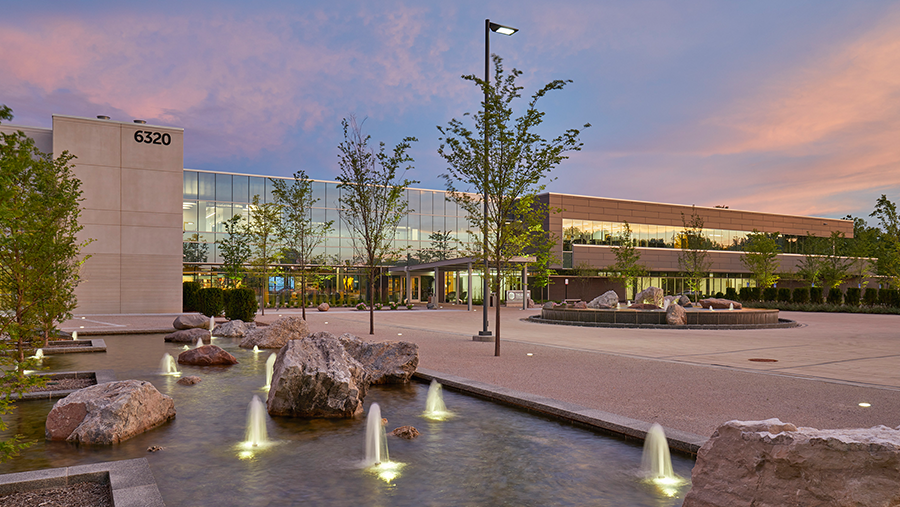
Figure 2 - The Center, Indianapolis. The first project in Indiana to be dual certified under both SITES and LEED. Image property of Browning Day.
SITES Certification
In addition to tracking and commissioning landscape performance, there is the prospect of third-party review and certification of a site's design and development. The Sustainable SITES Initiative (or, simply, SITES) was developed through a collaborative, interdisciplinary effort of the American Society of Landscape Architects, The Lady Bird Johnson Wildflower Center at The University of Texas at Austin, and the United States Botanic Garden. The rating system aligns landscape development and management with sustainable design objectives. SITES offers a comprehensive developmental framework that stems far beyond landscape performance metrics.
It is time for building design and construction industry to be more vocal about the critical public health, safety, and welfare stake of landscapes and for the "green building" community to expand its purview for regenerative, high-performance metrics and systems commissioning into the natural and built context in which our projects are nestled.
