Building Enclosure logo
search
cart
facebook twitter linkedin youtube instagram Spotify Podcasts Apple Podcasts Spotify Podcasts Apple Podcasts
  • Sign In
  • Create Account
  • Sign Out
  • My Account
Building Enclosure logo
  • NEWS
    • Breaking News
  • SECTIONS
    • Columns
    • Project Profiles
    • Trade Shows
    • Sponsor Insights
  • SYSTEM DESIGNS
    • Low-Slope Roofs
    • Pitched Roofs
    • Metal Roofing Materials
    • Waterproofing
    • Sustainability
    • Insulation
    • Exterior Claddings
    • Wall Systems
    • Building Envelope
  • BLOG
    • The BE Blog
  • MEDIA
    • Podcasts
    • Webinars
    • Quiz
    • Videos
    • Polls
    • Interactive Spotlights
    • Newsletter
    • Photo Galleries
  • DIRECTORIES
    • Directory: Blue Book
    • Directory: Roofing Resource
  • PRODUCTS
  • TECHNICAL
    • Codes
      • Waterproofing
      • Roofing
    • Details
      • Waterproofing
      • Roofing
  • CONTINUING ED
  • ABOUT
    • Advertise
      • Editorial Calendar
    • Contact
    • eMag Archive Issues
  • SIGN UP!

Energy Use Intensity (EUI) in Simple Terms
By Daniel Overbey
Living SUstainble
Figure property of Daniel Overbey.
August 17, 2017

Energy use intensity - or EUI. It has been called "the miles per gallon rating of the building industry," but many design and construction professionals are not entirely sure how EUI is defined and what its utility is with regard to project. Below is a primer to help get anyone started.


Energy Use Intensity (EUI)

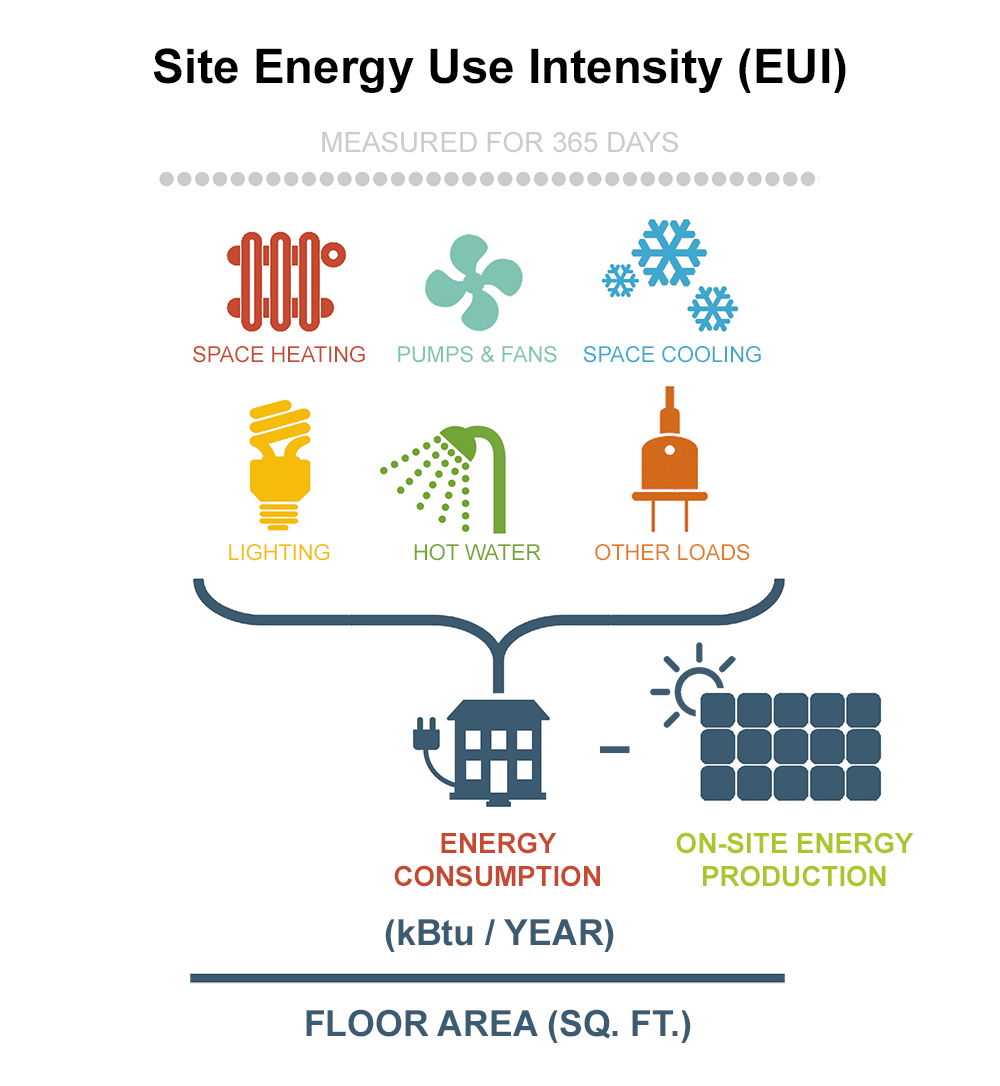
Energy Use Intensity (EUI) can be defined as the measurement of a building’s annual energy consumption relative to its gross square-footage. EUI is often used to:

1. Express an existing building’s actual, metered energy consumption;

2. Convey the average annual energy use derived from a data set of similar building type and location; or

3. Communicate the anticipated energy use for a particular project based on design performance or energy modeling (sometimes, this latter use is distinguished as pEUI - for predicted).


Site EUI or Source EUI?

EUI is expressed relative to either site or source energy.

Site energy is most often referenced in the design community. In simple terms, site EUI is the energy consumed at the building site and is reflected in the utility bills paid by the owner.

Figure property of Daniel Overbey.


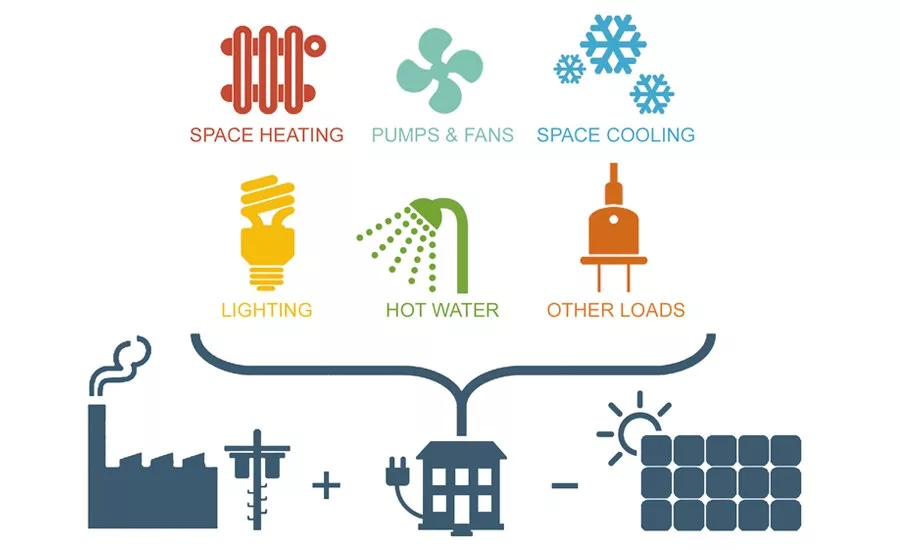
Source energy is a more accurate representation of a building's energy footprint as it considers the site energy as well as the energy lost during production, transmission and delivery to the site.

Figure property of Daniel Overbey.


It is also worth clarifying the distinction between net EUI and gross EUI. Net EUI is determined by comparing the gross EUI - or the annual energy consumption from all sources - to the Renewable Production Intensity (RPI).


Net EUI = Gross EUI - RPI


If the annual renewable energy production is greater than the gross energy consumption, the project is said to be net zero energy.


Baselining EUI

In May 2007, the American Institute of Architects (AIA), the American Society of Heating, Refrigerating and Air-Conditioning Engineers (ASHRAE), Architecture 2030, the Illuminating Engineering Society of North America (IESNA), and the U.S. Green Building Council (USGBC), supported by representatives of the U.S. Department of Energy, agreed to define the baseline for their common energy performance target goals as the national average energy consumption of existing U.S. commercial buildings as reported by the 2003 CBECS.

The U.S. Department of Energy's Commercial Buildings Energy Consumption Survey (CBECS)  is a national sample survey that collects information on the stock of U.S. commercial buildings, including their energy-related building characteristics and energy usage data (consumption and expenditures). 


EUI by Building Activity

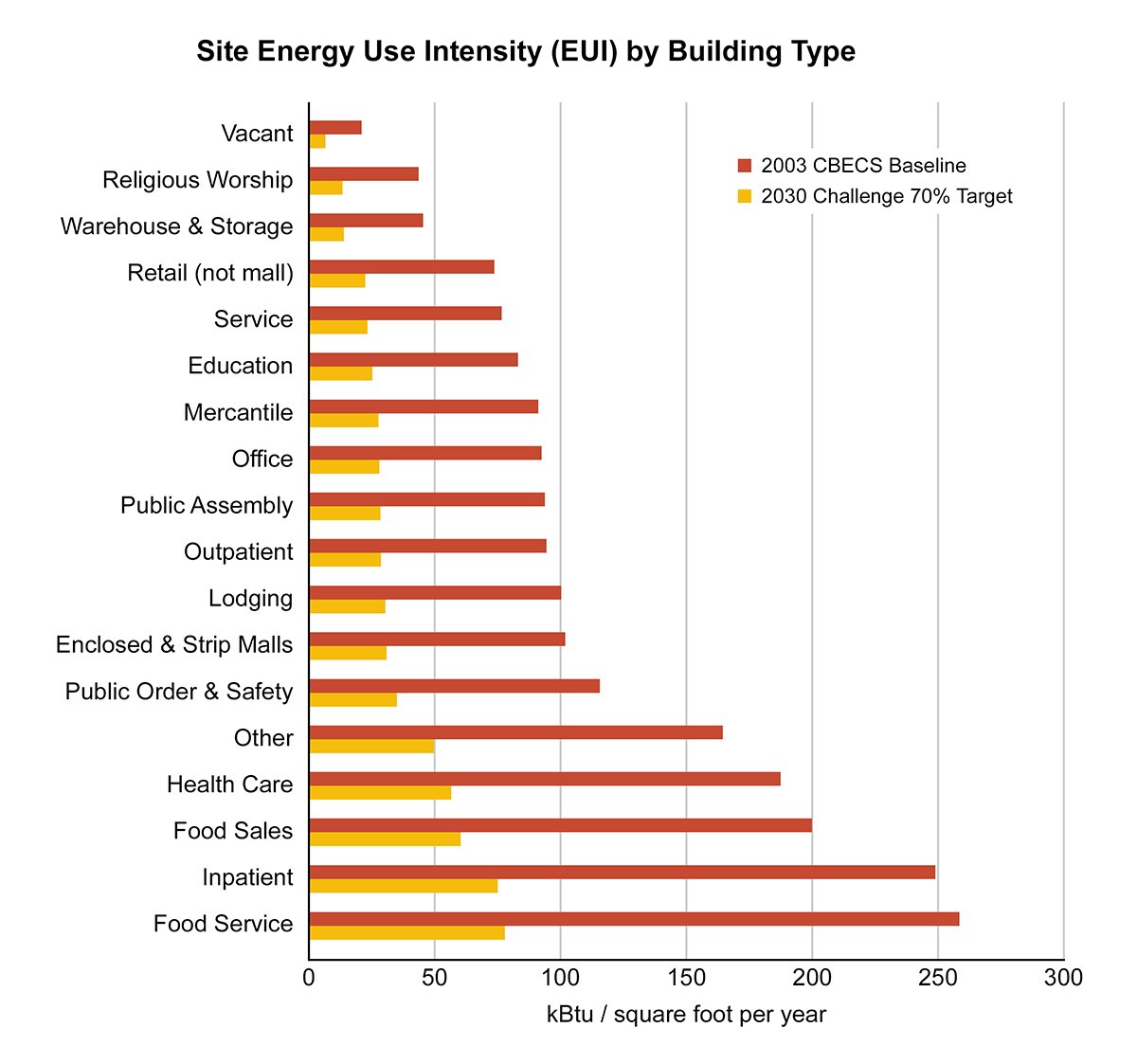
Recorded data from CBECS has shown that EUI may vary considerably by building type. Consider the following data regarding commercial building EUI for various building types. In the figure below, baseline 2003 CBECS EUI data is offered versus the current 70 percent reduction target for the 2030 Challenge.

Site EUI 2003 vs 2030 Challenge (p1200).jpg

Figure by Daniel Overbey. Baseline data from the 2003 CBECS Survey Data for USA.


Source vs Site EUI

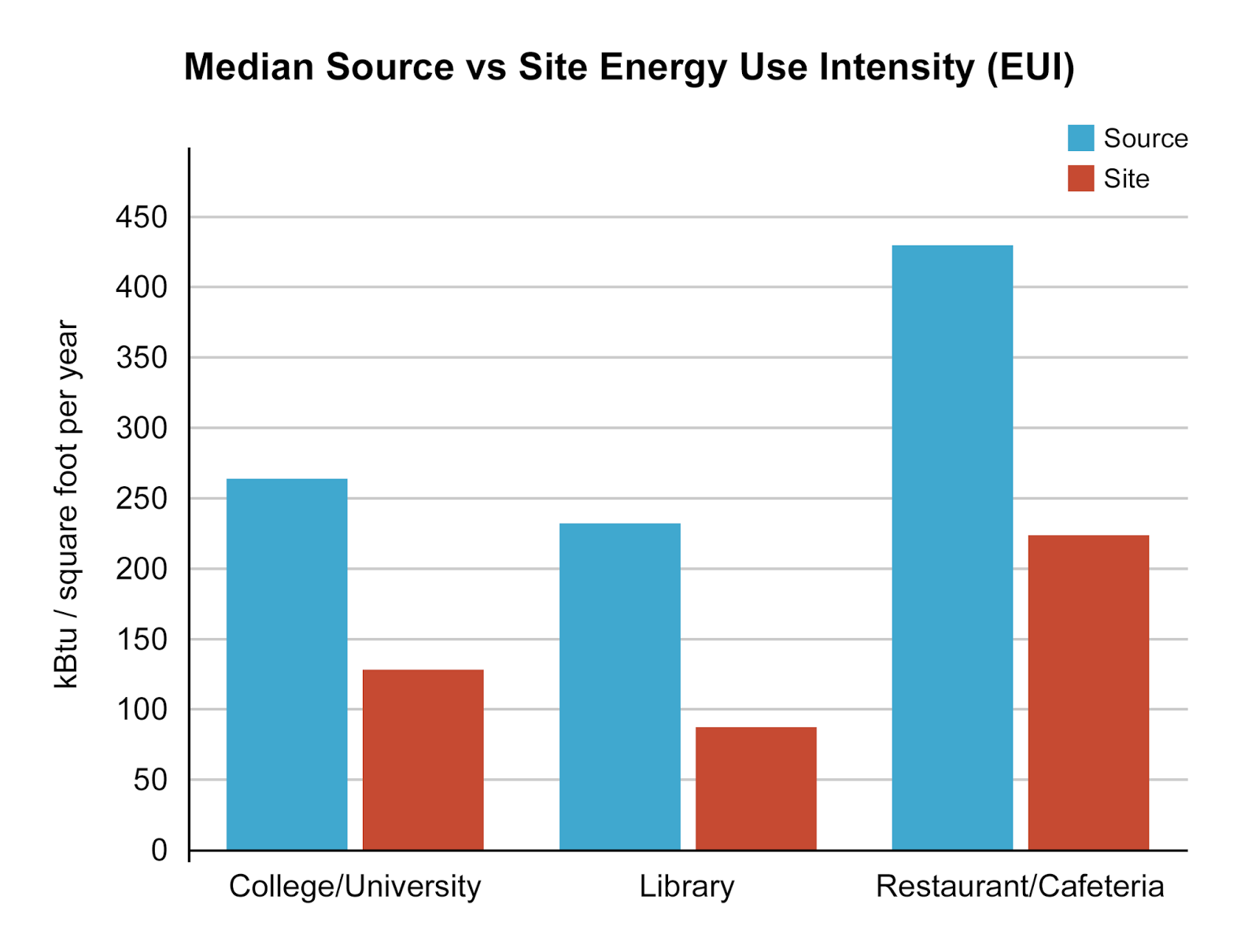
By definition, source EUI will be greater than site EUI. It is also worth noting the magnitude of the differences by building type.

Figure by Daniel Overbey. Data from the 2003 CBECS Survey Data for USA.


Determining a Target EUI

How can a design team quickly determine the appropriate EUI target for a project? There are a number of great resources to consult. In particular, the Zero Tool by Architecture 2030 is easy-to-use and well-suited for sustainable design professionals striving to meet the 2030 Challenge.

KEYWORDS: energy efficiency

Share This Story

Overbey   head shot 2020 3

Daniel Overbey, AIA, NCARB, LEED Fellow (LEED AP BD+C, ID+C, O+M), WELL AP is an Assistant Professor of Architecture at Ball State University and the Director of Sustainability for Browning Day in Indianapolis, Ind. His work focuses on high-performance building design and construction, environmental systems research, green building certification services, energy/life-cycle assessment modeling, and resilient design. He can be reached at djoverbey@bsu.edu.

Recent Comments

These are actually very helpful tips. It is...

This is the most beneficial blog for all...

This blog is a great resource for anyone...

Thank you for sharing this important information. I...

This is a very interesting subject of the...

Manage My Account
  • Sign up for the Newsletter
  • Online Registration
  • Manage My Preferences
  • Registration Customer Service

More Videos

Sponsored Content

Sponsored Content is a special paid section where industry companies provide high quality, objective, non-commercial content around topics of interest to the Building Enclosure audience. All Sponsored Content is supplied by the advertising company and any opinions expressed in this article are those of the author and not necessarily reflect the views of Building Enclosure or its parent company, BNP Media. Interested in participating in our Sponsored Content section? Contact your local rep!

close
  • HITT Construction headquarters
    Sponsored byBuilding Composites® LLC

    Pushing the Envelope

  • 2 construction workers and a DEXcell panel
    Sponsored byDEXcell Roof Boards

    Designing Low-Slope Roofs for Resilience

  • Bell Bank headquarters in Fargo, North Dakota
    Sponsored bySto Corp.

    Drained and Back-Ventilated Rainscreens vs Pressurized-Equalized Rainscreens

Popular Stories

graphic shows white arrows pointing to the right on a light green background

A Breakdown of Air Leakage Testing in LEED v5 BD+C

Open vs. closed cell foam in an attic

Open-Cell vs. Closed-Cell Spray Foam

skyscraper

NYC Tower Failure Offers Warning for Contractors

Building Enclosure Newsletter

BE Poll

Events

April 9, 2026

Strategies for High-Performance Below-Grade Waterproofing

Credits: 1 AIA LU/HSW ; 1 IIBEC CEH; 0.1 IACET CEU

On-Demand Designing a high-performance building enclosure requires more than just surface-level protection; it demands a rigorous, performance-based mastery of below-grade water and gas mitigation. This discussion will provide an expert-level analysis of below-grade waterproofing within the comprehensive framework of the high-performance building enclosure.

April 28, 2026

Roof Design Considerations That Prevent Installation Failures and Change Orders

Credit: 1 AIA LU/HSW; 1 IIBEC CEH; 0.1 ICC CEU

On-Demand This course provides visual examples of actual field conditions. Some good, some not so good; along with design suggestions that can cut installation costs and reduce construction change orders. Upon completion of this course, you will have a better understanding of the requirements the roofing contractor must meet to provide the specified roofing system warranty, and long-term value to the owner.

View All Submit An Event

Products

Plaster and Drywall Assemblies Manual

Plaster and Drywall Assemblies Manual

This is a comprehensive manual that goes beyond codes and standards, providing expert guidance in design, detailing, material selection and troubleshooting for plaster and drywall.

See More Products
×

Enhance your expertise with unparalleled insights.

Join thousands of building professionals today. Shouldn’t you know what they know?

SUBSCRIBE TODAY!
  • RESOURCES
    • Advertise
    • Contact Us
    • Store
    • Want More
  • SIGN UP TODAY
    • Create Account
    • Newsletter
    • Customer Service
    • Manage Preferences
  • SERVICES
    • Marketing Services
    • Reprints
    • Market Research
    • List Rental
    • Survey/Respondent Access
  • STAY CONNECTED
    • LinkedIn
    • Facebook
    • Instagram
    • YouTube
    • X
  • PRIVACY
    • PRIVACY POLICY
    • TERMS & CONDITIONS
    • DO NOT SELL MY PERSONAL INFORMATION
    • PRIVACY REQUEST
    • ACCESSIBILITY

Copyright ©2026. All Rights Reserved BNP Media, Inc. and BNP Media II, LLC.

Design, CMS, Hosting & Web Development :: ePublishing