Building Enclosure logo
search
cart
facebook twitter linkedin youtube instagram Spotify Podcasts Apple Podcasts Spotify Podcasts Apple Podcasts
  • Sign In
  • Create Account
  • Sign Out
  • My Account
Building Enclosure logo
  • NEWS
    • Breaking News
  • SECTIONS
    • Columns
    • Project Profiles
    • Trade Shows
    • Sponsor Insights
  • SYSTEM DESIGNS
    • Low-Slope Roofs
    • Pitched Roofs
    • Metal Roofing Materials
    • Waterproofing
    • Sustainability
    • Insulation
    • Exterior Claddings
    • Wall Systems
    • Building Envelope
  • BLOG
    • The BE Blog
  • MEDIA
    • Podcasts
    • Webinars
    • Quiz
    • Videos
    • Polls
    • Interactive Spotlights
    • Newsletter
    • Photo Galleries
  • DIRECTORIES
    • Directory: Blue Book
    • Directory: Roofing Resource
  • PRODUCTS
  • TECHNICAL
    • Codes
      • Waterproofing
      • Roofing
    • Details
      • Waterproofing
      • Roofing
  • CONTINUING ED
  • ABOUT
    • Advertise
      • Editorial Calendar
    • Contact
    • eMag Archive Issues
  • SIGN UP!

Key Updates in Tornado-Resistant Building Codes
By Evelyn Long
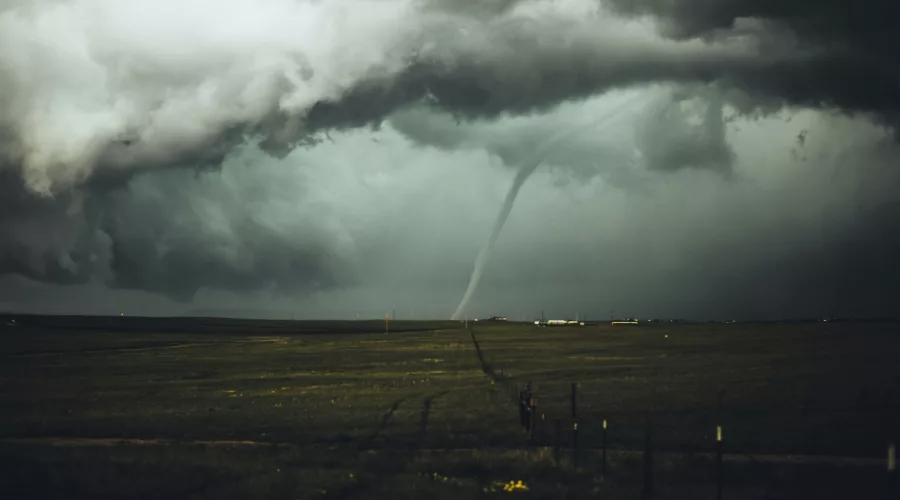
nikolas-noonan-n_3kdpSkrJo-unsplash.jpg

Image courtesy of Nikolas Noonan via UnSplash

July 8, 2024

The construction industry should always prioritize the safety and well-being of its future occupants. Building codes offer well-rounded guidelines for improving these structures’ security. As climate change progresses, you must adopt policy additions like tornado-resistant advice to prepare for natural disasters. 


Mitigating Climate Change With Building Codes

Climate change has made the weather more unpredictable than ever. About 20 percent of supercell thunderstorms create tornadoes, so stay on high alert. These natural disasters can harm future homeowners, office workers and others if your building isn’t designed to cope. They also waste multiple resources, which contributes to further global warming. 

Follow newer building codes to mitigate the future events that can affect life on Earth. One Villanova University professor and meteorologist admits there’s more than climate change influencing recent tornado events. “I always call it a two-headed monster or a dragon, where the climate change is one of the threats,” he says. “But on the other side, on the other head of the monster is our society. We are growing at record paces. There's more things in the path of these tornadoes.”


Updates to Know for Construction Projects

There has always been pressure to improve building codes for construction projects. After a long wait, the 2024 International Building Code finally contains provisions on tornado loadings and how to secure structures when erected. 

The shift first sparked when Marc Levitan and Long Phan led the National Institute of Standards and Technology investigation into the EF5 tornado in Missouri in 2011. A floor in a hospital complex survived the magnitude of the disaster because it had an impact–resistant exterior. 

Builders and engineers have always viewed tornado-resistant designs as too expensive. However, all construction professionals should recognize the dangers of such disasters and the importance of saving lives with safer buildings. 


Here are three updates you need to be aware of:

Tornado Load Assessments

Buildings and structures classified under Risk Category III or IV must proceed with construction considering tornado loads. They must be created in accordance with Chapter 32 of the American Society of Civil Engineers 7. States in tornado-prone areas are also advised to follow suit. 

Roof Covering Configurations

The 2024 IBC covers various assets related to a building’s roofing. As stated in ASCE 7, the roof deck should be able to withstand high wind and tornado pressures. Any asphalt shingles added over the deck should meet wind-resistance requirements in the same document. 

Conveying Systems

Elevators, escalators and most conveying systems are sensitive to high wind pressure. Fixtures exposed to outdoor environments should adhere to wind design requirements under ASCE 7. 


Meeting Building Codes

Integrating new building codes will require plenty of preparation and planning. You need to utilize construction technology to improve tornado resistance. For example, digital twins allow professionals to run a virtual simulation of a physical asset or system with real-time data and analytics. This transformative tool is expected to increase at a CAGR of 37.4 percent over the next seven years. 

As much as construction professionals should focus on the end product, natural disasters can also strike in the middle of the project. You have to prepare evacuation policies for crews. Contingency plans like securing equipment with anchors and tie-downs are also important during unexpected weather events. 

Building codes are essential to preserve loss of life and conserve resources in the long run. While they are not legally binding, these guidelines still matter to avoid the perils of tornadoes and other climate change-related disasters. 


Adopt Tornado-Resistant Building Codes

Tornado-resistant building codes should have always been implemented. Now that they are becoming more prominent, construction companies should take notice and improve their structures’ security. Your implementation of these guidelines can influence people’s safety and resource conservation.

KEYWORDS: building codes natural disasters

Share This Story

Evelyn Long is a writer and editor focused on home building and construction. She is the co-founder of Renovated, a web magazine for the home industry.

Recent Comments

These are actually very helpful tips. It is...

This is the most beneficial blog for all...

This blog is a great resource for anyone...

Thank you for sharing this important information. I...

This is a very interesting subject of the...

Manage My Account
  • Sign up for the Newsletter
  • Online Registration
  • Manage My Preferences
  • Registration Customer Service

More Videos

Sponsored Content

Sponsored Content is a special paid section where industry companies provide high quality, objective, non-commercial content around topics of interest to the Building Enclosure audience. All Sponsored Content is supplied by the advertising company and any opinions expressed in this article are those of the author and not necessarily reflect the views of Building Enclosure or its parent company, BNP Media. Interested in participating in our Sponsored Content section? Contact your local rep!

close
  • HITT Construction headquarters
    Sponsored byBuilding Composites® LLC

    Pushing the Envelope

  • 2 construction workers and a DEXcell panel
    Sponsored byDEXcell Roof Boards

    Designing Low-Slope Roofs for Resilience

  • Bell Bank headquarters in Fargo, North Dakota
    Sponsored bySto Corp.

    Drained and Back-Ventilated Rainscreens vs Pressurized-Equalized Rainscreens

Popular Stories

graphic shows white arrows pointing to the right on a light green background

A Breakdown of Air Leakage Testing in LEED v5 BD+C

Open vs. closed cell foam in an attic

Open-Cell vs. Closed-Cell Spray Foam

skyscraper

NYC Tower Failure Offers Warning for Contractors

Building Enclosure Newsletter

BE Poll

Events

April 9, 2026

Strategies for High-Performance Below-Grade Waterproofing

Credits: 1 AIA LU/HSW ; 1 IIBEC CEH; 0.1 IACET CEU

On-Demand Designing a high-performance building enclosure requires more than just surface-level protection; it demands a rigorous, performance-based mastery of below-grade water and gas mitigation. This discussion will provide an expert-level analysis of below-grade waterproofing within the comprehensive framework of the high-performance building enclosure.

April 28, 2026

Roof Design Considerations That Prevent Installation Failures and Change Orders

Credit: 1 AIA LU/HSW; 1 IIBEC CEH; 0.1 ICC CEU

On-Demand This course provides visual examples of actual field conditions. Some good, some not so good; along with design suggestions that can cut installation costs and reduce construction change orders. Upon completion of this course, you will have a better understanding of the requirements the roofing contractor must meet to provide the specified roofing system warranty, and long-term value to the owner.

View All Submit An Event

Products

Plaster and Drywall Assemblies Manual

Plaster and Drywall Assemblies Manual

This is a comprehensive manual that goes beyond codes and standards, providing expert guidance in design, detailing, material selection and troubleshooting for plaster and drywall.

See More Products
×

Enhance your expertise with unparalleled insights.

Join thousands of building professionals today. Shouldn’t you know what they know?

SUBSCRIBE TODAY!
  • RESOURCES
    • Advertise
    • Contact Us
    • Store
    • Want More
  • SIGN UP TODAY
    • Create Account
    • Newsletter
    • Customer Service
    • Manage Preferences
  • SERVICES
    • Marketing Services
    • Reprints
    • Market Research
    • List Rental
    • Survey/Respondent Access
  • STAY CONNECTED
    • LinkedIn
    • Facebook
    • Instagram
    • YouTube
    • X
  • PRIVACY
    • PRIVACY POLICY
    • TERMS & CONDITIONS
    • DO NOT SELL MY PERSONAL INFORMATION
    • PRIVACY REQUEST
    • ACCESSIBILITY

Copyright ©2026. All Rights Reserved BNP Media, Inc. and BNP Media II, LLC.

Design, CMS, Hosting & Web Development :: ePublishing