How Do Different Building Enclosure Systems Impact Building Performance?
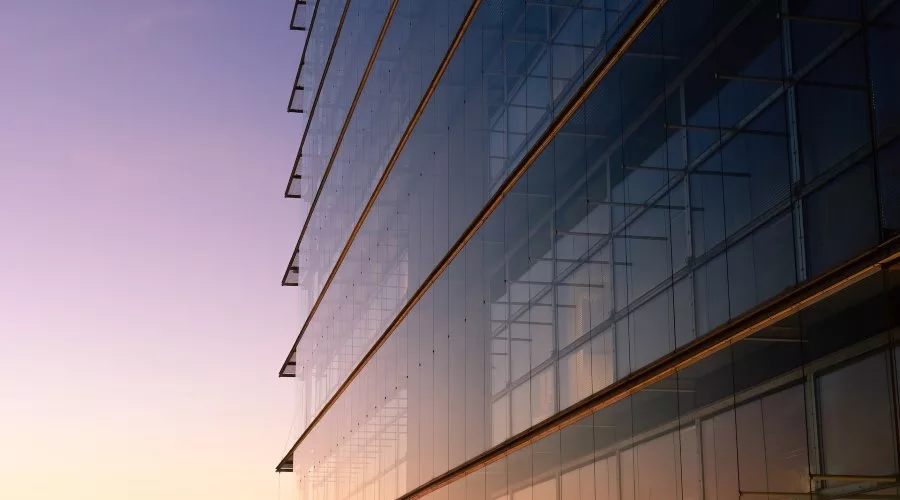
Photo courtesy of Joakim Honkasalo via Unsplash.
Designing and constructing a structure involves much more than the project’s immediate needs and costs. Rising regulatory pressure and shifting market trends mean firms must pay more attention to how their choices impact long-term building performance.
Sustainability is one of the most significant trends in modern construction and design, and it will only become more so in the future. As part of that trend, architecture and construction businesses must ensure their projects enable long-term energy efficiency. Choosing the optimal building enclosure system is crucial to meeting that goal.
Metal Buildings vs. Other Materials
Ensuring sustainable building performance begins with selecting the ideal framing. This choice is often more straightforward in commercial buildings than in residential projects. Steel is almost always the best framing material for this market.
Many materials expand and contract with fluctuating temperatures, and timber shrinks from moisture loss amid changing humidity. Even if a building’s design accounts for this warping throughout the year, these changes mean the insulation may vary across seasons. This fluctuation results in inconsistent insulation, potentially raising energy costs.
Metal frames offer more consistency. While steel also expands in high heat, it’s not as prone to warping from moisture as wood or masonry. It also provides more support strength with less mass, letting designers counteract thermal expansion while managing material costs and leaving room for insulation. Consequently, steel framing is ideal for most commercial buildings, but even under that umbrella, firms can choose from multiple enclosure systems.
How Enclosure Systems Impact Building Performance
Metal buildings today face increasingly stringent insulation codes, like IEC 2021, that dictate energy-efficiency standards. Meeting these regulations and capitalizing on an increasingly eco-conscious market means understanding the energy impact of different building enclosure systems. Here’s how some of the most popular options for steel buildings affect performance.
Curtain Walls
Curtain walls are a popular enclosure choice, largely thanks to their affordability and short lead times. It’s also possible to prefabricate these structures before attaching them to the side of a building. Modular construction can accelerate project timelines by 20-50 percent, so that’s a hard advantage to overlook
Many curtain walls use glass as their primary material, which offers mixed results for building performance. Having large glass panels as walls can bring in more sunlight, enabling solar heating to reduce energy consumption. However, glass also offers far less insulation than other materials, so curtain walls don’t perform as well in temperature extremes.
Recent innovations can make curtain walls a more energy-efficient choice. Solar glass features special coatings to reflect more sunlight, keeping interiors cooler in warmer weather with less energy. Similarly, thermal spacers between window panes let curtain walls trap heat instead of letting it through.
Window Walls
Window walls are similar to curtain walls but offer some distinct advantages. These structures typically use large prefabricated window panels. However, window walls sit between floor slabs instead of being structurally independent.
Because these building enclosure systems sit firmly between slabs and feature less glass, they typically retain heat better than curtain walls. That leads to increased energy efficiency in colder weather. They also don’t require fire-stopping, leaving more room in the budget for other energy-saving design measures or technologies.
One performance downside to window walls is that the caulk at their joints can introduce issues as they age. Cracks and holes that form between windows and floor slabs could create drafts, decreasing HVAC efficiency. Window walls also have less structural strength than curtain walls, so they may not work for some commercial projects, like high-rise office buildings.
Metal Panels
Metal panels offer one of the simplest yet most effective building enclosure systems. These enclosures don’t have the aesthetic appeal of glass-heavy designs like curtain and window walls, so they’re better for industrial rather than office spaces. However, they have considerable potential for energy savings.
Steel or aluminum panels provide structural integrity that window and curtain walls can’t offer. Consequently, they leave more room for additional insulation, something metal’s low upfront costs also support. An ever-increasing range of insulation materials is available today, and teams using metal enclosure systems have more options to balance performance and costs.
What metal panels lose in aesthetics from lacking large transparent spaces, they make up for in less heat loss in temperature extremes. Metal’s high conductivity makes it prone to thermal bridging, which can lead to heat and energy waste, but continuous insulation can compensate for those losses.
How to Choose the Best Building Enclosure System
Each building enclosure system offers unique advantages and disadvantages for long-term energy performance. Consequently, the best option will vary depending on the project at hand.
Architects and designers should start by determining their project’s structural needs. Curtain walls are ideal for exceptionally tall buildings, while window walls and metal panels offer more cost-effective solutions for shorter structures. Project budgets can also help narrow the options, with metal siding providing the lowest costs.
Next, consider the climate of the project site. Areas that experience more dramatic temperature fluctuations may make curtain walls inefficient. However, curtain walls may be ideal in more moderate climates, especially because they have the lowest risk of thermal bridging, reducing additional insulation needs.
Firms should also consider material choices within specific enclosure systems. Regular glass is often inefficient, but low-emissivity glass reduces energy loss by up to 50 percent, making options like window walls more feasible for some projects.
The best option may be to combine multiple enclosure systems. Using metal siding for the factory space in an industrial facility but opting for curtain walls for the office portion may yield the most overall efficiency for each section’s independent needs.
Find the Right Building Enclosure System
Choosing the best enclosure system for building performance requires understanding how each option impacts energy consumption. There’s no single answer to which enclosure type offers the most efficiency in every environment, so firms must carefully consider each project’s needs.
Businesses that know how each enclosure impacts insulation, sunlight and related factors can design more energy-efficient buildings. They can then meet the shifting demands of today’s market and remain compliant with regulations.
