Building Up and Community Resilience
Metropolitan infrastructure is always adapting because of—and in response to—rapid changes in technology and the planet’s climate. In 2012, Hurricane Sandy struck New York City and left a lasting impact beyond the billions of dollars in damage it caused. City officials realized that the five boroughs were vulnerable to catastrophic flood damage and new measures needed to be taken to ensure structures could withstand future weather disturbances and rising sea levels. As a result, a discussion on elevation began. One of the earliest projects the city looked at was the renovation of East River Park — the plan for this green space is to elevate it by eight to ten feet to prevent future flood damage. However, residents of Manhattan’s Lower East Side neighborhood are voicing stiff resistance to the plan for many reasons, including the disregard for the design options selected by the community among the ones that public officials presented to them.
As cities start to turn to elevation as a form of protection against rising sea-levels, renovations cannot come at the expense of local communities. When making changes to public spaces and housing to increase their resilience, architects, engineers, and elected officials must treat residents as if they were clients. In New York City, millions of people depend on parks for exercise, outdoor recreation, and unwinding. By implementing resiliency plans to protect urban spaces in collaboration with the people who use them, communities will have the opportunity to remain intact while undergoing transformations. Beside raising city infrastructures, another option for protecting urban shorelines is restoring natural climate buffers such as wetlands and marshes. Their native biodiversity allows for water to be soaked up quickly and provides a natural flood wall. Finally, artificial seawalls built near shorelines can also provide protection from rising waters.
Considerations When Elevating Projects
Engineers and architects need to look at floodwaters, storms, and other ways the changing climate impacts cities and communities, and they should explore how the built environment can guard against these disturbances 100 years into the future. Projects that are built to withstand the climate for a few decades will only have to be implemented again soon, causing more damage to a city's urban landscape and its community.
When it comes to residential buildings and elevation, the way we have grown accustomed to designing and living in buildings will need to change. It is common for residents to find select amenities, laundry rooms, and mechanical rooms in the basement or at the ground floor of an apartment complex. As developments are slowly increasing their flood-resistance, engineers and architects have found innovative ways to position building utilities and critical infrastructure on higher floors. Additionally, depending on the existing structure, some buildings can be entirely raised above the flood level. To ensure that amenities are not sacrificed from their respective communities and for the sake of façade consistency within a neighborhood, cities must consider elevating whole city blocks simultaneously.
When lifting entire buildings is not an option and if regulations allow, additional floors can be built on top of existing buildings to make up for the square footage lost on the ground floor. In these cases, the ground floor will remain below the flood level and can be treated through dry or wet floodproofing to reduce the risk of flood damage. Dry floodproofing entails making the building’s ground floor watertight and adding drainage and pumps for water that would sip inside the buildings in the case of flood. Wet floodproofing involves allowing the water to go through the building’s lower-level and using flood damage resistant materials in such areas. Post-flood cleanup is significant in the case of wet floodproofing.
The Build-Up Community Model
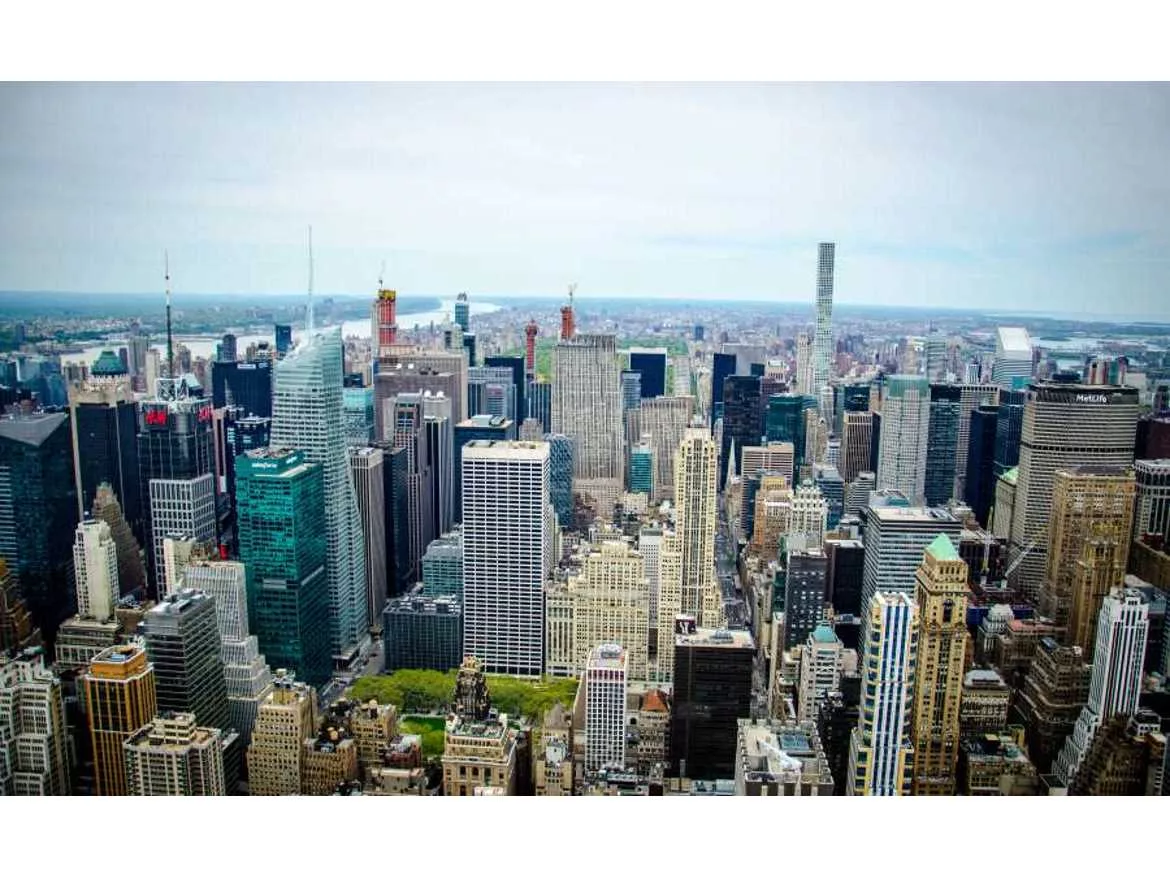
Building up is not only a necessity to expand urban resilience, but it can also be an opportunity to increase community density. Denser communities are more efficient and sustainable, as they collect resources where a greater amount of people can access them, without consuming as much land as spread-out developments. Long Island City (LIC) is a model that other communities can learn from. Located on the opposite side of the East River, many of the buildings in this neighborhood have been designed as high-rise constructions. Not only is LIC an example of a successful buildup from an engineering standpoint, but it has also become a highly desired and highly populated community; a radical departure from Long Island City’s industrial landscape from only a few decades ago. Now, with an increasing residential population due to its proximity to major transportation lines and Manhattan, LIC is now a vibrant and walkable community.
While the development in areas like LIC is a great accomplishment, it should not necessarily be the end goal. The community is filled with high-rise towers that cater to only some of the city’s millions of residents. As cities and developers look to convert their residential infrastructure into climate-proof metropolises, they must create structures that can accommodate residents of all socioeconomic backgrounds. When done properly, building up is more than developers acquiring additional square footage; it is a new way to create communities.