Building a Post-Pandemic Future
Adapting Medical Thinking into Design
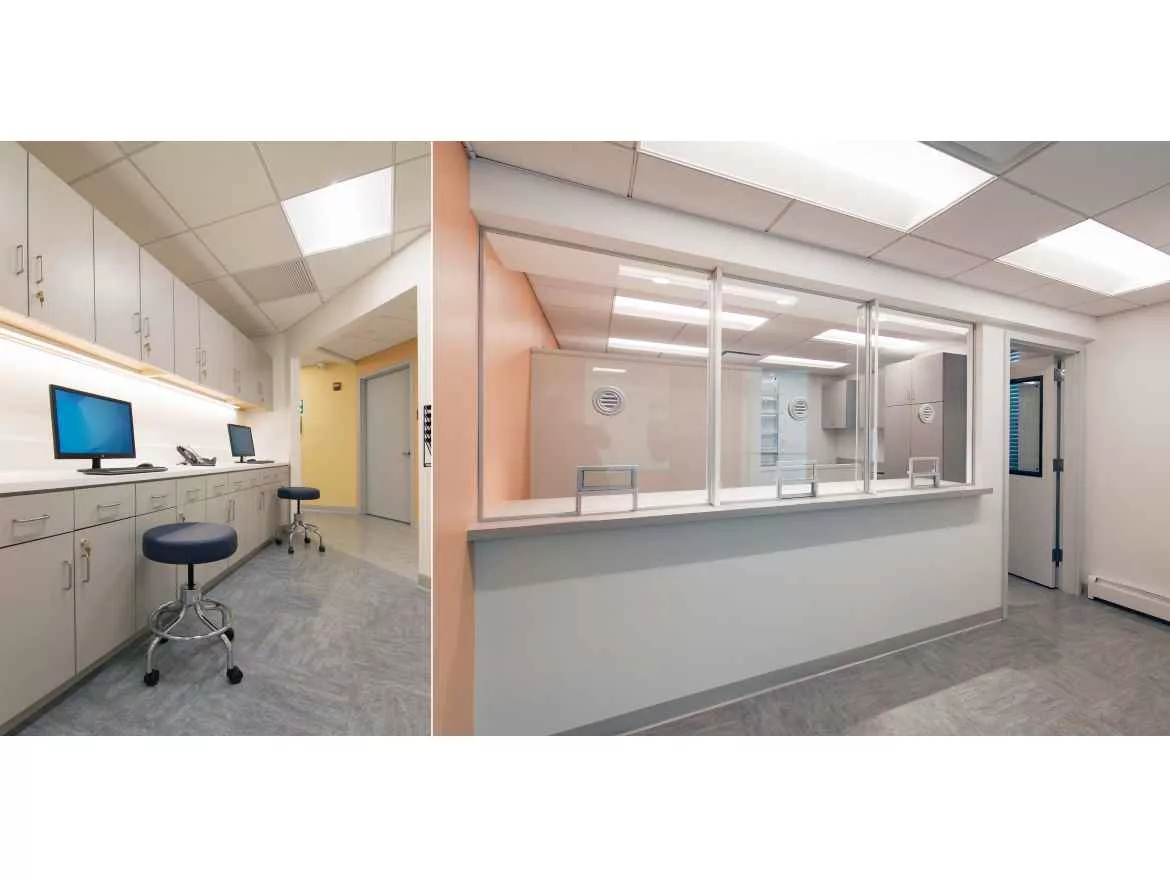
As a society, we have hit a “pandemic wall.” After more than a year of social distancing and a months-long vaccine rollout, we are eager to put the pandemic behind us and return to “normal.” However, the pandemic will inevitably leave lasting impacts across a range of industries, as our heightened awareness of hygiene and disease starts to influence how we look at our built environment. As an architect, I predict that we will see many of the traditionally used strategies in the design of medical facilities applied to office spaces, residential buildings, and more. Designers will not soon forget the lessons of the past year. Creating spaces that promote personal safety and wellbeing will be a number one priority as we work to ensure our adaptability in the face of future health crises.
Shifts in Healthcare Design
It is helpful to look back at how medical design has changed in the last decade. Think back to one of your earliest memories of being in a doctor’s office. Perhaps the walls are painted a classic “medical blue,” and faded discount furniture lines the perimeter. Now think about your most recent visit to a medical facility. More likely than not, the environment is bright and airy, with luxury furniture to rest in and soothing artwork adorning the walls. This shift highlights a growing idea that a patient can start to feel better simply by walking into an environment that is more focused on comfort and aesthetics. In 2017, our firm redesigned several birthing rooms for Northwell Health at 100 East 77th Street that were intended to function as luxury suites. Reminiscent of five-star hotel rooms, they have become so popular that the hospital chose to triple the size of that section.
In light of a global pandemic that has caused unprecedented levels of anxiety, the desire for spaces that prioritize comfort has only increased. We will see this trend towards high-end luxury spaces reflected across other markets as well. Many pharmacies are now looking to replicate this kind of environment and create airy and relaxed rooms with an emphasis on natural light. We will also see this philosophy increasingly applied to senior living spaces, student dormitories, residential lobbies, and more.
Expanding Medical Thinking Outward
Beyond aesthetics, a considerable part of patient comfort relates to the perception of personal safety and hygiene. It is hugely important for patients to feel confident that the space they are entering is kept clean and that it is set up to decrease the spread of germs between occupants. Before the pandemic, this was not a big concern outside of the medical field. As a culture, we all accepted that viruses like the common cold would spread around offices or on public transportation. Now, with protection against harmful germs top of mind on a global scale, we will start to see the kind of thinking associated with medical facilities brought into other industries.
From air circulation to surface materials, every choice made in constructing a healthcare space is made to reduce the spread of germs. We build hospitals with robust air filtration systems that rapidly circulate air in and out of the facility. Our office spaces, residences, and retail spaces are not traditionally built with the same considerations, but now many developers, landlords, and designers are starting to reevaluate existing HVAC systems. The financial commitment is a huge factor here. Achieving the level of air filtration found in a hospital setting would require rethinking a space’s entire design. Many are turning to easier fixes such as installing secondary devices and changing out filters more frequently.
The selection of surface materials is another design choice that many of us have taken for granted. Certain surface types are naturally resistant to bacteria. These are the types of materials we see selected during the construction of healthcare facilities—this concept derived from the study of shark skin, which is textured to avoid bacterial growth. We will inevitably see these kinds of hygienic materials incorporated on a larger scale across the board. Similarly, finishing industries have long marketed products such as antibacterial coatings to medical fields, and the next step will be to bring these products into other commercial markets.
Beyond this, we already see designs incorporate touchless technologies that eliminate the need for some of these surfaces. Apartment buildings and offices are increasingly built with touchless innovations that enable users to open a doorway or operate an elevator through an app or an electronic key. These forward-thinking design decisions increase the cleanliness of common spaces and contribute to a more inclusive future for users with mobility impairments.
Looking Ahead
If we started construction on a new building today, the space would not be ready to welcome tenants for at least three years. So while the full impact of COVID-19 on our built environment remains to be seen, an increased focus on user comfort and safety is unavoidable. By forcing us to reevaluate every aspect of the spaces we inhabit, the pandemic will ultimately bring about a more agile and inclusive world. It is an open invitation for all of us to think critically about what we can do to contribute to a better future. The opportunity for creative thinking within the design industry is boundless.