The Basics of Constructing a Green Wall
Developers and architectural designers alike have become increasingly captivated by sustainability and green design—amplified by the demand for big-idea solutions to climate change and an unprecedented global health crisis that has encouraged a re-evaluation of what it means to be both physically and mentally well. As a result, the AEC industry is anticipating an influx of requests from developers in search of cost-effective solutions for making their buildings healthier and safer for inhabitants. Specifically, more developers are looking outside-the-box at non-traditional features and systems to fit new architecture and design needs that attract people back to public and commercial spaces while prioritizing wellbeing and sustainability.
One such feature that has been gaining significant traction is the introduction of living walls. Living walls, sometimes called green walls, are a multifaceted and prudent solution for those buildings looking to add the intrinsic benefits that nature provides. Additionally, green panels will enhance a building’s aesthetics, improve air quality, employee alertness, and productivity levels. With all these positive characteristics, living walls have become features in building structures across the United States. As this trend continues, it will be important for construction firms and project managers to familiarize themselves with these systems –– as well as any potential considerations or challenges –– so they are prepared when they are tapped to build one.
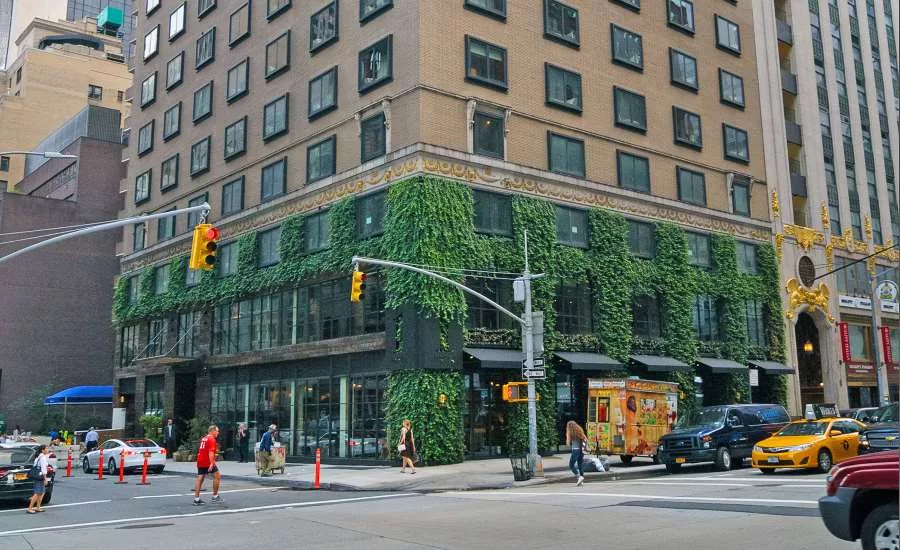
While spotting a green wall on a building’s exterior in New York City is rare, as they are usually found inside, one that can be found at the 1 Hotel Central Park. At the property, I oversaw the construction and installation of this unique green wall, which covers the first three stories of the exterior with lush greenery––presenting both an aesthetic appeal and an environmentally-friendly facade alternative. An array of plants and vines now live on the exterior as part of a comprehensive renovation that converted this existing 19-story commercial building into a 230-key luxury lifestyle hotel located at 1414 Avenue of the Americas in Midtown Manhattan. As New York, as well as other cities around the country, explore ways to repurpose their existing building stock for new uses, we anticipate that our approach will be replicated for years to come.
That approach to 1 Hotel's unique green facade is particularly distinctive because of its individual irrigation system, which allows for greater control over the maintenance of the living wall and ultimately contributed to its feasibility from a cost-benefit perspective. As part of the property’s renovation, our team was tasked with building new entryways that encompass a custom steel front with steel mullions. These stainless steel exterior walls are now home to 8,000 individual pots that clasp the plants, each with a hole at the bottom for proper drainage, ensuring the hotel and its guests do not have to worry about pools of standing water nor the pests they attract. We chose to use this system, because it allowed us to receive the plants in full-bloom, rather than waiting for vines to work their way up a single panel over time, guaranteeing an instantly beautiful and functional green wall. Without the procurement of individual pots and segmented panels, the plants sourced may have never reached their climate-dependent color and size, which could disappoint an owner who is expecting an exuberant display immediately. By installing 8,000 individual pots, our team assured that the wall would be able to remain in bloom all year round. Further, if a certain plant starts to fade in color or has passed its prime, the hotel management team can simply swap it out for a fresher plant, resulting in very low-cost maintenance.
While this approach is better suited to support the health and vibrancy of the living wall, it does require more attention after its installation than other systems. In the case of 1 Hotel Central Park, the property’s facilities staff must attend to the wall, occasionally pulling pots and adjusting the irrigation system. Still, this system is easier than other walls, as the hotel will never have to worry about trimming plants since they won’t grow beyond their intended location. Without using a proper potting system or even individual pots, ivy and other plants tend to expand out of their spaces, making it more challenging and ultimately more expensive to maintain on the exterior of a building.
With an increased demand expected in green wall construction for exterior and interior environments, it is vital for construction and project management teams to know the basic principles of assembling a living wall and ways to maintain it. The most important part of the process is ensuring that there is an easily isolated irrigation system. Project managers must carefully lay out the piping and familiarize themselves with how the irrigation system drains, as the most common mistake is not properly capturing the water. In conjunction with the irrigation system, the gutter system also plays a significant role in successfully building a living wall. In New York City, buildings aren’t allowed to drain water onto sidewalks, which is why buildings themselves must capture the water. While most buildings are equipped with a solution for this problem, project managers need to know whether a building has a proper drainage system to collect and drain water while staying within the confines of the building.
Green walls not only beautify a building’s exterior, but they also benefit the environment and those who interact with the property. Recent surveys indicate that employees rank health and wellness as their number one concern as they prepare to return to offices. With everyone’s health, safety, and wellbeing top-of-mind, we are going to see more green elements incorporated into building designs, whether it is a wall, roof, or other feature yet to be seen. While sustainable design will continue to be a major factor moving forward, owners, operators, and construction companies must educate themselves with the knowledge to preserve the health and appearance of these walls.