Building Infrastructure in the Time of COVID-19
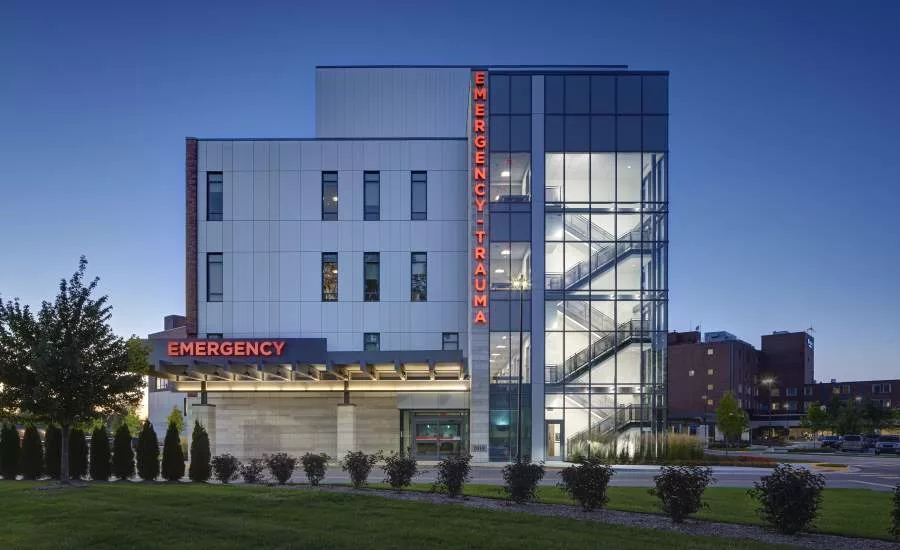
We have learned more about hospitals and healthcare protocols in the last month than many of us will need to know in our lifetime. We hear common terms like negative airflow, triage, isolation, N95 and those three little letters…PPE. But how do all these pieces work together, and as we face unprecedented times relative to responding to COVID-19, what infrastructure changes in healthcare spaces are we seeing as a response to this pandemic?
The CDC, our authority and personal advisor to all things related to this virus, comments on the system surrounding infectious disease preparedness by saying, “Healthcare personnel can protect themselves when caring for patients by adhering to infection prevention and control practices, which includes the appropriate use of engineering controls, administrative controls, and personal protective equipment (PPE).” Rightfully pointed out, it is not just the PPE or the engineering systems in a building that keep infection rates down, but a system of protocols needed to prevent and control negative outcomes.
These protocols become the functional narrative that drives building design and user experience relative to infection control. The administrative controls set the standard of care for the flow of people in the building, rules around access, cleaning and disinfection methods, density of people and guidelines for how they gather. Engineering controls generally refers to the mechanical interventions needed to clean and purify the air and water in the facility. These also consider building automation, sensors, and other strategies used through active means to manage the airflow, air exchange rate, cleanliness of the air, and the design of the system to keep the inhabitants healthy. As designers, our job is to reconcile the operations and the experience while integrating the engineering. Our goal is to design an elegant solution that creates spaces that both advance the human condition and meet functional needs.
Specific to the infrastructure question, we take a wide view of the overall system level infrastructure that includes the tenants of the social determinants of care, like access and environmental conditions, as well as a more detailed look inside facilities. We know that an integrated response has a much broader impact. At CallisonRTKL, our team works continuously between scales considering both the human experience and the operational needs to formulate design responses. Furthermore, we examine how those needs interplay between the interior and exterior of the building and impact the community at large.
We believe, now more than ever, that we will see thinking move beyond the physical walls of healthcare facilities and see overall community impact. It starts at the primary and personal care levels. There will be more personal accountability to our own health coming out of this crisis. We also anticipate more with in-home health with quicker adoption of telemedicine. This virtual care site will be the first portal for triage into the healthcare network.
Considering infectious disease protocols, once on site, we anticipate additional measures to be taken to help manage flow of patients into the hospital. This includes provisions for forward triage ahead of the emergency department or possibly into a campus. Today, many hospitals are porous to people entering. We need a well-articulated control process to manage flow and direct care pathways especially with infectious disease patients. The flow of patients coming to a hospital is important because it limits the amount of cross infection that occurs, plus the facility itself can be designed to best handle the hospital needs.
As an outcome of COVID-19, we know there are more questions of how we could plan better for the future. We anticipate the adoption of many of the design solutions used in our international hospitals that currently embrace a proactive approach to infectious disease management. Solutions include clearer divisions of patient care, physical separations and movement protocols for human flow along with goods and services. In addition, the MEP systems are design specific to this patient population, which means more negative airflow, higher air exchanges, and added filtration that cleans the air more effectively.
The obvious demand moving forward will include a need for greater flexibility to yield greater returns from your built asset. We see solutions for quick conversion of single occupancy rooms to double to handle surge. Having more spaces adaptable for isolation and increased ICU capacity in the case of crisis. In addition, the inclusion of building automation systems that allow quick modifications to the mechanical systems provides the building a more effective response to operational needs.
The lifecycle of a pandemic needs to be considered, including recovery. As quick as a building or space is turned over, it should be able to revert to its primary use just as fast. This requires more conversion ready solutions, as well as thinking of how you will decontaminate and restore functions as soon as possible. Alternate solutions like ionizing air to neutralize contaminants advancements in UVC to sanitize surfaces and automated cleaning robots will be part of the approaches from the facility management team.
Part of the controls will include how the architecture and interior design solutions follow the same protocols. It is the combination of both administrative and design solutions that work in tandem to create a complete system. This will require intentional action to specify antimicrobial surfaces, touchless everything, materials choices and design details that are easily cleaned. It will necessitate creative solutions to make the spaces feel warm and inviting, healing and comforting, not sterile, but able to meet the protocols needed to keep us healthy and safe. These challenges are not new to healthcare architects and interior designers, who manage the tension between inspired and functional design, but now more than ever it will be important not to lose sight of the responsibility of the designer to create solutions that bring these worlds in alignment, making beautiful spaces and exceptional experiences.