Building Enclosure logo
search
cart
facebook twitter linkedin youtube instagram Spotify Podcasts Apple Podcasts Spotify Podcasts Apple Podcasts
  • Sign In
  • Create Account
  • Sign Out
  • My Account
Building Enclosure logo
  • NEWS
    • Breaking News
  • SECTIONS
    • Columns
    • Project Profiles
    • Trade Shows
    • Sponsor Insights
  • SYSTEM DESIGNS
    • Low-Slope Roofs
    • Pitched Roofs
    • Metal Roofing Materials
    • Waterproofing
    • Sustainability
    • Insulation
    • Exterior Claddings
    • Wall Systems
    • Building Envelope
  • BLOG
    • The BE Blog
  • MEDIA
    • Podcasts
    • Webinars
    • Quiz
    • Videos
    • Polls
    • Interactive Spotlights
    • Newsletter
    • Photo Galleries
  • DIRECTORIES
    • Directory: Blue Book
    • Directory: Roofing Resource
  • PRODUCTS
  • TECHNICAL
    • Codes
      • Waterproofing
      • Roofing
    • Details
      • Waterproofing
      • Roofing
  • CONTINUING ED
  • ABOUT
    • Advertise
      • Editorial Calendar
    • Contact
    • eMag Archive Issues
  • SIGN UP!

The Future of Education Through a Design Lens
By Vandana Nayak, Tyler Murph
Tarleton
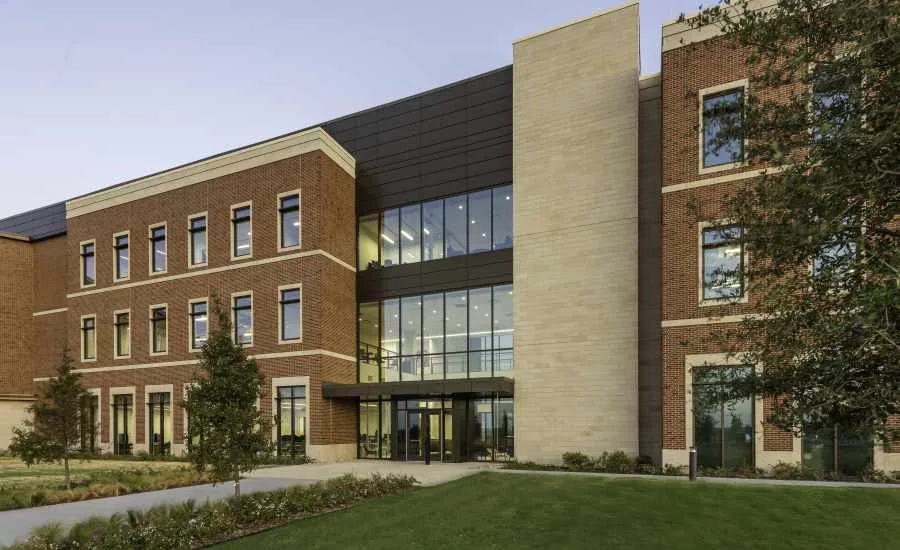
Tarleton State University. Photo courtesy of James Steinkamp.
March 16, 2020

Today, the future of education is defined by informed approaches, as opposed to the temporary nature of “trends.” Through rigorous study, advancements in education and neuroscience are guiding design strategies and revealing exactly how and why certain pedagogical and environmental factors benefit the learning process.


Why has there been such a massive shift in education environments?

More and more, academic institutions have to compete to attract the best and the brightest—and in response, have leaned toward increasingly progressive branding, offering students a wider variety of amenities and accommodating different learning styles to create inclusive and diverse student bodies. Academic institutions have put more emphasis on having their students feel that a learning facility has been created with their wants and needs in mind.

People with a strong attachment to ‘place’ are more self-aware, more conscious of others, and more engaged with the community—and this all starts with placemaking, which is at the core of any good design. Environments with a clear sense of place, where students can comfortably engage with their surroundings and each other, is pivotal to their success. Designers must consider a host of factors to accomplish this sense of place, such as mental and physical wellbeing, neurodiverse appropriate spaces, and a variety of learning environments.


How will health and wellness shape these spaces?

Many schools and designers are prioritizing health and wellness, with a deeper understanding of mental health in particular. Students need room for emotional space as well as areas that encourage them to learn life skills. In order to achieve a more balanced offering of spaces, designers are making sure to integrate areas where students can seek respite or assistance from educators or staff. Access to instructors, counselors, leadership, and other faculty, is key to a student’s success just as is access to spaces where they can be alone or have the ability to choose what they do at that moment––having both freedom of choice and these resources available to them better supports students’ mental wellbeing.

Research has also demonstrated that access to nature provides measurable benefits for hospital patients—this unsurprisingly also applies to education environments. Visual connection to nature provides students the ability to see beyond themselves and their current state.


How will the classroom change in the coming years?

Schools will continue to move away from the “factory model,” which suggests a standardized education environment (also known as a “one-size-fits-all” approach).This shift from the didactic classroom model will instead move toward a more engaged learning approach that accommodates a diverse student body. While there is some debate about the legitimacy of the idea that learning styles vary, there is no question about the efficacy of the team-based learning model in classrooms. Physical engagement with other students and the material being taught is crucial to success in the classroom.

Design elements outside of the classroom will encourage students to gravitate toward dedicated learning or collaboration spaces such as media centers, libraries, art rooms, or other inclusive spaces. The design strategies vary, as the approach depends on how educators envision their curriculum and ways that these new spaces can complement their teaching goals.

Amenities that were formerly not a part of traditional school structures are also finding their way into new facilities. Small touches like genderless bathrooms and meditation rooms seem like minor adjustments, when in fact these offerings are crucial to fostering a safe and inclusive environment for all students.


How will designers create spaces that are more supportive of educators?

Designers seek to meet the needs of educators by providing them with the tools to successfully inspire students through their curriculum. While younger educators navigate pedagogical challenges and technology better, designers must accommodate all faculty by creating environments that easily support ever-changing technology. Schools are also implementing more flexible office spaces for educators, allowing easier access to students and each other. Students with even occasional interaction with instructors outside of the classroom are significantly more likely to graduate. These adaptable office spaces allow educators to feel more approachable to students who need support.


How can designers help to shape education environments of the future?

Our goal as designers is to create more informed, innovative, diverse, and supportive spaces that provide students with the opportunity to succeed. To achieve this, we must be students of science ourselves, as this will help us create successful learning environments. Finally, we must also be able to immerse ourselves into the communities we are designing for, so that we can better understand the individuals that will ultimately inhabit these spaces.

KEYWORDS: academic building building design health and health care

Share This Story

Born in Bangalore, India, Vandana realized at a very young age that architecture was her passion. She loved building with her hands, enjoyed art, and also had a knack for math and science. Understanding what a powerful combination this could be for her future, her father took her on daddy-daughter dates to buildings that were designed by female architects, and on the first day she entered architecture school, she knew it was the perfect fit for her. Vandana has a unique ability to understand her clients’ intentions and aspirations beyond simply listening to the words they say. This is especially powerful for her education clients who typically have a large number of constituents involved, all with diverse perspectives. She is able to navigate through the many voices, create a clear vision, and translate that into a built facility that exceeds her clients’ expectations.

Starting from a childhood Lego block obsession, Tyler has built a design career focused on finding the balance between beauty and function. He finds his greatest achievement in projects that satisfy his “people first” philosophy – buildings that are not only beautiful, but that also support user needs and tell a compelling story. Particularly interested in the science of how we learn and grow creatively, Tyler’s most recent design work has focused on educational environments that push the boundaries of 21st-century learning models. An accomplished guitarist, Tyler flexes his own creative muscles by sharing his love of music with the community in weekend gigs and worship services.

Recent Comments

These are actually very helpful tips. It is...

This is the most beneficial blog for all...

This blog is a great resource for anyone...

Thank you for sharing this important information. I...

This is a very interesting subject of the...

Manage My Account
  • Sign up for the Newsletter
  • Online Registration
  • Manage My Preferences
  • Registration Customer Service

More Videos

Sponsored Content

Sponsored Content is a special paid section where industry companies provide high quality, objective, non-commercial content around topics of interest to the Building Enclosure audience. All Sponsored Content is supplied by the advertising company and any opinions expressed in this article are those of the author and not necessarily reflect the views of Building Enclosure or its parent company, BNP Media. Interested in participating in our Sponsored Content section? Contact your local rep!

close
  • 2 construction workers and a DEXcell panel
    Sponsored byDEXcell Roof Boards

    Designing Low-Slope Roofs for Resilience

  • Bell Bank headquarters in Fargo, North Dakota
    Sponsored bySto Corp.

    Drained and Back-Ventilated Rainscreens vs Pressurized-Equalized Rainscreens

  • A construction worker using DEXcell roof boards
    Sponsored byDEXcell Roof Boards

    The Hidden Strength of Low-Slope Roof Systems: Why Roof Cover Boards Matter

Popular Stories

construction industry workers in hard hats stand around a city scape

Construction Industry Revolts Over New CSI Licensing Plan

a man wearing a mask installs insulation into a wall system

Quiet Rooms and Healthier Air: A Second Look at What Goes Inside the Wall Cavity

Canalino Elementary School and Canalino Family School exterior

Daylighting Design to Support Rapidly Growing Trend in Modular Building Construction

Building Enclosure Newsletter

BE Poll

Events

June 17, 2025

Addressing Condensation in Low-Slope Roof Assemblies

Credits: 1 AIA LU/HSW; 0.1 ICC CEU; 1 IIBEC CEH; 0.1 IACET CEU

On Demand In modern roofing systems, vapor retarders and air barriers do more than just minimize air leakage—they’re essential to maximizing performance and longevity. This engaging course dives into the next generation of moisture control: permeable vapor retarders and air barriers. Discover how these cutting-edge technologies are transforming low-slope roofing assemblies by improving energy efficiency, managing moisture, and boosting wind uplift resistance.

April 9, 2026

Strategies for High-Performance Below-Grade Waterproofing

Credits: 1 AIA LU/HSW ; 1 IIBEC CEH; 0.1 IACET CEU

On-Demand Designing a high-performance building enclosure requires more than just surface-level protection; it demands a rigorous, performance-based mastery of below-grade water and gas mitigation. This discussion will provide an expert-level analysis of below-grade waterproofing within the comprehensive framework of the high-performance building enclosure.

View All Submit An Event

Products

Plaster and Drywall Assemblies Manual

Plaster and Drywall Assemblies Manual

This is a comprehensive manual that goes beyond codes and standards, providing expert guidance in design, detailing, material selection and troubleshooting for plaster and drywall.

See More Products
×

Enhance your expertise with unparalleled insights.

Join thousands of building professionals today. Shouldn’t you know what they know?

SUBSCRIBE TODAY!
  • RESOURCES
    • Advertise
    • Contact Us
    • Store
    • Want More
  • SIGN UP TODAY
    • Create Account
    • Newsletter
    • Customer Service
    • Manage Preferences
  • SERVICES
    • Marketing Services
    • Reprints
    • Market Research
    • List Rental
    • Survey/Respondent Access
  • STAY CONNECTED
    • LinkedIn
    • Facebook
    • Instagram
    • YouTube
    • X
  • PRIVACY
    • PRIVACY POLICY
    • TERMS & CONDITIONS
    • DO NOT SELL MY PERSONAL INFORMATION
    • PRIVACY REQUEST
    • ACCESSIBILITY

Copyright ©2026. All Rights Reserved BNP Media, Inc. and BNP Media II, LLC.

Design, CMS, Hosting & Web Development :: ePublishing