Choosing a Roofing Underlayment: Granular VS. Smooth
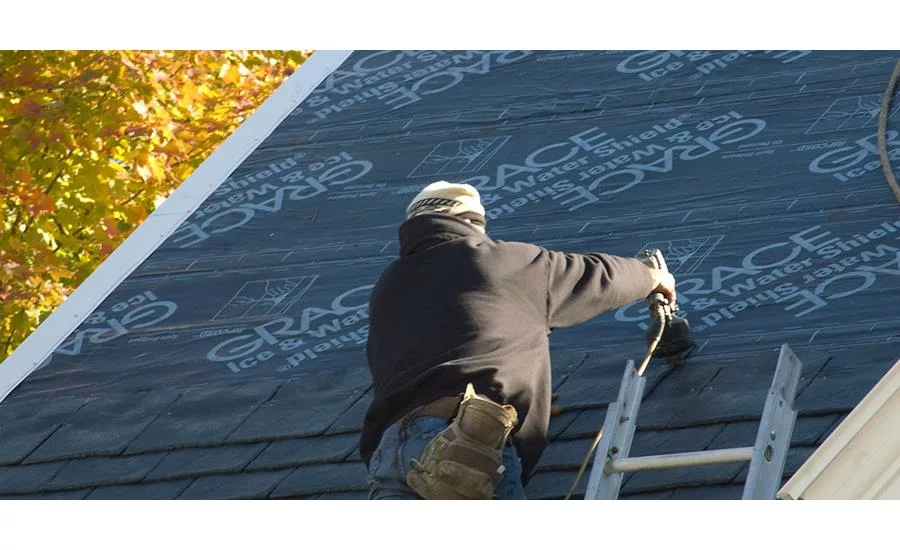
The history of roofing underlayments is a long one, a progression of needs and innovations that like the products themselves, have remained under the surface. Roofing underlayments have come a long way and are now a critical part of a building’s overall roof system.
Roofing underlayments perform many functions in a roof assembly, but first and foremost, they serve as the last line of defense between building owners and the damaging effects of water infiltration. Since asphalt saturated roofing felt first came on the scene in the 1800’s, there have been numerous advances in the design of underlayments to provide roofing solutions and serve multiple purposes.
Not All Underlayments Are the Same
Today, there are many self-adhered underlayment product choices available. While self-adhered roofing underlayments are designed to prevent water from leaking through the roof, not all are created equal.
Many believe that because a product has met all the requirements of the building code that it is the right choice, but the building code represents the absolute minimum level of performance required. There are significant differences in performance depending on how the product is constructed. An important consideration when selecting a self-adhered roofing underlayment is the surface: granular or smooth.
The surface of a self-adhered roofing underlayment has a big impact on the application of the underlayment, as well as on future re-roofing. Thus, it is critical to take a close look at the two categories to determine which one is best for their project. Here is a breakdown of the features of a granular self-adhered underlayment and a smooth self-adhered underlayment and their pros and cons:
Granular Underlayments
Granular self-adhered underlayments have sand-like surface. They are heavy with a thickness ranging from 40-60 mils. This type of underlayment has grown in popularity, as it is perceived that they are slip resistant and they are generally sold at a lower price.
Many roofers prefer granular underlayment, because they work with asphalt shingles all the time. They like the thickness, since it makes it easier to install. However, there are four considerations regarding granular underlayments to be aware of:
- After exposure, the granules can become loose and spread over the surface of a sloped roof.
- Granular underlayments tend to soften on hot sunny days. This creates the risk that oil and adhesive may be transferred from the surface of the underlayment onto the decorative roof covering, such as the shingles.
- A granular surface tends to be uneven, making it difficult to adhere to itself at overlaps and to create watertight laps. Frequently, granular underlayments require roofers to use roofing cement to bond these overlaps and end laps to improve water-tightness. This step is often overlooked by the installer.
- Granular underlayments are double the weight of smooth underlayments. They are usually 65 pounds compared to 30-50 pounds for a smooth underlayment roll with same dimensions.
Smooth Underlayments
Smooth self-adhered underlayments are also often referred to as a film surface underlayments. Their smooth surface provides benefits when it comes to waterproofing a roof. They seal aggressively to roof decks and seal around roof fasteners to prevent leaks and create a watertight bond. Other smooth underlayment features to consider are:
- They easily adhere to the next membrane layer at overlaps, making it easy to form strong and watertight laps without using roofing cement or sealants.
- Smooth surface underlayments have multiple levels of performance to choose from. For example, the ICE & WATER SHIELD underlayment from GCP Applied Technologies has a thick layer of aggressive adhesive, offering the ultimate level of protection and is designed to perform even in severe alpine and coastal environments. The company’s SELECT brand roofing underlayment has a thinner, less aggressive adhesive layer. It delivers the protection, economy and ease of installation typical of the granular membranes without its drawbacks: it is lighter weight; watertight laps can be easily formed due to the smooth film surface; it has no granules that can become loose; and it won’t track oil onto the roof covering on a hot day.
- When it comes time to replace a roof, smooth surface underlayments are re-roofable. Simply apply a new layer of smooth underlayment over the old smooth underlayment.
- Smooth underlayments are lightweight, 30-50 pounds for the same roll size, making it easier to haul up to a roof, reducing labor time and cost.
Even though roofing underlayments are hidden under the shingles, they should not be overlooked. They serve a critical function, protecting the building from water damage. Take the time to examine the multiple product types out there, first studying whether a granular or smooth surfaced underlayment is the better fit. Ask yourself the following questions
- What level of protection does the job require?
- What surface is ideal for application and securing overlaps?
- What is safest for the crew?
- What would the building owners prefer for re-roofing in the future?
The primary consideration shouldn’t only be about what is cheaper, but what product provide long-term quality and performance.
In 2016, GCP Applied Technologies (formerly Grace Construction Products) became an independent operating company from W. R. Grace. The company continues to drive innovation into its flagship product brands as it advances new developments in construction products technologies.