Building Enclosure logo
search
cart
facebook twitter linkedin youtube instagram Spotify Podcasts Apple Podcasts Spotify Podcasts Apple Podcasts
  • Sign In
  • Create Account
  • Sign Out
  • My Account
Building Enclosure logo
  • NEWS
    • Breaking News
  • SECTIONS
    • Columns
    • Project Profiles
    • Trade Shows
    • Sponsor Insights
  • SYSTEM DESIGNS
    • Low-Slope Roofs
    • Pitched Roofs
    • Metal Roofing Materials
    • Waterproofing
    • Sustainability
    • Insulation
    • Exterior Claddings
    • Wall Systems
    • Building Envelope
  • BLOG
    • The BE Blog
  • MEDIA
    • Podcasts
    • Webinars
    • Quiz
    • Videos
    • Polls
    • Interactive Spotlights
    • Newsletter
    • Photo Galleries
  • DIRECTORIES
    • Directory: Blue Book
    • Directory: Roofing Resource
  • PRODUCTS
  • TECHNICAL
    • Codes
      • Waterproofing
      • Roofing
    • Details
      • Waterproofing
      • Roofing
  • CONTINUING ED
  • ABOUT
    • Advertise
      • Editorial Calendar
    • Contact
    • eMag Archive Issues
  • SIGN UP!

What Makes a Building Green?

Eco-Friendly Construction Explained
By Hannah Thomas
green buildings
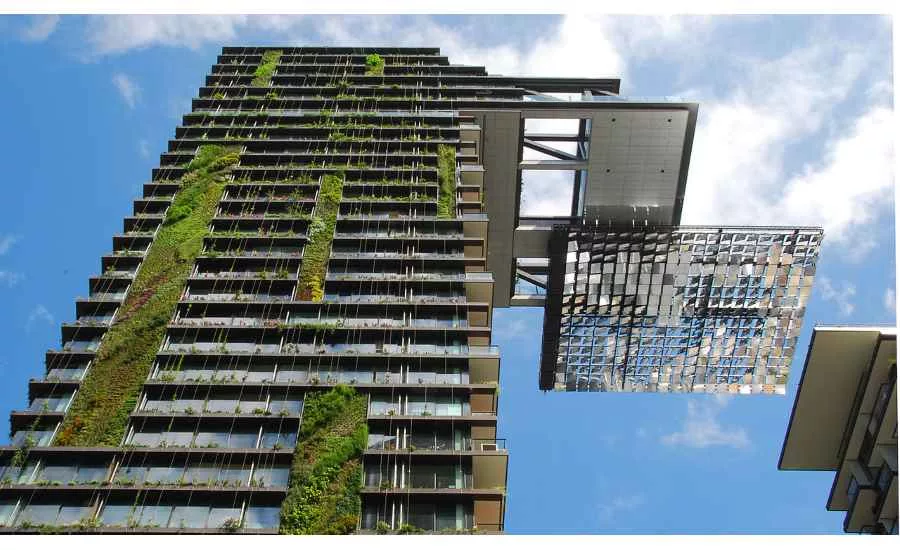
Image source: https://commons.wikimedia.org/wiki/File:Hanging_gardens_of_One_Central_Park,_Sydney.jpg.
August 27, 2018

Eco-friendly construction is being more and more used every day, especially in commercial building. This is a modern and inspiring effort to help the environment and preserve it for future generations. But what is a green building then? Simply put, green building is an environmentally-conscious construction which uses special materials and methods that won’t harm the environment.

With that in mind, here are the general and basic facts you should know about it, especially if you plan to buy an office in such commercial building, or an apartment in a residential one.

1. Use as many improvements as possible
You don’t have to decide on one feature, but you can use as many as you can since that will only make the building better and greener. So, instead of choosing only one state of the art system, incorporate as many as you can. For example, use solar powered ventilators instead of air-conditioners and water harvesting and purification for purposes of the building users.

2. Green construction materials
The most common green construction practices include using the sustainable building materials like wood and recycled glass and also renewable materials like rubber and bamboo. The paint needs to contain the lowest possible quantities of volatile organic compounds or VOC which are also toxic to humans and animals.

Steel is an eternally sustainable material which once manufactured can be forever. You can recycle it and it's never wasted away so its use is a solid investment and eco-friendly choice. “If we want to achieve really green buildings, we need to accept that building design or architecture may be influenced by the environmental standards we set,” says Marius Holm, managing director for Zero Emission Resource Organization (ZERO).

3. Consider a green roof system
The green roof system is basically having plants on your roof which can actually do a lot for creating an eco-friendly environment. Landscaping experts from Sphere Construction Company state that these types of roofs improve stormwater management, conserve energy, reduce noise and protect the roofing membrane. That will turn your roof into an oasis that will serve as habitat for wildlife and give room for urban agriculture. Additionally, such landscaping can create a space designated for a recreation of employees, brainstorming activities and relaxation during breaks.

4. Insulation is very important
If the insulation is good, then you won’t have to spend too much energy on the HVAC system. This also includes windows and doors, which can easily release the air in and out of the building though inappropriate sealants. Insulation will make your building energy efficient and lower the gas emissions your HVAC unit emits into the atmosphere.

However, some insulation materials commonly used in the construction are harmful like fiberglass and cellulose. But new materials are present on the market like wool and cotton that are equally efficient and were actually used for thousands of years.

5. Renewable energy is the future
Photovoltaic energy is still not part of the majority of residential buildings, but commercial ones are more and more seeing it as the future investment. This type of energy collection is clean, renewable and it will lower the expenses for the building considerably. And the best thing is that solar energy is unlimited and doesn't emit greenhouse gasses or other pollutants.

Although photovoltaic systems were expensive, the competitive market and high demand have lowered the prices in the recent years. The solar panels are practical and can serve as the roof on the building or parking lot. The production and consumption vary depending on the building and location, but even when partially used, photovoltaic energy can make a lot of difference for the environment.

Final words
Green building is not unreachable or hard to achieve, but for now, the expenses are higher than for the eco-friendly construction. However, in the long run, green construction is a cost-effective solution that not only saves the planet but also has a positive impact on the overall expenses of the building.

KEYWORDS: energy efficiency environmental impacts green building insulation systems

Share This Story

Hannah Thomas is an expert in business innovation and management with a love for writing. She is always eager to learn new things and to share the knowledge she acquired along the way. She can be reached at hannahthomas899@gmail.com.

Recent Comments

These are actually very helpful tips. It is...

This is the most beneficial blog for all...

This blog is a great resource for anyone...

Thank you for sharing this important information. I...

This is a very interesting subject of the...

Manage My Account
  • Sign up for the Newsletter
  • Online Registration
  • Manage My Preferences
  • Registration Customer Service

More Videos

Sponsored Content

Sponsored Content is a special paid section where industry companies provide high quality, objective, non-commercial content around topics of interest to the Building Enclosure audience. All Sponsored Content is supplied by the advertising company and any opinions expressed in this article are those of the author and not necessarily reflect the views of Building Enclosure or its parent company, BNP Media. Interested in participating in our Sponsored Content section? Contact your local rep!

close
  • HITT Construction headquarters
    Sponsored byBuilding Composites® LLC

    Pushing the Envelope

  • 2 construction workers and a DEXcell panel
    Sponsored byDEXcell Roof Boards

    Designing Low-Slope Roofs for Resilience

  • Bell Bank headquarters in Fargo, North Dakota
    Sponsored bySto Corp.

    Drained and Back-Ventilated Rainscreens vs Pressurized-Equalized Rainscreens

Popular Stories

graphic shows white arrows pointing to the right on a light green background

A Breakdown of Air Leakage Testing in LEED v5 BD+C

Open vs. closed cell foam in an attic

Open-Cell vs. Closed-Cell Spray Foam

skyscraper

NYC Tower Failure Offers Warning for Contractors

Building Enclosure Newsletter

BE Poll

Events

April 9, 2026

Strategies for High-Performance Below-Grade Waterproofing

Credits: 1 AIA LU/HSW ; 1 IIBEC CEH; 0.1 IACET CEU

On-Demand Designing a high-performance building enclosure requires more than just surface-level protection; it demands a rigorous, performance-based mastery of below-grade water and gas mitigation. This discussion will provide an expert-level analysis of below-grade waterproofing within the comprehensive framework of the high-performance building enclosure.

April 28, 2026

Roof Design Considerations That Prevent Installation Failures and Change Orders

Credit: 1 AIA LU/HSW; 1 IIBEC CEH; 0.1 ICC CEU

On-Demand This course provides visual examples of actual field conditions. Some good, some not so good; along with design suggestions that can cut installation costs and reduce construction change orders. Upon completion of this course, you will have a better understanding of the requirements the roofing contractor must meet to provide the specified roofing system warranty, and long-term value to the owner.

View All Submit An Event

Products

Plaster and Drywall Assemblies Manual

Plaster and Drywall Assemblies Manual

This is a comprehensive manual that goes beyond codes and standards, providing expert guidance in design, detailing, material selection and troubleshooting for plaster and drywall.

See More Products
×

Enhance your expertise with unparalleled insights.

Join thousands of building professionals today. Shouldn’t you know what they know?

SUBSCRIBE TODAY!
  • RESOURCES
    • Advertise
    • Contact Us
    • Store
    • Want More
  • SIGN UP TODAY
    • Create Account
    • Newsletter
    • Customer Service
    • Manage Preferences
  • SERVICES
    • Marketing Services
    • Reprints
    • Market Research
    • List Rental
    • Survey/Respondent Access
  • STAY CONNECTED
    • LinkedIn
    • Facebook
    • Instagram
    • YouTube
    • X
  • PRIVACY
    • PRIVACY POLICY
    • TERMS & CONDITIONS
    • DO NOT SELL MY PERSONAL INFORMATION
    • PRIVACY REQUEST
    • ACCESSIBILITY

Copyright ©2026. All Rights Reserved BNP Media, Inc. and BNP Media II, LLC.

Design, CMS, Hosting & Web Development :: ePublishing