Building Enclosure logo
search
cart
facebook twitter linkedin youtube instagram Spotify Podcasts Apple Podcasts Spotify Podcasts Apple Podcasts
  • Sign In
  • Create Account
  • Sign Out
  • My Account
Building Enclosure logo
  • NEWS
    • Breaking News
  • SECTIONS
    • Columns
    • Project Profiles
    • Trade Shows
    • Sponsor Insights
  • SYSTEM DESIGNS
    • Low-Slope Roofs
    • Pitched Roofs
    • Metal Roofing Materials
    • Waterproofing
    • Sustainability
    • Insulation
    • Exterior Claddings
    • Wall Systems
    • Building Envelope
  • BLOG
    • The BE Blog
  • MEDIA
    • Podcasts
    • Webinars
    • Quiz
    • Videos
    • Polls
    • Interactive Spotlights
    • Newsletter
    • Photo Galleries
  • DIRECTORIES
    • Directory: Blue Book
    • Directory: Roofing Resource
  • PRODUCTS
  • TECHNICAL
    • Codes
      • Waterproofing
      • Roofing
    • Details
      • Waterproofing
      • Roofing
  • CONTINUING ED
  • ABOUT
    • Advertise
      • Editorial Calendar
    • Contact
    • eMag Archive Issues
  • SIGN UP!

Where the Health & Wellness Movement Meets Design
By Daniel Overbey
9-6-16 Living Sustainable
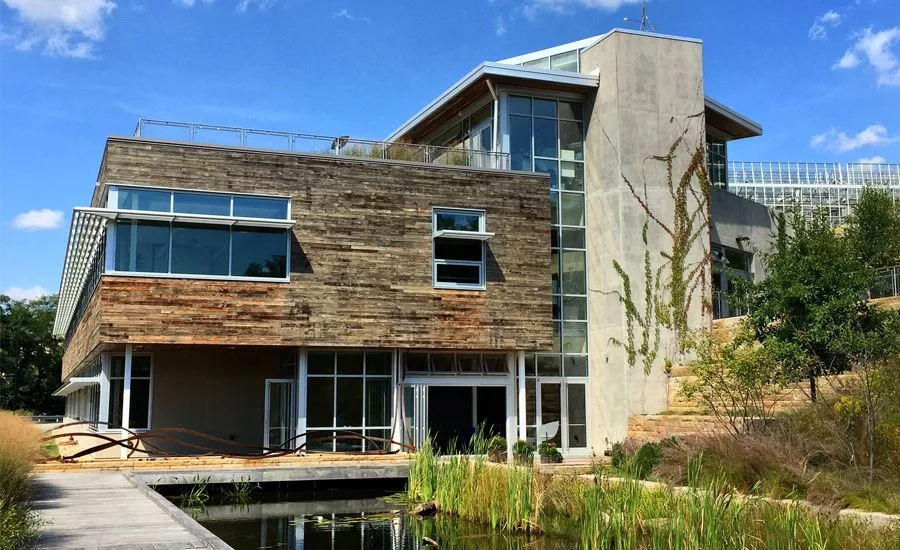
The Phipps Conservatory and Botanical Gardens is the first institution worldwide to be WELL Certified Platinum - Pilot Program, the highest rating awarded by IWBI, for its Center for Sustainable Landscapes (CSL). The CSL has also achieved the Living Building Challenge, LEED Platinum, and four-star certification under the Sustainable SITES Initiative (SITES). Photograph by Daniel Overbey.
September 6, 2016

An emerging body of work is showing that our buildings have a profound impact on our health, well-being, happiness and productivity. The built environment can shape our habits and choices, regulate our sleep-wake cycle, drive us toward healthy and unhealthy choices, and passively influence our health through the quality of our surroundings.

But how does a project team move decisively toward realizing a building solution that addresses human health in a comprehensive manner?

Enter WELL.


WELL Building Standard

The WELL Building Standard is a performance-based system for measuring and certifying features of a building and its surroundings that impact human health and well-being through air, water, nourishment, light, fitness, comfort and mind. The standard marries best practices in design and construction with evidence-based medical and scientific research – harnessing the built environment as a vehicle to support human health and well-being.

The rating system is grounded in a body of research that explores the connections between the buildings where we spend about 90 percent of our time, and the health and wellness impacts on us as occupants. WELL Certified spaces can help create a built environment that improves the nutrition, fitness, mood, sleep patterns and performance of its occupants.


Who Administers WELL?

WELL is administered by the International WELL Building Institute (IWBI), which is a public benefit corporation whose mission is to improve human health and well-being through the built environment.


Is WELL compatible with LEED?

Green building and health and wellness go hand-in-hand. LEED, which stands for Leadership in Energy and Environmental Design, prioritizes building design and construction practices focused on efficiency and resource management. WELL, by contrast, is focused on human health-related priorities, addressing aspects of high-performance design where LEED is less robust.

In fact, WELL is designed to work harmoniously with LEED and the Living Building Challenge, and is expanding alignment with other international leading green building systems such as Three Star, Green Star and BREEAM. 


The WELL AP Credential

The WELL AP credential ensures to the public, building owners, and other building professionals that the credential holder has demonstrated advanced knowledge and proficiency in building wellness as well as the principles, practices, and applications of the WELL Building Standard.

In order to demonstrate a commitment to placing health and wellness at the center of building design and performance—and to become more knowledgeable of technical details of WELL, I made it priority to be one of the first WELL APs in Indiana. I learned a tremendous amount along the journey. 


This is Just the Beginning

Health and wellness is one of the largest growing industries and consumers are impacting this growing demand. McKinsey and Company recently stated:

In order to demonstrate a commitment to placing health and wellness at the center of building design and performance—and to become more knowledgeable of technical details of WELL, I made it priority to become a WELL AP. I learned a tremendous amount along the journey.

The WELL Building Standard provides the framework for design and construction teams to build with a human-centered approach, which ultimately supports the industry in comprehensively addressing human health.

KEYWORDS: LEED WELL Building Standard

Share This Story

Overbey   head shot 2020 3

Daniel Overbey, AIA, NCARB, LEED Fellow (LEED AP BD+C, ID+C, O+M), WELL AP is an Assistant Professor of Architecture at Ball State University and the Director of Sustainability for Browning Day in Indianapolis, Ind. His work focuses on high-performance building design and construction, environmental systems research, green building certification services, energy/life-cycle assessment modeling, and resilient design. He can be reached at djoverbey@bsu.edu.

Recent Comments

These are actually very helpful tips. It is...

This is the most beneficial blog for all...

This blog is a great resource for anyone...

Thank you for sharing this important information. I...

This is a very interesting subject of the...

Manage My Account
  • Sign up for the Newsletter
  • Online Registration
  • Manage My Preferences
  • Registration Customer Service

More Videos

Sponsored Content

Sponsored Content is a special paid section where industry companies provide high quality, objective, non-commercial content around topics of interest to the Building Enclosure audience. All Sponsored Content is supplied by the advertising company and any opinions expressed in this article are those of the author and not necessarily reflect the views of Building Enclosure or its parent company, BNP Media. Interested in participating in our Sponsored Content section? Contact your local rep!

close
  • 2 construction workers and a DEXcell panel
    Sponsored byDEXcell Roof Boards

    Designing Low-Slope Roofs for Resilience

  • Bell Bank headquarters in Fargo, North Dakota
    Sponsored bySto Corp.

    Drained and Back-Ventilated Rainscreens vs Pressurized-Equalized Rainscreens

  • A construction worker using DEXcell roof boards
    Sponsored byDEXcell Roof Boards

    The Hidden Strength of Low-Slope Roof Systems: Why Roof Cover Boards Matter

Popular Stories

a man wearing a mask installs insulation into a wall system

Quiet Rooms and Healthier Air: A Second Look at What Goes Inside the Wall Cavity

Canalino Elementary School and Canalino Family School exterior

Daylighting Design to Support Rapidly Growing Trend in Modular Building Construction

construction workers on a roof, plane flies in background

Why Specifications Are Becoming the Next Critical Layer of Construction Compliance

Building Enclosure Newsletter

BE Poll

Events

June 17, 2025

Addressing Condensation in Low-Slope Roof Assemblies

Credits: 1 AIA LU/HSW; 0.1 ICC CEU; 1 IIBEC CEH; 0.1 IACET CEU

On Demand In modern roofing systems, vapor retarders and air barriers do more than just minimize air leakage—they’re essential to maximizing performance and longevity. This engaging course dives into the next generation of moisture control: permeable vapor retarders and air barriers. Discover how these cutting-edge technologies are transforming low-slope roofing assemblies by improving energy efficiency, managing moisture, and boosting wind uplift resistance.

April 9, 2026

Strategies for High-Performance Below-Grade Waterproofing

Credits: 1 AIA LU/HSW ; 1 IIBEC CEH; 0.1 IACET CEU

On-Demand Designing a high-performance building enclosure requires more than just surface-level protection; it demands a rigorous, performance-based mastery of below-grade water and gas mitigation. This discussion will provide an expert-level analysis of below-grade waterproofing within the comprehensive framework of the high-performance building enclosure.

View All Submit An Event

Products

Plaster and Drywall Assemblies Manual

Plaster and Drywall Assemblies Manual

This is a comprehensive manual that goes beyond codes and standards, providing expert guidance in design, detailing, material selection and troubleshooting for plaster and drywall.

See More Products
×

Enhance your expertise with unparalleled insights.

Join thousands of building professionals today. Shouldn’t you know what they know?

SUBSCRIBE TODAY!
  • RESOURCES
    • Advertise
    • Contact Us
    • Store
    • Want More
  • SIGN UP TODAY
    • Create Account
    • Newsletter
    • Customer Service
    • Manage Preferences
  • SERVICES
    • Marketing Services
    • Reprints
    • Market Research
    • List Rental
    • Survey/Respondent Access
  • STAY CONNECTED
    • LinkedIn
    • Facebook
    • Instagram
    • YouTube
    • X
  • PRIVACY
    • PRIVACY POLICY
    • TERMS & CONDITIONS
    • DO NOT SELL MY PERSONAL INFORMATION
    • PRIVACY REQUEST
    • ACCESSIBILITY

Copyright ©2026. All Rights Reserved BNP Media, Inc. and BNP Media II, LLC.

Design, CMS, Hosting & Web Development :: ePublishing