Let's Knock Down 5 Million Crappy Houses
Last month, three single-family homes I pass while driving to work disappeared.
Poof.
Last month, three single-family homes I pass while driving to work disappeared.
Poof.
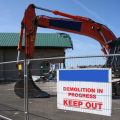
They were there on my drive into work. But on the way home, only a “demolished by” sign remained.
It was impressive. All three homes were old, battered and probably unsalable in the current market. It was good so see them go.
The disappearance of these abandoned abodes got me to thinking. Removing crappy homes offers several benefits beyond the obvious.
Obvious benefits include increasing neighborhood beautification, safety and the value of remaining homes.
Not-so-obvious benefits include reducing low-grade local housing stock, saving wasted energy and creating space for newly built homes.
With so many foreclosures stagnating on the market--and some in horrible shape with little upkeep--mortgage holders could stop the bleeding and simultaneously reduce housing competition by demolishing their worst properties.
By demolishing vacant houses, mortgage holders would save on the cost of utilities, maintenance, taxes, marketing and other carrying costs.
While these are great reasons, I’m even more buoyed by the idea of reducing our nation’s housing stock. According to the U.S. Census Bureau, there were 127,901,934 housing units as of 2007. If we demo just 4% of them, we would reduce our current housing stock by 5 million units.
And let’s face it. There is a legion of poorly built or horribly maintained houses littering our landscape. Tearing them down would be prudent in both the short and long term.
In addition, as we eliminate a few million dwellings, we limit the number of substandard options for people to buy and rent. That would increase demand for remaining properties.
Before long, our massive backlog of empty homes would shrink, leading to demand for new homes and remodeled properties. That would generate construction jobs and kick-start our economy at a time when we really need to see improvement.
But here’s one more opportunity that would benefit the construction field. Instead of simply demolishing these “blower-uppers,” let’s deconstruct them. We can create even more jobs for construction pros by systematically dismantling the homes, salvaging the good wood, electrical systems, piping and other products that still have value.
So here is a challenge for mortgage holders and local municipalities (not our federal government, please): catch the vision and build support for deconstruction of the worst houses in your portfolios or communities.
What’s not to like about eliminating eyesores, creating open spaces for new homes/gardens, improving neighborhood safety, recycling building materials, and creating jobs?
Deconstructing 5 million crappy houses will take vision, willpower and execution. But the payoff would be well worth it.
Poof.
©iStockphoto.com/fintastique
Last month, three single-family homes I pass while driving to work disappeared.
Poof.
They were there on my drive into work. But on the way home, only a “demolished by” sign remained.
It was impressive. All three homes were old, battered and probably unsalable in the current market. It was good so see them go.
The disappearance of these abandoned abodes got me to thinking. Removing crappy homes offers several benefits beyond the obvious.
Obvious benefits include increasing neighborhood beautification, safety and the value of remaining homes.
Not-so-obvious benefits include reducing low-grade local housing stock, saving wasted energy and creating space for newly built homes.
With so many foreclosures stagnating on the market--and some in horrible shape with little upkeep--mortgage holders could stop the bleeding and simultaneously reduce housing competition by demolishing their worst properties.
By demolishing vacant houses, mortgage holders would save on the cost of utilities, maintenance, taxes, marketing and other carrying costs.
While these are great reasons, I’m even more buoyed by the idea of reducing our nation’s housing stock. According to the U.S. Census Bureau, there were 127,901,934 housing units as of 2007. If we demo just 4% of them, we would reduce our current housing stock by 5 million units.
And let’s face it. There is a legion of poorly built or horribly maintained houses littering our landscape. Tearing them down would be prudent in both the short and long term.
In addition, as we eliminate a few million dwellings, we limit the number of substandard options for people to buy and rent. That would increase demand for remaining properties.
Before long, our massive backlog of empty homes would shrink, leading to demand for new homes and remodeled properties. That would generate construction jobs and kick-start our economy at a time when we really need to see improvement.
But here’s one more opportunity that would benefit the construction field. Instead of simply demolishing these “blower-uppers,” let’s deconstruct them. We can create even more jobs for construction pros by systematically dismantling the homes, salvaging the good wood, electrical systems, piping and other products that still have value.
So here is a challenge for mortgage holders and local municipalities (not our federal government, please): catch the vision and build support for deconstruction of the worst houses in your portfolios or communities.
What’s not to like about eliminating eyesores, creating open spaces for new homes/gardens, improving neighborhood safety, recycling building materials, and creating jobs?
Deconstructing 5 million crappy houses will take vision, willpower and execution. But the payoff would be well worth it.