The annual Global Climate Change Conference (also known as COP27), was just held in Egypt from November 6-18. The conference sparked global conversations around sustainability efforts and the role of the construction industry in reducing emissions.
Spread across 100+ acres in the Willowbrook neighborhood of Los Angeles County, Calif., the Earvin "Magic" Johnson Recreation Area, named after the basketball Hall of Famer and Los Angeles Lakers legend, is a go-to area for outdoor activities, gatherings and festivals.
Nearly all industries have felt the pain of supply chain issues. The construction industry has been dealing with supply chain issues for several years now, posing a continuous challenge to completing projects timely and within budget.
Dan and Annie sat down with the Enclosure Experts podcast to talk about all things net zero. Mostly, they discussed the concept of getting to net zero before the RFP, including questions to ask before writing an RFP and how project teams can approach net zero energy while working on a project.
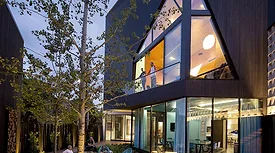
Making its own unique contribution to San Francisco’s South of Market building boom is a seven-story, mixed use office building with exterior vertical sunshades framing a high-performance curtain wall.
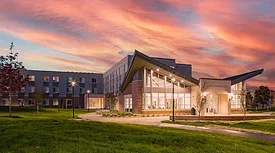
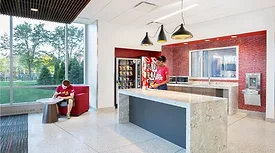
South Dakota’s largest private university, Augustana University, has made the shift to mixed-grade housing for the 2022-2023 school year with the recent completion of Wagoner Hall designed by St. Louis-based KWK Architects.
Project teams are considering additional dimensions of carbon emissions resulting from a building project, including carbon emissions from water consumption, waste generation, occupant transportation, and the embodied carbon of materials used to build the project.
Housed in a collection of repurposed 1950s-era warehouses and a former parking lot in northwest Portland, the Foundation occupies what was originally conceived as a residential home.
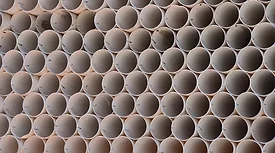
If PVC is categorized as hazardous waste, the EPA would have to develop a comprehensive framework to ensure its treatment, storage and disposal. This would likely be very costly, burdensome and particularly hit small businesses hard.
According to the EPA, Sick Building Syndrome describes situations in which building occupants experience acute health and comfort effects that appear to be linked to time spent in a building, but no specific illness or cause can be identified.
 RSS
RSS