The Biden-Harris Administration released Decarbonizing the U.S. Economy by 2050: A National Blueprint for the Buildings Sector, a comprehensive plan to reduce greenhouse-gas emissions from buildings by 65% by 2035 and 90% by 2050.
Early planning ensures compliance with ever-stricter environmental regulations. It allows time for devising the most efficient building processes, reduces waste generation and minimizes a project’s overall carbon footprint.
NEU: An ACI Center of Excellence for Carbon Neutral Concrete—with a mission to drive education, awareness, and adoption of carbon-neutral concrete materials and technologies—announced the detailed plans for $6B of investments in the U.S. industrial sector by the U.S. Department of Energy.
ClarkDietrich is introducing a new line of low embodied carbon steel framing products, giving architects and engineers greater freedom in designing sustainable buildings.
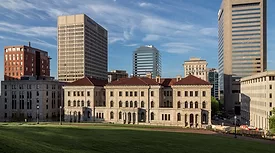
The U.S. General Services Administration recently awarded over $10 million to select windows made of low embodied carbon glass to be featured in an existing renovation project at the Lewis F. Powell Jr. U.S. Courthouse and Annex buildings in Richmond, Virginia.
The UK-basedBuilding Research Establishment, Green Building Council of Australia and theU.S. Green Building Council have announced an industry-first, international alliance to unlock the sustainable finance needed for the built environment to play its role in meeting global climate goals.
While much attention has historically been focused on operational carbon emissions generated during a building's lifecycle, the significance of embodied carbon cannot be overstated.
Innovative Brick Systems has rejoined AltusGroup as an Innovation Partner to lend its expertise and technical support to the group’s precaster members.

.webp?height=168&t=1711279082&width=275 "early planning can reduce environmental impact in construction projects (002).jpg")