Solar Heat Gain Coefficient Optimization
A Three-Layer Approach to Meeting Thermal Performance Targets
Key Takeaways
- Layered facade design cuts cooling loads, lowering energy costs while maintaining daylight and occupant comfort in warmer climates.
- Stricter energy codes demand better SHGC management, making high-performance glazing and shading critical for compliance.
- Exterior shading, advanced glazing, and smart interior controls together reduce heat gain, protecting buildings from rising temperatures.
With climate change comes stricter energy codes. Maintaining building occupant comfort requires innovative facade designs that align with building envelope strategies. The Solar Heat Gain Coefficient (SHGC) now plays a central role in determining the amount of radiation that enters a building through transparent surfaces.
Why Use a Layered Approach to Managing Solar Gain
In warmer regions, unmanaged solar gain through windows can quickly become one of the largest drivers of cooling demand in commercial buildings. As a result, many envelope consultants and energy modelers now adopt a layered strategy for improving building envelope thermal performance. Instead of treating glazing, shading and interior controls as separate decisions, designers coordinate them as a sequence of complementary and supportive systems.
A three-layer framework comprised of these elements lets design teams achieve meaningful passive cooling load reduction to counter high SHGC while maintaining daylighting, occupancy comfort and code compliance.
The Legislation Driving Thermal Performance Targets
The U.S. recorded the fourth-warmest year in 2025, with temperatures above its 20th-century baseline. With authorities taking note, ASHRAE 90.1-2022 Compliance and the 2024 International Energy Conservation Code (IECC) require designers to be more proactive in managing solar heat gain in low-rise residential buildings, rather than relying on mechanical cooling systems to compensate for rising heat.
The most appropriate way to achieve energy efficiency goals is to follow a tri-layer approach. This targets exterior control, glazing and interior treatments.
1. First Line of Defense — Exterior Shading Technologies
An effective way to control solar heat gain is to prevent the sun’s radiation from reaching the windows in the first place. Exterior Shading Systems for commercial buildings intercept sunlight before it penetrates the building envelope, reducing the thermal load on interior spaces. With a concerning 14% of commercial energy use devoted to cooling commercial buildings, keeping heat out is key to efficiency.
While shade structures are popular in outdoor public spaces, their ability to prevent sunlight from penetrating buildings is proving increasingly popular as a way to secure the energy envelope before heat enters the equation. Commercial projects commonly deploy several types of exterior shading.
These include:
- Horizontal overhangs and brise-soleil
- Vertical fins for east and west orientations
- Film-coated, tinted windows or blackout blinds and curtains
- Operable louvers integrated into curtain walls
- Tensioned fabric shade structures
Specialized UV-resistant textiles block or absorb incoming radiation before this reaches the glass surface. Properly engineered shade fabric lowers the ambient internal temperature.
In facade design, this modulates the heat island effect. Because the heat never actually enters the building, the cooling systems operate at lower baseline loads and need less electricity to run.
Exterior shading also helps control glare and improve occupant comfort near perimeter zones. When integrated early in the design process, these enhance architectural expression while boosting performance.
Structural and Thermal Considerations
Measurable benefits are instant when the systems integrate with thoughtful planning.
Design teams should evaluate:
- Structural attachment points for shading infrastructure
- Potential thermal bridging at bracket connections
- Wind load impacts on projecting elements
- Maintenance access and long-term durability
Using properly designed thermal breaks and attachment assemblies prevents hardware from undermining the overall result. With early coordination, these challenges are typically manageable and outweighed by the savings.
2. Glazing Specificity and Spectral Selectivity
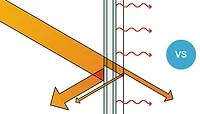
Even with effective exterior shading, glazing controls the lion's share of solar heat gain. The SHGC measures the fraction of radiation that enters a building through a window, both directly transmitted and absorbed before re-radiating indoors.
A lower SHGC value indicates better resistance to the sun’s infrared spectrum. Modern windows rely on spectrally selective treatments to manage this balance, which is how they are rated for SHGC, providing designers with an indication of the material's quality and its performance in designs.
Advanced coatings let visible light pass through glass while deflecting a significant portion of the infrared spectrum, which is responsible for heat transfer. This capability helps design teams maintain daylighting performance without introducing excessive cooling loads.
Window performance ratings from the U.S. Department of Energy highlight how SHGC works alongside other metrics such as visible transmittance and U-factor. Selecting a glazing with the appropriate SHGC value allows designers to tailor facade outcomes to climate conditions.
Climate Considerations and Energy Codes
Climate zones set SHGC targets. Hot areas require lower SHGC values to reduce solar gain and cool interiors, while colder regions need higher SHGC values to support passive radiant heating.
Energy codes tighten requirements. Under the 2024 IECC regulations, the focus lies on increased insulation and revised fenestration performance targets underscore the importance of selecting high-performing facade assemblies rather than relying on mechanical cooling to compensate for inefficient envelopes.
SHGC Versus Daylighting
A common misconception in facade design is that reducing SHGC inevitably cuts daylight. Spectrally selective coatings challenge that assumption. Many modern glazing products maintain high visible-light transmittance while maintaining relatively low SHGC values. The result is that light can enter without raising the indoor temperature.
Energy modeling often demonstrates that combining spectrally selective glass with exterior measures produces better results than relying on low-SHGC glazing alone. A layered strategy is proactive — stopping most radiation outside, managing transference at the window level and managing thermal increases with indoor controls — instead of placing the entire burden on the windows.
3. Interior Treatments for Dynamic Solar Control
Even the most optimized facade allows some radiation to enter interior spaces. Using shading inside the building provides a final layer of control, allowing occupants or building automation to manage glare and residual heat gain throughout the day.
Common interior solutions include automated roller shades, Venetian blinds with daylight redirection, electrochromic glazing and low-emissivity window films. These interior treatments support adaptive thermal management.
Unlike exterior strategies, which remain static in most installations, interior options can respond to changing sun angles, weather conditions and occupant preferences. When connected to building automation systems for dynamic shading, the cooling load during peak radiant exposure is optimized while maintaining daylight during lower-intensity periods.
Integration With Building Automation
Modern commercial buildings increasingly combine intervention protocols with comprehensive AI-optimized building management. Technologies adjust measures based on the sun’s position, interior temperature sensors, occupancy patterns and visible light. When coordinated with HVAC operations, automated shading can flatten peak cooling demands and improve overall power requirements.
Designing Facades for a Warmer Climate
As temperatures and energy codes rise, building exteriors must prioritize adaptability. Efficiency standards become more demanding, and the ability to manage solar heat gain coefficients through envelope design is now more valuable than ever.
A layered strategy for SHGC optimization means designers reduce thermal loads while maintaining adequate natural light penetration without neglecting architectural flexibility. When the exterior, window-level and interior layers collaborate, facade performance improves.
Looking for a reprint of this article?
From high-res PDFs to custom plaques, order your copy today!

.webp?height=740&t=1767036885&width=auto "Header - BE 1170x658 (002).png")

.webp?height=740&t=1755781744&width=auto "KEE(2).png")