Tariffs
SCOTUS Ruling Brings Mixed News for AEC Trades
IEEPA duties are out, but Section 232 tariffs on steel and aluminum remain — and distributors may be slow to pass along savings
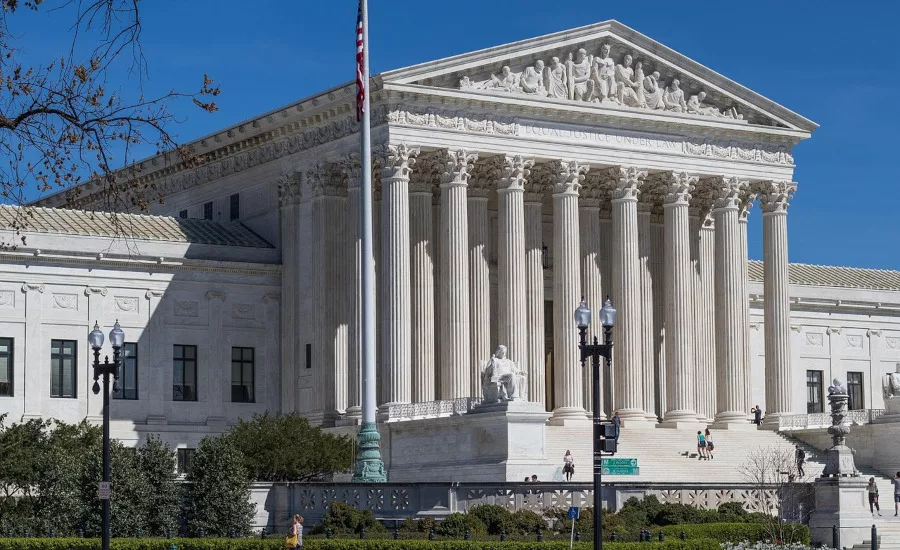
The U.S. Supreme Court on Friday struck down the core of President Donald Trump’s emergency-tariff program, a decision that could reduce price volatility for the AEC industry—particularly on metal-intensive scopes—while leaving other trade duties intact.
In a 6–3 decision, the Court ruled that the sweeping tariffs Trump imposed through a series of executive orders exceeded the authority granted by Congress under the International Emergency Economic Powers Act (IEEPA), a 1977 law meant to address foreign threats during national emergencies. Chief Justice John Roberts wrote that the administration’s interpretation would amount to an “independent power” to impose tariffs “at any rate, for any amount of time,” despite IEEPA containing “no reference to tariffs or duties.”
The decision covers two major buckets of IEEPA-based tariffs described in the litigation: “trafficking” tariffs aimed at products from China, Canada and Mexico tied to fentanyl flow concerns, and “reciprocal” tariffs that included an initial 10 percent levy on imports from almost all countries and higher rates on dozens of nations.
Why Architects are Watching
Here are four reasons architects—especially those working in commercial, institutional, and public sectors—should pay close attention to this Supreme Court tariff ruling:
1. Material Pricing Stability Impacts Project Budgets
Tariffs directly affect the cost of steel, aluminum, curtainwall systems, roofing metals, fasteners, and mechanical components—all critical to AEC projects.
When broad emergency tariffs are struck down:
- Price volatility may decrease.
- Bid spreads may tighten.
- Escalation contingencies may shrink.
- Owners may regain confidence to move forward.
For architects, this impacts:
- Early cost modeling
- Value engineering cycles
- GMP negotiations
- Owner trust in project estimates
Even if some duties remain intact, removing sweeping IEEPA-based tariffs reduces uncertainty—uncertainty is often more damaging to projects than high prices alone.
2. Contract Risk Allocation Could Shift
Over the past few years, tariff volatility led to:
- Escalation clauses
- Material substitution requests
- Force majeure disputes
- Delays tied to supply chain disruptions
If emergency tariffs are limited by the Court:
- Owners may push back on escalation contingencies.
- Contractors may have less justification for material substitutions.
- Risk-sharing language in AIA or custom contracts could evolve.
Architects must understand how legal shifts affect:
- Spec language
- Allowances
- Material performance substitutions
- Procurement timing
This ruling doesn’t eliminate trade risk—but it changes how it may be allocated.
3. Metal-Intensive Design Decisions Are Directly Affected
Architects designing:
- Structural steel systems
- Long-span buildings
- Curtain wall façades
- Standing seam metal roofing
- Aluminum sunshades…
- are especially exposed to tariff-driven cost swings.
When tariffs spike unpredictably:
- Owners may demand redesigns.
- VE may compromise aesthetics.
- Alternative materials (wood, concrete, composite panels) may gain traction.
Understanding this decision helps architects anticipate:
- Material competitiveness shifts
- Supply chain sourcing changes
- Early schematic design cost implications
4. Public and Institutional Projects May See Funding Effects
Many architects work on:
- Schools
- Municipal buildings
- Infrastructure
- Healthcare facilities
Public projects are particularly sensitive to:
- Tax-funded budgets
- Bond constraints
- Hard bid thresholds
If tariff volatility declines:
- Bond-funded projects may stretch further.
- Deferred capital projects could re-enter planning.
- Budget overruns tied to metal escalation may ease.
However, because the Court only addressed tariffs imposed under the International Emergency Economic Powers Act, other duties under separate trade statutes remain in place. So this is not a full reset—just a recalibration.
Bottom Line for Architects
This isn’t just a political story—it’s a risk management and design economics story.Architects should pay attention because this ruling influences:
- Cost forecasting
- Material specification strategy
- Contract language
- Owner confidence
- Project timing
In an industry where margins are tight and materials like steel and aluminum are foundational, trade policy decisions at the federal level can meaningfully shape design decisions at the drafting table.
Any easing in material costs may take time to reach jobsites. Distributors typically sell through inventory purchased under earlier cost structures, and manufacturers may be slow to adjust pricing until the legal and policy outlook is clearer.
Economist Alex Chausovsky has also cautioned that tariffs tend to filter slowly through the economy, with about 37% of tariff costs passed to consumers and 9% absorbed by companies, according to his framing. That dynamic helps explain why a court ruling can change the policy landscape overnight, but bids and invoices may shift more gradually.
Not All Tariffs Fall
The ruling does not eliminate all U.S. tariffs. It applies to duties imposed under IEEPA; other tariffs created under separate trade statutes—including authorities often used for national security or unfair-trade findings—remain in place.
The Signatory Wall and Ceiling Contractors Alliance (SWACCA) underscored that point for interior trades, noting the decision does not affect Section 232 tariffs imposed under separate authority, including duties affecting steel, aluminum, wood products and copper—materials that can still influence framing and ceiling packages.
Costs Were Climbing Before the Ruling
The Supreme Court decision lands in a market that was already experiencing broad cost pressure. ABC previously reported construction input prices rose 0.2% in September, the fifth straight month of increases, and were 3.5% higher year over year (with nonresidential inputs up 3.8%), while ABC Chief Economist Anirban Basu flagged uncertainty around the effects of higher tariffs on essentials including iron, steel, aluminum and copper. More recently, Walls & Ceilings reported that costs accelerated again in November, with ABC showing construction input prices up 0.6% month over month and 3.4% year over year (nonresidential inputs up 3.8%), while AGC’s analysis pegged the nonresidential construction PPI at +0.4% in November and +3.6% over 12 months—the largest annual increase since January 2023.
At the same time, the steel supply picture has been shifting. W&C reported the U.S. produced 82.0 million tons of crude steel in 2025 (up 3.1% year over year), overtaking Japan for the first time in 26 years, while steel imports as a share of U.S. consumption reportedly fell from about 25% in early 2025 to 14% by November.
NAHB Chairman Bill Owens said the ruling “reins in presidential authority” under IEEPA but warned Trump “still has wide latitude” on tariff policy. Owens urged the administration to exempt building materials, arguing that tariffs raise construction costs, impede supply chains and create uncertainty that makes it difficult to price homes.
Even if materials stabilize, labor constraints continue to shape bids and schedules. W&C previously reported that 92% of construction firms said they are having difficulty finding qualified workers, and 78% experienced at least one delayed project in the past year, citing an AGC/NCCER survey.
What Comes Next
Two practical questions now move to the foreground: whether the administration tries to rebuild parts of the tariff agenda through other statutes, and how (or whether) refunds are handled for duties already collected.
On refunds, the Supreme Court did not weigh in on whether or how the federal government should reimburse importers—an issue SWACCA said remains unresolved for IEEPA-linked duties. Justice Brett Kavanaugh, writing in dissent, suggested refund obligations could be substantial.
Looking for a reprint of this article?
From high-res PDFs to custom plaques, order your copy today!


.webp?height=740&t=1767036885&width=auto "Header - BE 1170x658 (002).png")

.webp?height=740&t=1755781744&width=auto "KEE(2).png")