RAMSA and National Trust Partner on Pro Bono Campus Plan
Re-imagining the historic Palmer Memorial Institute
.webp?t=1770157320)
RAMSA (Robert A.M. Stern Architects), in collaboration with the National Trust for Historic Preservation’s Where Women Made History initiative, has completed a pro bono campus plan for the historic Palmer Memorial Institute. The 35-acre site has been re-envisioned as a vibrant cultural and educational hub, establishing a framework to guide future rehabilitation, restoration, and adaptive re-use of the site while ensuring founder Dr. Charlotte Hawkins Brown’s enduring legacy continues to inspire.
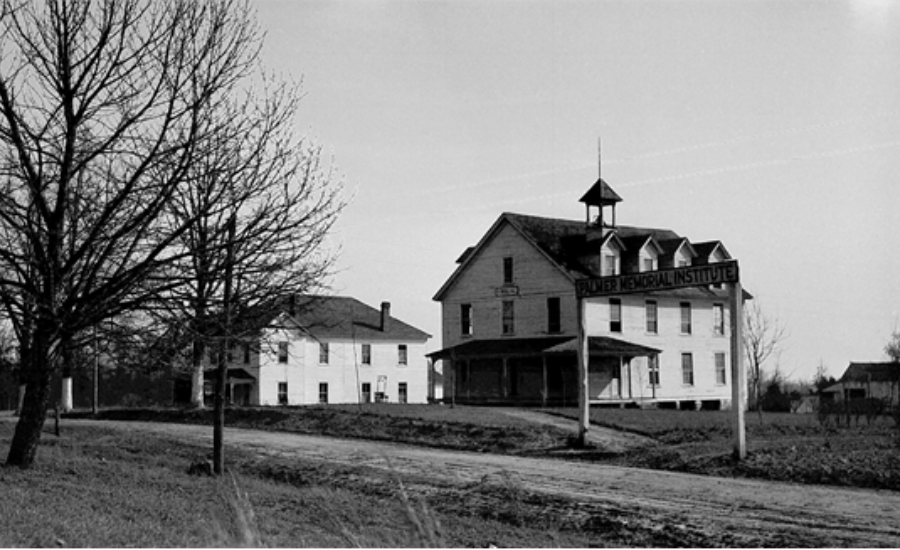
Dr. Brown (1883-1961) was a pioneering educator and community leader who founded the Palmer Memorial Institute in 1902. Initially established as a small rural school for African American children, Palmer Memorial Institute grew under her leadership into a nationally recognized preparatory school that emphasized academic excellence and local leadership.
 Griff Davis/Griffith J. Davis Photographs and Archives
After closing in 1971 following a fire and decades of underinvestment, Palmer Memorial Institute’s campus fell into disrepair. Today, the campus is home to and stewarded by the Charlotte Hawkins Brown Museum, a North Carolina state historic site dedicated to preserving the history of Palmer Memorial Institute. RAMSA’s newly completed campus plan provides a path forward, guiding the site’s future transformation into a vibrant cultural and educational hub that can once again serve the Sedalia community.
“Historic campuses like Palmer Memorial Institute carry deep cultural meaning, and with thoughtful planning they can be evolved to serve new generations,” said Melissa DelVecchio, Partner at RAMSA. “This campus plan will help reclaim and revitalize a legacy institution as a living space to support art, history, education, and community life while honoring the values that first shaped it.”
“This is the first and only site of Black women’s history recognized as a state historic site in North Carolina, and unfortunately it is also one of the most under-resourced,” said Christina Morris, Senior Director of Preservation at the National Trust and Leader of the Where Women Made History initiative. “We are grateful that the RAMSA and National Trust teams were able to come together in partnership with the state and its staff, Palmer alumni, and Sedalia residents to imagine how Palmer Memorial Institute can build on Dr. Brown’s remarkable legacy and be revived as a center of education, excellence, and community for years to come.”
RAMSA’s plan organizes the campus into program-specific zones that enable phased implementation, introducing new uses such as artist and scholar-in-residence housing, community and educational programs, maker spaces, a community garden, and outdoor trails inspired by Dr. Brown’s focus on wellness and nature.
These zones—museum/visit, administration, live/learn, celebrate/collaborate/research, community/culinary/agriculture, and maintenance/service—guide the repositioning of select historic buildings to improve circulation and strengthen wayfinding between program-specific areas along a central pedestrian spine.
Notably, the visitor’s center will be relocated to the center of the campus to serve as the primary orientation point, and the maintenance shop will be consolidated along Palmer Farm Road for better access and to minimize visual impact on the landscape.
Other structures, such as the Gregg and Brightside cottages, will be fully restored and adaptively reused as artist- and scholar-in-residence housing, preserving their historic character. The Firehouse and shed will be reconstructed in full, and accessibility upgrades, including external ramps and internal elevators, will be added to key buildings and outdoor spaces.
Together, these interventions will address long-standing challenges identified during site analysis, including visitor orientation, pedestrian and vehicular circulation, and accessibility, creating safer and more intuitive pathways throughout the campus.
The Palmer Memorial Institute campus plan marks the second pro bono collaboration between RAMSA and the Where Women Made History initiative, following the reimagining of Stone Quarry Art Park in Cazenovia, New York.
Looking for a reprint of this article?
From high-res PDFs to custom plaques, order your copy today!
.webp?height=740&t=1767036885&width=auto "Header - BE 1170x658 (002).png")

.webp?height=740&t=1755781744&width=auto "KEE(2).png")