Behind the Scenes of Renovation Projects
Renovation projects, whether residential or commercial, offer an exciting opportunity to reimagine the potential of an existing space
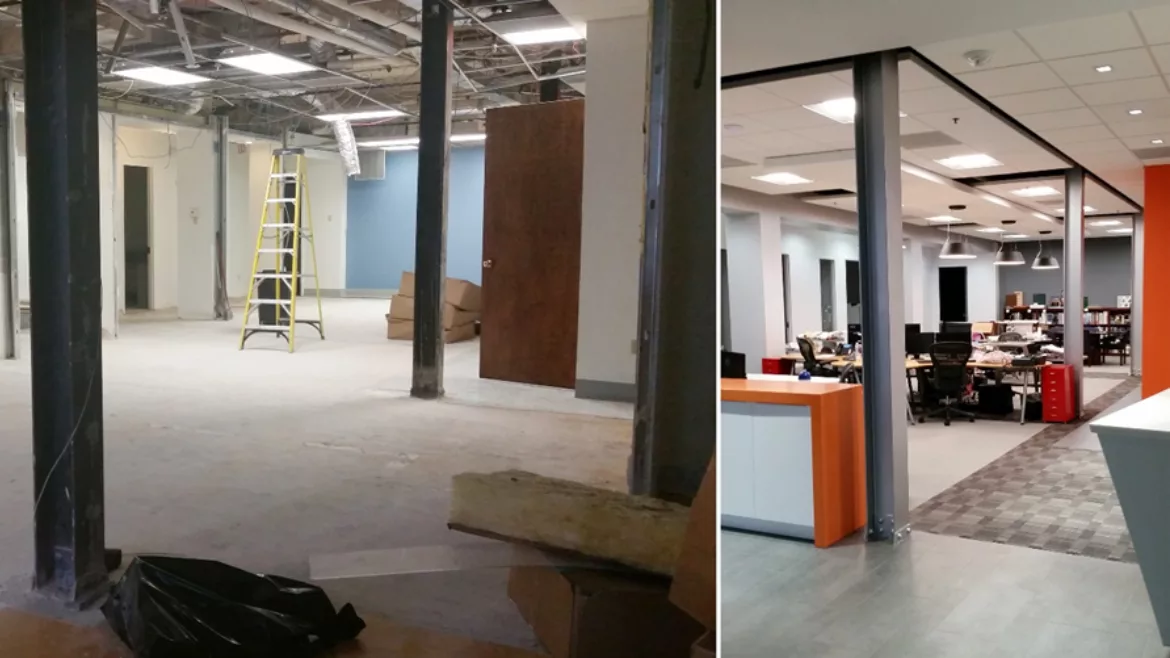
Before and after: an office reinvented to reflect modern culture and collaboration.
Renovation projects, whether residential or commercial, offer an exciting opportunity to reimagine the potential of an existing space. The scope can range from updating the image and identity of a brand to enhancing the functionality and efficiency of the systems that serve the space. In certain instances, the projects are a necessity because the age of the space warrants repair and replacement of a variety of components. No matter the reason, renovations can present an assortment of challenges that require careful planning and execution. Understanding the project budget and how to manage the details of the process will help homeowners, developers, and business owners make informed decisions and achieve more successful outcomes.
To determine if a renovation project makes sense, the project’s benefits must be weighed and the circumstances for needing it understood. One of the most compelling reasons to undertake a renovation project is the potential for increased property value. For instance, in residential properties, updating kitchens, bathrooms, and other features can make the property more appealing to future buyers or tenants. Even small improvements such as updating flooring, fixtures, and paint can yield significant returns on investment. Other considerations for a renovation project could be improved functionality and increased comfort for the end user.
Also improving and tailoring a space to current needs and market demands can allow Owner’s to be more competitive with their counterparts. Many times, Owner’s are seeking a differentiator that elevates their property to draw more attention and market share. This can be done by reconfiguring layouts to more open floor plans or adding extra rooms to meet modern needs. For business Owners, a renovation could improve workflow and efficiency within the workplace which translates into higher productivity and happier employees. For hospitality type projects, renovations can lead to increased guest experience and satisfaction or provide a unique curated offering like no other. Whatever the reason for the project, the vision is just the beginning.
Once a project is realized, establishing the project budget is the next step. In certain instances, the budget is based on the amount of savings or reserves available for the project and other instances the budget is based on financial calculations that determine how many dollars should be dedicated for a return on the investment. However, often the budget does not reflect the challenges and processes a renovation can demand. Many times, existing conditions are not thoroughly reviewed prior to establishing a budget and assumptions are made about the ease of connectivity to existing utilities and structural members. Code compliances with respect to federal, state, and local governing authorities as well as knowing how to properly navigate the web of jurisdictional approvals is also overlooked. Project management, facilitation, and logistics are other criteria that are typically not at the forefront of establishing the budget. Without a sound strategy, these issues can quickly add complication and exuberant costs that can derail the project.
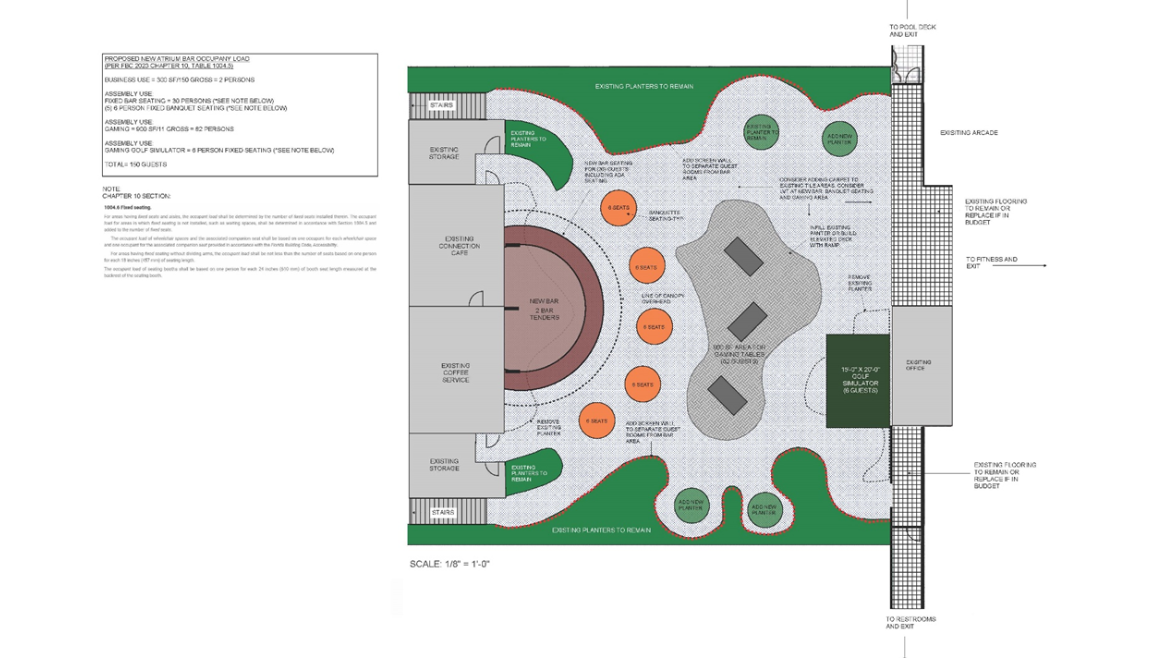 Balancing creativity and compliance through strategic space planning and code analysis. Image courtesy of Dragonfly Architecture.
The recommended best practice is to hire experienced professionals that can assist with the analysis and organization of the project process. When a project is first considered for renovation, an evaluation of the existing conditions should be carried out. This will require a nominal investment to solicit architects, engineers, and contractors to observe the space and identify the potential challenges related to the scope. If the scope is not yet determined, these professionals can also assist in determining the best course of action to make the vision a reality. Regardless, observing the space and its systems will establish the base line of what can be done and the level of difficulty at which it can be achieved. This will be a direct correlation to the cost and time the project will take. Ideally, a representative from each discipline should be retained for the evaluation because the collaboration and interconnectivity of their responsibilities will determine the best overall direction.
Another key component for establishing the project base line is the use of as-built construction documentation. These documents are vital to understanding the project make-up and key systems necessary for a fully functional space. Often record documents are not available or lack completeness. No matter the scale of the project, existing documentation is required to start the new project. With some documentation, professionals can annotate missing features or variations seen in the field. However, it is not cost prohibitive for a full recording of the space by these disciplines. The solution is to solicit a third-party building scanning company to document all the pertinent details related to the scope of the project. These scans will provide information for all the interior and exterior conditions and can be as specific as necessary. The more detailed the scan the higher the cost. A combination of third-party scanning and evaluation by the design team yields the best value.
Many projects are planned without a working knowledge of the codes and ordinances that apply to the type of renovation being considered. An early evaluation by the architectural and engineering team can identify where certain obstacles may exist. Codes are not always intuitive and are often open to interpretation. Knowing how to properly navigate these requirements will greatly benefit the project’s outcome. A renovation type project usually starts by applying requirements of the current adopted existing building code of the authority having jurisdiction.
This will establish the type of renovation project. Such examples include, repair or replacement of like-for-like components, a modification or reconfiguration of the layout, a change of occupancy use or classification, or a combination of all. There are specific criteria that apply which must be understood to prevent scope creep and cost escalation. This often occurs when the scope and budget are established without understanding the implications of the code. The fire prevention codes must also be reviewed in conjunction with the building codes because there are variations that may be more stringent than their building code counterparts. Life safety is paramount to whatever project goals are planned and cannot be sacrificed. A thorough review should be carried out, which is a step-by-step process citing specific sections that apply. Often local code officials challenge a renovation project because there is a lack of detail in how the code is being applied. Working with the officials and conducting pre-review meetings are a good way to limit misunderstandings and delays for approvals.
Having the right experienced professionals can also assist with project logistics. Renovations can present challenges to daily life and business functions resulting in noise, dust, and restricted space. There can also be challenges for delivery of materials and the time at which certain construction activities can be performed. These factors also require a thorough plan of execution and should be discussed with the project owner and their representatives. Without it, chaos could ensue resulting in missed deadlines, cost overages, and a lot of unhappy people. A well-executed plan considers all project challenges and addresses the who, what, when, where, and why key activities should be done.
Both residential and commercial renovation projects can deliver significant value, but they demand clear goals, realistic budgeting, professional planning, and quality execution. A collaborative approach with stakeholders and the project team can limit negative impacts. It is important to consider all that is involved with a renovation project prior to committing. Too often a project is advanced with the idea of saving money but lacks understanding of the details and omits key steps in the process. Ironically, what started as an initiative to save, escalates into a costly endeavor or prevents the project from ever moving forward at all. No matter the reason for considering a renovation, take the time to become prepared and educated on what tools will provide project success. Renovations can be a great way to breathe new life into existing spaces and informed decisions drive better outcomes.
Looking for a reprint of this article?
From high-res PDFs to custom plaques, order your copy today!
.webp?height=740&t=1767036885&width=auto "Header - BE 1170x658 (002).png")

.webp?height=740&t=1755781744&width=auto "KEE(2).png")