Building Enclosure logo
search
cart
facebook twitter linkedin youtube instagram Spotify Podcasts Apple Podcasts Spotify Podcasts Apple Podcasts
  • Sign In
  • Create Account
  • Sign Out
  • My Account
Building Enclosure logo
  • NEWS
    • Breaking News
  • SECTIONS
    • Columns
    • Project Profiles
    • Trade Shows
    • Sponsor Insights
  • SYSTEM DESIGNS
    • Low-Slope Roofs
    • Pitched Roofs
    • Metal Roofing Materials
    • Waterproofing
    • Sustainability
    • Insulation
    • Exterior Claddings
    • Wall Systems
    • Building Envelope
  • BLOG
    • The BE Blog
  • MEDIA
    • Podcasts
    • Webinars
    • Quiz
    • Videos
    • Polls
    • Interactive Spotlights
    • Newsletter
    • Photo Galleries
  • DIRECTORIES
    • Directory: Blue Book
    • Directory: Roofing Resource
  • PRODUCTS
  • TECHNICAL
    • Codes
      • Waterproofing
      • Roofing
    • Details
      • Waterproofing
      • Roofing
  • CONTINUING ED
  • ABOUT
    • Advertise
      • Editorial Calendar
    • Contact
    • eMag Archive Issues
  • SIGN UP!
Breaking News

State of the Industry for Canada, U.S. Assessed at FGIA Virtual Summer Summit

U.S. Market Study | Uncertainty and Opportunities

the word tariffs with a canadian and american flag

Image courtesy of FGIA

July 5, 2025

The Fenestration and Glazing Industry Alliance (FGIA) hosted speakers with the knowledge and expertise needed to give a current assessment of the state of the industry for both Canada and the U.S. Louis-Philippe Champagne (Canadian Construction Association) discussed how recent changes in federal politics and trade relations with the U.S. are two of the biggest factors in the Canadian industry at this time. Rhett Bender (Ducker Carlisle) shared details about the most recent FGIA market study, including a breakdown of factors impacting available data in the U.S.


U.S. Market Study | FGIA Report Update and Industry Impacts: Tariffs, Inflation and Immigration

In this FGIA members only session, Bender reminded participants that Ducker has been working with the Association to conduct research since 1982. There have been many factors influencing the fenestration and glazing market since that time, and he provided an overview of the recent state of the industry.


Tariffs

In the current environment, Bender said that there are many scenarios that are impacting the market today, the first of which are tariffs. “There is a lot of economic uncertainty with fenestration products specifically,” he said. “Residentially, these tariffs will raise the costs for homebuilders. There is a higher likelihood of inflation in this category now, from products from overseas.” Bender anticipated that larger, multi-family projects may be less affected in the short term. “We expect those markets to rebound,” he said. “That said, hospitality is suffering due to declines in tourism from other countries in the near term, so we are expecting a little less spending in hotels this year.”
 

Higher Interest Rates

“We are seeing continued, elevated interest rates,” said Bender. “On the remodeling side, things are significantly down. Home prices are holding steady, and folks are wanting to upgrade their current home, but are doing so with smaller projects. There are lower levels of investment on the remodeling side. Homeowners may not be as willing to spend.”
 

Immigration

Bender noted that immigration policies impact the number of homes needed. Plus, immigrants are a large portion of the workforce in construction. “A more welcoming policy could lead to more workers and more homes being built, and more demand for homes as well,” said Bender. “We are hearing deportations are below Trump’s expectations, and we expect higher enforcement. There have been limited targets of construction companies, but as we know, they are a primary category of employing immigrants.”
 

ENERGY STAR

Energy savings have been a big driver of window replacement, said Bender. “We had seen replacement numbers much lower in recent years,” he said. “There have been rising costs in many product categories, including windows.” On top of this, Bender said there were already challenges with the attainability of ENERGY STAR Version 7. “And now that funding is going away, the future is uncertain,” he concluded.
 

Uncertainty and Opportunities | Navigating Change in Canadian Politics and Trade Relations

Champagne cited the change in government at the federal level and trade relations with the U.S. as the two biggest factors to focus on at this time when it comes to the industry. “Right now, we are experiencing organized chaos,” he said. “The election of Trump as the U.S. President transformed Canadian relations with the U.S. We have seen key policies changed and the impacts of that.”
 
Champagne shared that the current precarity index in Canada is currently high, across all demographics. “I start with public sentiment because it’s tied to construction,” he said. “Our workforce and markets are affected by it. Canadians have been feeling uncertainty when it comes to investment in construction. Much of this is because of the political shuffle of the last six months.”
 

Political Change

Former Canadian Prime Minster Justin Trudeau left in January, triggering a leadership race and an election in the spring. Mark Carney took office at that time. “The election had an impact on construction,” said Champagne. “At the CCA, we have been fighting for years to bring awareness of the industry to Ottawa [the federal government]. They have an important role to play in making sure we have the workforce we need but also investing in infrastructure around the country.” Champagne expects to see this recognized by the new administration.
 

Trade Relations

Champagne moved on to the lasting impacts of the current trade relations with the U.S. “Our provinces and territories are very different from one another in terms of growth and trade, as well as in terms of their dependence on trading with the U.S. specifically,” he said, noting that about 70 percent of Canada’s GDP depends on trade in general.
 
“Canada relies on electronic and electrical equipment and parts from U.S. manufacturers because the power grid is standardized across North America,” he said. “We can’t get those items from Europe.” Another area in which Canada depends on the U.S. is industrial machinery, equipment and parts. On a smaller scale, Canada gets forestry products and metal and non-metallic mineral products from the U.S. “We do not manufacture much glass in Canada,” said Champagne. “It gets made in the U.S. and then sent back to Canada.”
 
Champagne predicts an improvement with trade negotiations now that Prime Minister Carney is in power. “Carney comes with a stronger business agenda,” he said.
 
For more coverage about the FGIA Virtual Summer Summit, visit FGIAonline.org/news. 

KEYWORDS: Canada FGIA (Fenestration and Glazing Industry Alliance) glazing tariffs

Share This Story

Looking for a reprint of this article?
From high-res PDFs to custom plaques, order your copy today!


Recommended Content

JOIN TODAY
to unlock your recommendations.

Already have an account? Sign In

  • bar graph shows LEED v4/LEED v5/LEED v6 in various colors

    When Will LEED v4 / v4.1 and LEED v5 Expire?

    The latest version of the LEED rating system, LEED v5, is...
    Sustainability
    By: Daniel Overbey
  • Celebrating Women In AEC-2026

    Celebrating Women in The AEC Industry Part 1

    A round-up of women in the design, engineering and...
    Building Envelope
    By: Lindsay Lewis
  • KEE membrane application on a roof

    A Beginner’s Guide to Single-Ply Roofing Membranes

    While PVC and TPO appear extremely similar, the chemistry...
    Low-Slope Roofs
    By: Peter Gross
Manage My Account
  • Sign up for the Newsletter
  • Online Registration
  • Manage My Preferences
  • Registration Customer Service

More Videos

Sponsored Content

Sponsored Content is a special paid section where industry companies provide high quality, objective, non-commercial content around topics of interest to the Building Enclosure audience. All Sponsored Content is supplied by the advertising company and any opinions expressed in this article are those of the author and not necessarily reflect the views of Building Enclosure or its parent company, BNP Media. Interested in participating in our Sponsored Content section? Contact your local rep!

close
  • 2 construction workers and a DEXcell panel
    Sponsored byDEXcell Roof Boards

    Designing Low-Slope Roofs for Resilience

  • Bell Bank headquarters in Fargo, North Dakota
    Sponsored bySto Corp.

    Drained and Back-Ventilated Rainscreens vs Pressurized-Equalized Rainscreens

  • A construction worker using DEXcell roof boards
    Sponsored byDEXcell Roof Boards

    The Hidden Strength of Low-Slope Roof Systems: Why Roof Cover Boards Matter

Popular Stories

a man wearing a mask installs insulation into a wall system

Quiet Rooms and Healthier Air: A Second Look at What Goes Inside the Wall Cavity

Canalino Elementary School and Canalino Family School exterior

Daylighting Design to Support Rapidly Growing Trend in Modular Building Construction

construction workers on a roof, plane flies in background

Why Specifications Are Becoming the Next Critical Layer of Construction Compliance

Building Enclosure Newsletter

BE Poll

Events

June 17, 2025

Addressing Condensation in Low-Slope Roof Assemblies

Credits: 1 AIA LU/HSW; 0.1 ICC CEU; 1 IIBEC CEH; 0.1 IACET CEU

On Demand In modern roofing systems, vapor retarders and air barriers do more than just minimize air leakage—they’re essential to maximizing performance and longevity. This engaging course dives into the next generation of moisture control: permeable vapor retarders and air barriers. Discover how these cutting-edge technologies are transforming low-slope roofing assemblies by improving energy efficiency, managing moisture, and boosting wind uplift resistance.

April 9, 2026

Strategies for High-Performance Below-Grade Waterproofing

Credits: 1 AIA LU/HSW ; 1 IIBEC CEH; 0.1 IACET CEU

On-Demand Designing a high-performance building enclosure requires more than just surface-level protection; it demands a rigorous, performance-based mastery of below-grade water and gas mitigation. This discussion will provide an expert-level analysis of below-grade waterproofing within the comprehensive framework of the high-performance building enclosure.

View All Submit An Event

Products

Plaster and Drywall Assemblies Manual

Plaster and Drywall Assemblies Manual

This is a comprehensive manual that goes beyond codes and standards, providing expert guidance in design, detailing, material selection and troubleshooting for plaster and drywall.

See More Products

Related Articles

  • FGIA Logo

    Legal Guidance Offered on Sustainability Topics Like PFAS, "Green" Claims at FGIA Virtual Summer Summit

    See More
  • FGIA Logo

    Sessions at FGIA Virtual Summer Summit Share Ways to Learn Improvement through Quality Control

    See More
  • FGIA Logo

    Registration Now Open for the 2026 FGIA Virtual Summer Summit

    See More

Related Products

See More Products
  • 41G-JcZWT+L._SX342_SY445_.jpg

    The Architect's Studio Companion: Rules of Thumb for Preliminary Design, 7th Edition

  • interior design.jpg

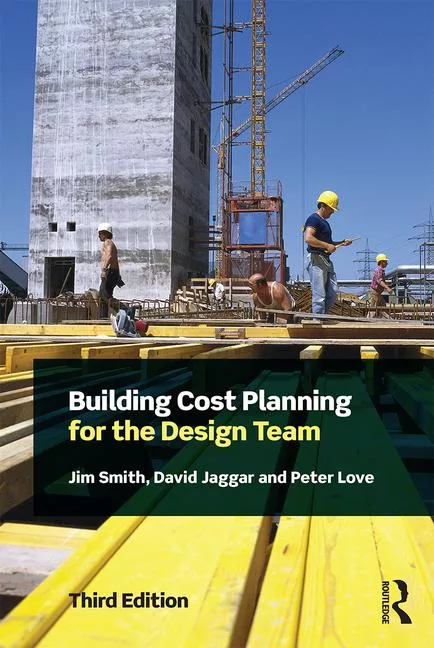
    Building Cost Planning for the Design Team

See More Products
×

Enhance your expertise with unparalleled insights.

Join thousands of building professionals today. Shouldn’t you know what they know?

SUBSCRIBE TODAY!
  • RESOURCES
    • Advertise
    • Contact Us
    • Store
    • Want More
  • SIGN UP TODAY
    • Create Account
    • Newsletter
    • Customer Service
    • Manage Preferences
  • SERVICES
    • Marketing Services
    • Reprints
    • Market Research
    • List Rental
    • Survey/Respondent Access
  • STAY CONNECTED
    • LinkedIn
    • Facebook
    • Instagram
    • YouTube
    • X
  • PRIVACY
    • PRIVACY POLICY
    • TERMS & CONDITIONS
    • DO NOT SELL MY PERSONAL INFORMATION
    • PRIVACY REQUEST
    • ACCESSIBILITY

Copyright ©2026. All Rights Reserved BNP Media, Inc. and BNP Media II, LLC.

Design, CMS, Hosting & Web Development :: ePublishing