Building Enclosure logo
search
cart
facebook twitter linkedin youtube instagram Spotify Podcasts Apple Podcasts Spotify Podcasts Apple Podcasts
  • Sign In
  • Create Account
  • Sign Out
  • My Account
Building Enclosure logo
  • NEWS
    • Breaking News
  • SECTIONS
    • Columns
    • Project Profiles
    • Trade Shows
    • Sponsor Insights
  • SYSTEM DESIGNS
    • Low-Slope Roofs
    • Pitched Roofs
    • Metal Roofing Materials
    • Waterproofing
    • Sustainability
    • Insulation
    • Exterior Claddings
    • Wall Systems
    • Building Envelope
  • BLOG
    • The BE Blog
  • MEDIA
    • Podcasts
    • Webinars
    • Quiz
    • Videos
    • Polls
    • Interactive Spotlights
    • Newsletter
    • Photo Galleries
  • DIRECTORIES
    • Directory: Blue Book
    • Directory: Roofing Resource
  • PRODUCTS
  • TECHNICAL
    • Codes
      • Waterproofing
      • Roofing
    • Details
      • Waterproofing
      • Roofing
  • CONTINUING ED
  • ABOUT
    • Advertise
      • Editorial Calendar
    • Contact
    • eMag Archive Issues
  • SIGN UP!
Breaking News

Heat Advisory

Major Heatwave Forecast Beginning, Wildfire Risk Rises

Construction workers and field crews at risk for hyperthermia
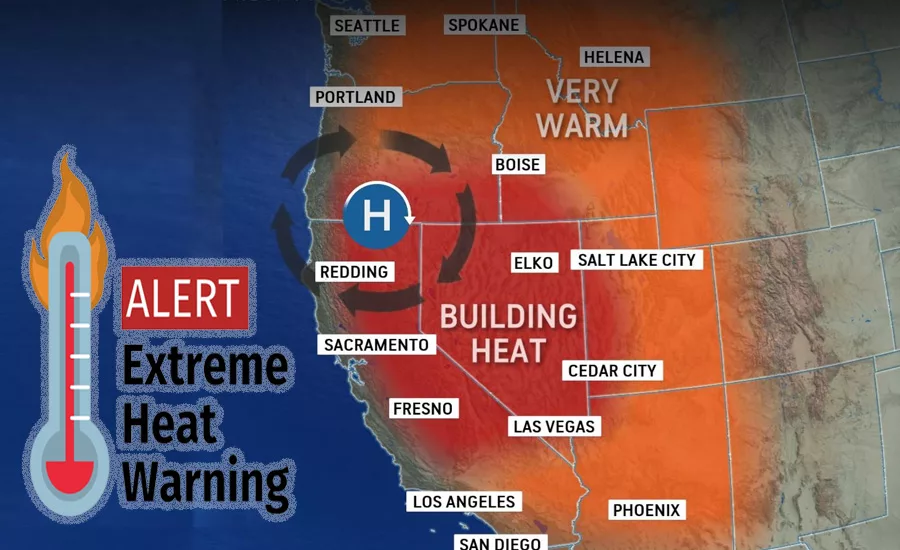
Roofing and construction crews prepare for extreme heat as triple-digit temperatures hit the Southwest beginning May 28.

Roofing and construction crews should brace for extreme heat beginning May 29 as triple-digit temperatures sweep the Southwest, prompting urgent calls for hydration, shift planning, and heat illness prevention.

— Bryan Gottlieb/Roofing Contractor | Elements: AccuWeather, Adobe Stock

May 28, 2025

An intense early-season heat wave will engulf the Southwest beginning Wednesday, unleashing triple-digit highs that could imperil roofing and construction crews, as well as other outdoor workers.

With minimal humidity to temper the furnace-like heat, contractors are urged to finalize hydration plans, adjust schedules and remain vigilant to prevent heat exhaustion and potentially fatal heatstroke.

Forecast and Local Impact

AccuWeather warns that “the hottest weather of the season so far is on the way for many places across the interior West as the first heat wave of the season looms.”

Interior California, Nevada and western Utah will bear the brunt of the heat. In Phoenix, forecasters project highs of 103 degrees on Wednesday and Thursday before climbing to 105 degrees on Friday, with RealFeel temperatures nearing 109 degrees.

Las Vegas may reach 100 degrees as early as Wednesday and climb to 106 degrees by Friday and Saturday. Nighttime relief will be minimal across desert basins and high-plateau communities, allowing heat to accumulate and amplify health risks.

“This will be the first heat wave of the season in the West, outside of Southern California,” said Heather Zehr, senior meteorologist at AccuWeather. She noted that a general offshore flow — where wind travels from the land to the water — will enhance the heat.

That same pattern prevents any cooling by lower ocean water temperatures along the coast. “A strong high-pressure area to the north and a broad upper-level low over the Pacific west of northwestern Mexico are driving these conditions,” Zehr explained.


Wildfire Threat Rises

Experts warn that record-low fuel moisture levels, combined with high winds and low relative humidity, will heighten wildfire danger. The National Weather Service cautioned that Arizona has experienced more than 30 additional fire-weather days annually over the past five decades. “The state’s excessively dry winter and predicted above-average summer temperatures further raise concerns about an extended and intense fire season,” the agency said.

* * *

Safety Measures and Planning

Roofers and other exterior trades face particular vulnerability when the heat index exceeds 105 degrees for more than three hours over consecutive days, a condition that triggers extreme heat warnings.

Contractors should begin each shift by reviewing their heat-illness prevention plan and ensuring crews recognize warning signs such as heavy sweating, weakness, clammy skin, rapid, weak pulse, nausea or fainting.

Workers must drink water or electrolyte solutions every 15 to 20 minutes, even when they are not thirsty, and wear light-colored, loose-fitting, moisture-wicking clothing, along with wide-brimmed hats and UV-blocking eyewear.

Superintendents are advised to schedule high-exertion tasks early in the morning or late in the afternoon. When starting new or returning workers, begin at 20 percent of a normal shift in the heat and gradually build tolerance over several days. Shade canopies or umbrellas should be available when temperatures exceed 80 degrees, and mandatory rest breaks in shaded areas enforced once the thermometer climbs above 95 degrees.

At the first sign of dizziness, muscle cramps, confusion or a rapid heartbeat, workers must be moved to a cool area, given fluids and monitored closely; if symptoms worsen, employers should call emergency services immediately.


QUICK READ: Heat Wave Alert

  • Temperatures are expected to exceed 105°F across parts of California, Nevada, Utah, and Arizona, with little nighttime relief.
  • High Risk for Outdoor Workers: Roofers and construction crews face an elevated risk of heat exhaustion and heatstroke, particularly during prolonged exposure.
  • Early Planning Is Critical: Contractors should review heat-illness prevention plans daily, adjust work schedules, and ensure access to shade and rest breaks.
  • Hydration Is Non-Negotiable: Workers should drink water or electrolyte fluids every 15–20 minutes, avoiding sugary and caffeinated beverages.
  • Watch for Warning Signs: Symptoms like dizziness, heavy sweating, and confusion must be treated immediately to prevent life-threatening conditions.

* * *

Resources

Contractors are encouraged to integrate guidance from OSHA’s Heat Illness Prevention Campaign, which mandates paid rest breaks and the provision of drinking water when the heat index exceeds 90 degrees.

Real-time HeatRisk Outlooks and local alerts are available from the National Weather Service. Updated forecasts and safety advisories can be found at accuweather.com.

This article was originally posted on www.roofingcontractor.com.
KEYWORDS: construction health and health care heat mitigation natural disasters wildfires

Share This Story

Looking for a reprint of this article?
From high-res PDFs to custom plaques, order your copy today!


Recommended Content

JOIN TODAY
to unlock your recommendations.

Already have an account? Sign In

  • bar graph shows LEED v4/LEED v5/LEED v6 in various colors

    When Will LEED v4 / v4.1 and LEED v5 Expire?

    The latest version of the LEED rating system, LEED v5, is...
    Sustainability
    By: Daniel Overbey
  • Celebrating Women In AEC-2026

    Celebrating Women in The AEC Industry Part 1

    A round-up of women in the design, engineering and...
    Building Envelope
    By: Lindsay Lewis
  • KEE membrane application on a roof

    A Beginner’s Guide to Single-Ply Roofing Membranes

    While PVC and TPO appear extremely similar, the chemistry...
    Low-Slope Roofs
    By: Peter Gross
Manage My Account
  • Sign up for the Newsletter
  • Online Registration
  • Manage My Preferences
  • Registration Customer Service

More Videos

Sponsored Content

Sponsored Content is a special paid section where industry companies provide high quality, objective, non-commercial content around topics of interest to the Building Enclosure audience. All Sponsored Content is supplied by the advertising company and any opinions expressed in this article are those of the author and not necessarily reflect the views of Building Enclosure or its parent company, BNP Media. Interested in participating in our Sponsored Content section? Contact your local rep!

close
  • HITT Construction headquarters
    Sponsored byBuilding Composites® LLC

    Pushing the Envelope

  • 2 construction workers and a DEXcell panel
    Sponsored byDEXcell Roof Boards

    Designing Low-Slope Roofs for Resilience

  • Bell Bank headquarters in Fargo, North Dakota
    Sponsored bySto Corp.

    Drained and Back-Ventilated Rainscreens vs Pressurized-Equalized Rainscreens

Popular Stories

graphic shows white arrows pointing to the right on a light green background

A Breakdown of Air Leakage Testing in LEED v5 BD+C

Open vs. closed cell foam in an attic

Open-Cell vs. Closed-Cell Spray Foam

skyscraper

NYC Tower Failure Offers Warning for Contractors

Building Enclosure Newsletter

BE Poll

Events

April 9, 2026

Strategies for High-Performance Below-Grade Waterproofing

Credits: 1 AIA LU/HSW ; 1 IIBEC CEH; 0.1 IACET CEU

On-Demand Designing a high-performance building enclosure requires more than just surface-level protection; it demands a rigorous, performance-based mastery of below-grade water and gas mitigation. This discussion will provide an expert-level analysis of below-grade waterproofing within the comprehensive framework of the high-performance building enclosure.

April 28, 2026

Roof Design Considerations That Prevent Installation Failures and Change Orders

Credit: 1 AIA LU/HSW; 1 IIBEC CEH; 0.1 ICC CEU

On-Demand This course provides visual examples of actual field conditions. Some good, some not so good; along with design suggestions that can cut installation costs and reduce construction change orders. Upon completion of this course, you will have a better understanding of the requirements the roofing contractor must meet to provide the specified roofing system warranty, and long-term value to the owner.

View All Submit An Event

Products

Plaster and Drywall Assemblies Manual

Plaster and Drywall Assemblies Manual

This is a comprehensive manual that goes beyond codes and standards, providing expert guidance in design, detailing, material selection and troubleshooting for plaster and drywall.

See More Products

Related Articles

  • 4.jpg

    ICC Raises Awareness Around Wildfire Safety with Three New Fire Prevention Resources

    See More
  • 4.jpg

    NIBS to Brief Legislators on Earthquake and Wind Damage Risk

    See More
  • One World Trade Center

    A New Testing Method Assesses Leap-Frog Risk

    See More

Related Products

See More Products
  • bim-3e.jpg

    BIM Handbook: A Guide to Building Information Modeling for Owners, Designers, Engineers, Contractors, and Facility Managers, 3rd Edition

  • facility.jpg

    The Facility Manager's Guide to Safety and Security

  • tall building.jpg

    Tall Building Design: Steel, Concrete, and Composite Systems

See More Products
×

Enhance your expertise with unparalleled insights.

Join thousands of building professionals today. Shouldn’t you know what they know?

SUBSCRIBE TODAY!
  • RESOURCES
    • Advertise
    • Contact Us
    • Store
    • Want More
  • SIGN UP TODAY
    • Create Account
    • Newsletter
    • Customer Service
    • Manage Preferences
  • SERVICES
    • Marketing Services
    • Reprints
    • Market Research
    • List Rental
    • Survey/Respondent Access
  • STAY CONNECTED
    • LinkedIn
    • Facebook
    • Instagram
    • YouTube
    • X
  • PRIVACY
    • PRIVACY POLICY
    • TERMS & CONDITIONS
    • DO NOT SELL MY PERSONAL INFORMATION
    • PRIVACY REQUEST
    • ACCESSIBILITY

Copyright ©2026. All Rights Reserved BNP Media, Inc. and BNP Media II, LLC.

Design, CMS, Hosting & Web Development :: ePublishing