New LEED Platinum Build From Architecture Program
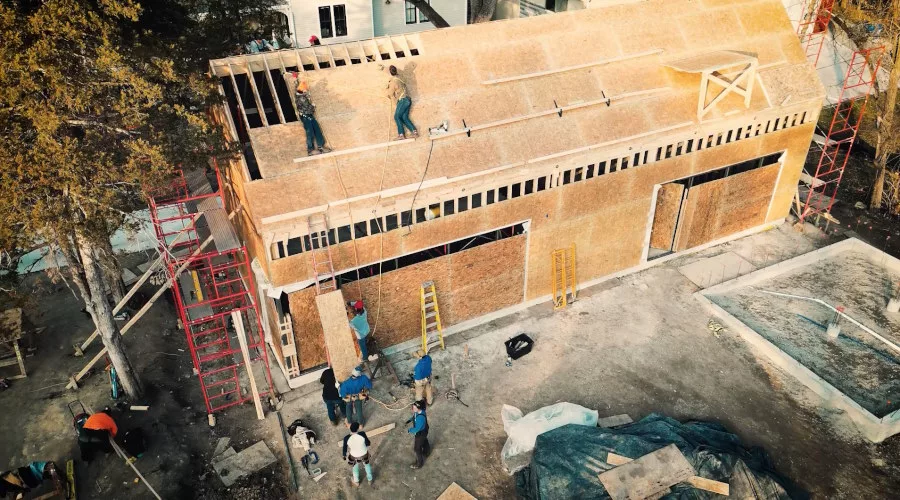
Studio 804 is a year-long, educational opportunity for graduate students who are entering the final year of the Master of Architecture program at the University of Kansas (KU) School of Architecture and Design. Students are tasked with real-world building challenges as part of the program, including the designing, hiring of consultants, establishing budgets, getting permits and the physical act of building the entire structure. In addition, Studio 804 students specify all products and solicit donations, which helps them understand the role that building manufacturers play in bringing new technologies to market, as well as the real costs of the materials used in construction.
Because Studio 804 and Atlas have worked together in the past, the Architecture program, led by Dan Rockhill, was familiar with the EnergyShield polyiso insulation solutions and selected the sustainable products to construct their new project. Atlas and Studio 804 have collaborated since 2020, previously constructing two unique projects, including a single-family LEED platinum certified residence in Lawrence, Kansas and a sustainable housing community built out of shipping containers for people experiencing homelessness.
“We’ve really enjoyed working with Studio 804 and helping educate the future of our industry,” said Tom Robertson, Business Unit Manager for the Atlas Roof and Wall Insulation Division. “If we can reach students in architecture school to help push their thinking on best practices that meet and exceed building codes and maximize efficiencies, we can help shape the next group of architects, engineers and contractors to learn and expand expectations in the industry.”
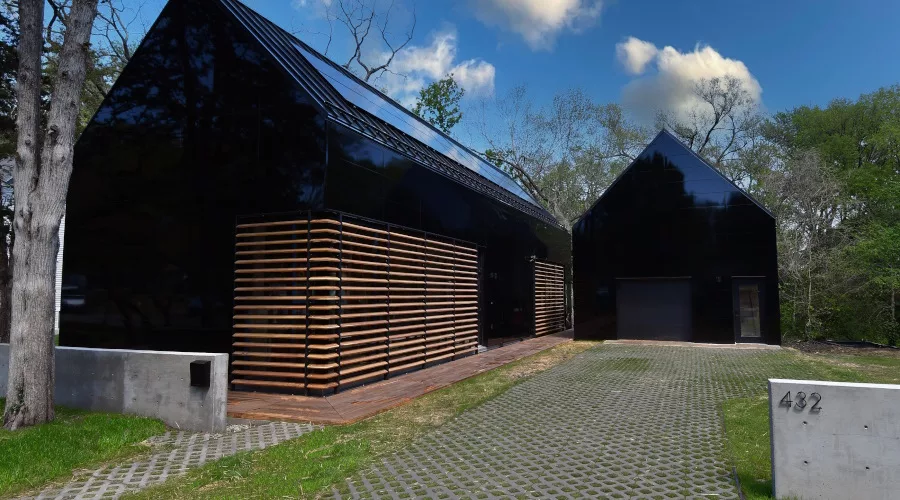
The current Studio 804 project is located in an established residential neighborhood built at 432 Indiana Street, a short walk from Burcham Park and the cultural vibrancy of downtown Lawrence, Kansas. The historic Pinckney Neighborhood is a perfect place to integrate the history of Lawrence with the future of sustainable design. This residence was built based on the U.S. Green Build Council’s Leadership in Energy and Environmental Design (LEED) Platinum Standards. This minimizes the impact to the environment plus offers the long-term energy savings that a LEED Platinum project has for the homeowner.
Approach:
The 432 Indiana Street project aligns with the long-term mission of the city of Lawrence for creating a sustainable future that is also affordable. Community engagement during a recent study found that residents were open to seeing small-scale lots and dwellings infill their neighborhoods to combat housing shortages. Part of the challenge was to design a house that was in scale with the surrounding neighborhood. The house features an open concept floor plan for the living, kitchen and dining area. The upstairs bedroom suite is a flexible area that adapts to the changing privacy needs of families in different stages of their lives. The opportunity for a detached garage with accessory dwelling unit above nicely adheres to the goal of increased residential density in the heart of Lawrence.
Professor Dan Rockhill and his students worked closely with the Atlas team to identify and install the most efficient building materials, including Atlas polyiso insulation, an easy-to-install, cost-effective and sustainable energy-efficient solution for roofing and wall applications.
“We select products that are the most innovative and advanced technology materials,” said Rockhill. “We are always at the pinnacle of architectural education and immersed in selecting building materials that provide the highest-performance, are sustainable as well as energy-efficient, and that often dictates future design.”
Polyiso foam insulation is used in both commercial and residential construction. The Atlas insulation products contain a polyiso core, which achieves higher effective R-values with minimal material thickness needed.
Solution:
For the 1800 sq. ft. house, sustainability and durability against the elements was of vital importance. The structure needed high-performance insulation that would function exceptionally well under weather conditions that are often extreme in Kansas – a mixed climate that can run from very hot and muggy in summer to very cold and icy in winter. In the summertime with the heat index, it can be 115 to 120 degrees. And with wind chills in the winter, the weather can easily go below zero. A product like polyiso continuous insulation from Atlas can handle the temperature swings and keeps the structure’s temperature efficient.
“We chose Atlas polyiso insulation because it is the thinnest and highest R-value of insulation that’s available on the market,” said Rockhill. “It also has to absolutely be resistant to infiltration, which is what happens when the air or wind blows – it pushes air throughout the structure. So we selected a product that will stand the test of time. Another significant factor in choosing Atlas on multiple projects is the technical support the company brings. It’s extremely valuable to have support on-site for the installation but also along the way through ongoing collaborations with their engineering teams.”
Atlas provided two products for the insulation needs at the 432 Indiana project, including ACFoam NailBase for the roof assembly and EnergyShield for the walls. The Atlas ACFoam NailBase product was used in the steep slope roof’s construction because it has a nailable OSB surface adhered directly to the polyiso insulation. It makes installation much quicker as the standing seam metal roofing panels can attach directly to the Atlas product, removing an entire step from the roof assembly process. Because the roof assembly is a key component to any structure, it’s important to invest in the best materials that will have a lasting impact on energy savings and performance for the roof’s life span. Roof insulation is an important part of the roof assembly, helping control inside temperatures, and reducing strain on HVAC systems.
The residence used 5.5” of batt cavity insulation within the walls of the house, with 2 inches of Atlas EnergyShield continuous insulation on the exterior, providing an R-value of 13.1. The roof assembly continues the efficient building envelope with 3” of ACFoam Nailbase insulation with a long-term thermal resistance (LTTR) of 15. In total, the project has an insulative value of R-40 in the wall assembly, which makes it extremely well insulated and air-tight with all of the joints taped to provide a weather-tight cocoon-like building envelope.
The Atlas polyiso products helped meet the LEED certification requirements. The 432 Indiana residence project is almost 35 percent greater than the minimum required, according to the energy code in the Lawrence municipality. The Atlas products helped create a redundancy of the structure’s WRB and air barrier design with excellent R-value advantages with all seams and potential penetrations in the insulation being taped.
“Homeowners may not always understand the technical benefits of proper roof and wall installation, but one area that does resonate is the cost of energy consumption,” said Jennifer Sansone, West Region Sales Manager of the RWI Division at Atlas. “We continually hear from customers of the significant drop in their monthly utility bills because of reduced heating and air conditioning needs offset by using performance-based insulation products in the construction of their home.” Atlas insulation products provide both long- and short-term cost and sustainability benefits.
Looking for a reprint of this article?
From high-res PDFs to custom plaques, order your copy today!
.webp?height=740&t=1767036885&width=auto "Header - BE 1170x658 (002).png")

.webp?height=740&t=1755781744&width=auto "KEE(2).png")