Building Enclosure logo
search
cart
facebook twitter linkedin youtube instagram Spotify Podcasts Apple Podcasts Spotify Podcasts Apple Podcasts
  • Sign In
  • Create Account
  • Sign Out
  • My Account
Building Enclosure logo
  • NEWS
    • Breaking News
  • SECTIONS
    • Columns
    • Project Profiles
    • Trade Shows
    • Sponsor Insights
  • SYSTEM DESIGNS
    • Low-Slope Roofs
    • Pitched Roofs
    • Metal Roofing Materials
    • Waterproofing
    • Sustainability
    • Insulation
    • Exterior Claddings
    • Wall Systems
    • Building Envelope
  • BLOG
    • The BE Blog
  • MEDIA
    • Podcasts
    • Webinars
    • Quiz
    • Videos
    • Polls
    • Interactive Spotlights
    • Newsletter
    • Photo Galleries
  • DIRECTORIES
    • Directory: Blue Book
    • Directory: Roofing Resource
  • PRODUCTS
  • TECHNICAL
    • Codes
      • Waterproofing
      • Roofing
    • Details
      • Waterproofing
      • Roofing
  • CONTINUING ED
  • ABOUT
    • Advertise
      • Editorial Calendar
    • Contact
    • eMag Archive Issues
  • SIGN UP!
Breaking NewsInsulation

SPFA Releases LCA Use Phase Report Evaluating Impacts of Spray Foam Insulation
spfa
March 23, 2021

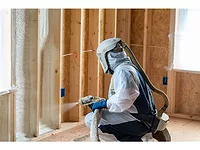
The Spray Polyurethane Foam Alliance (SPFA), the voice and technical resource of the U.S. spray foam industry, today published a Life Cycle Assessment (LCA) Use Phase Analysis report which evaluates the environmental impacts and performance of spray polyurethane foam insulation. The report compares the environmental impacts of spray foam insulation as compared to fiberglass insulation, specifically measuring cumulative energy demand and global warming potential for homes insulated in different US climate zones.

“This Life Cycle Assessment Use Phase Report is really timely considering the expense and dangers of energy consumption and global warming to individuals and the planet,” says Rick Duncan, executive director of the Spray Polyurethane Foam Alliance. “Insulation choice plays a vital role in the decarbonization of homes and the energy sector and the findings of this study reflect what we in the industry have always known – that spray foam insulation is clearly the better choice.”

The SPFA’s new LCA Use Phase study reviews the cumulative energy demand and global warming potential impacts of spray foam and fiberglass insulations over a 75-year period. The impacts were estimated for a typical, new 2,512-square-foot home insulated and air-sealed to 2018 International Energy Conservation Code (IECC) constructed in three different US climate zones including: Houston, Texas, a hot-humid climate Zone 2; Richmond, VA, a mixed climate Zone 4; and Minneapolis, MN, a cold climate Zone 6.

The three homes were equally insulated according to 2018 IECC requirements in their respective climate zones using fiberglass as a baseline and various types of spray polyurethane foam insulation. The total number of insulation functional units (FU’s) were determined for the homes in each climate zone. The environmental impact of each home’s amount and type of insulation and the insulation environmental impact ‘spent’ to insulate each building was calculated. Next, energy modeling was performed using EnergyGauge to estimate the HERS score and annual energy use of the home in each of the three building designs, in each of the three climate zones and in terms of natural gas (therms) and electricity (KWh).

The report acknowledges that spray foam insulations have a higher initial environmental impact than fiberglass insulations, however it finds that the higher R-values and inherent air impermeability of spray foam save additional energy when installed at the same R-value as fiberglass insulations. The result is annual energy savings coupled with long term environmental global warming reduction based on regional energy sources typically used for heating and cooling.  The report shows the reduction in carbon emissions by using SPF insulation instead of fiberglass in a single home is the equivalent of removing 14 to 23 automobiles from the road for an entire year.  

“These impacts are noteworthy in that they represent the proven environmental benefit of using spray foam over fiberglass insulation,” adds Duncan. “And in all three climate zones, the total annual energy savings from spray foam insulation exceeds fiberglass insulation.”

To access this Use Phase report, visit https://www.sprayfoam.org/sustainable Visit the SPFA at www.sprayfoam.org or on Twitter, Facebook and LinkedIn.

KEYWORDS: insulation systems polyurethane spray foam spray foam insulation

Share This Story

Looking for a reprint of this article?
From high-res PDFs to custom plaques, order your copy today!


Recommended Content

JOIN TODAY
to unlock your recommendations.

Already have an account? Sign In

  • bar graph shows LEED v4/LEED v5/LEED v6 in various colors

    When Will LEED v4 / v4.1 and LEED v5 Expire?

    The latest version of the LEED rating system, LEED v5, is...
    Sustainability
    By: Daniel Overbey
  • Celebrating Women In AEC-2026

    Celebrating Women in The AEC Industry Part 1

    A round-up of women in the design, engineering and...
    Building Envelope
    By: Lindsay Lewis
  • KEE membrane application on a roof

    A Beginner’s Guide to Single-Ply Roofing Membranes

    While PVC and TPO appear extremely similar, the chemistry...
    Low-Slope Roofs
    By: Peter Gross
Manage My Account
  • Sign up for the Newsletter
  • Online Registration
  • Manage My Preferences
  • Registration Customer Service

More Videos

Sponsored Content

Sponsored Content is a special paid section where industry companies provide high quality, objective, non-commercial content around topics of interest to the Building Enclosure audience. All Sponsored Content is supplied by the advertising company and any opinions expressed in this article are those of the author and not necessarily reflect the views of Building Enclosure or its parent company, BNP Media. Interested in participating in our Sponsored Content section? Contact your local rep!

close
  • HITT Construction headquarters
    Sponsored byBuilding Composites® LLC

    Pushing the Envelope

  • 2 construction workers and a DEXcell panel
    Sponsored byDEXcell Roof Boards

    Designing Low-Slope Roofs for Resilience

  • Bell Bank headquarters in Fargo, North Dakota
    Sponsored bySto Corp.

    Drained and Back-Ventilated Rainscreens vs Pressurized-Equalized Rainscreens

Popular Stories

graphic shows white arrows pointing to the right on a light green background

A Breakdown of Air Leakage Testing in LEED v5 BD+C

graphic shows a building destoryed by tornados with information on the amount of torandos in 2026 in the US

Record-Breaking Tornado Activity in Illinois Signals New Challenges for Architects

HITT Construction headquarters

Pushing the Envelope

Building Enclosure Newsletter

BE Poll

Events

April 9, 2026

Strategies for High-Performance Below-Grade Waterproofing

Credits: 1 AIA LU/HSW ; 1 IIBEC CEH; 0.1 IACET CEU

On-Demand Designing a high-performance building enclosure requires more than just surface-level protection; it demands a rigorous, performance-based mastery of below-grade water and gas mitigation. This discussion will provide an expert-level analysis of below-grade waterproofing within the comprehensive framework of the high-performance building enclosure.

April 28, 2026

Roof Design Considerations That Prevent Installation Failures and Change Orders

Credit: 1 AIA LU/HSW; 1 IIBEC CEH; 0.1 ICC CEU

On-Demand This course provides visual examples of actual field conditions. Some good, some not so good; along with design suggestions that can cut installation costs and reduce construction change orders. Upon completion of this course, you will have a better understanding of the requirements the roofing contractor must meet to provide the specified roofing system warranty, and long-term value to the owner.

View All Submit An Event

Products

Plaster and Drywall Assemblies Manual

Plaster and Drywall Assemblies Manual

This is a comprehensive manual that goes beyond codes and standards, providing expert guidance in design, detailing, material selection and troubleshooting for plaster and drywall.

See More Products

Related Articles

  • Carlisle Spray Foam Insulation_image 1.jpg

    Carlisle Spray Foam Insulation Publishes EPD for its Portfolio of Spray Foam Insulation Products

    See More
  • Next Generation of Spray Foam Insulation

    See More
  • Breaking News 4

    Accella Polyurethane Systems’ Spray Foam Now Carlisle Spray Foam Insulation

    See More

Related Products

See More Products
  • 41G-JcZWT+L._SX342_SY445_.jpg

    The Architect's Studio Companion: Rules of Thumb for Preliminary Design, 7th Edition

  • ecology.jpg

    Architecture and Systems Ecology: Thermodynamic Principles of Environmental Building Design, in three parts

  • 71lmKx8brKL._SY385_.jpg

    A Visual Dictionary of Architecture, 2nd Edition

See More Products
×

Enhance your expertise with unparalleled insights.

Join thousands of building professionals today. Shouldn’t you know what they know?

SUBSCRIBE TODAY!
  • RESOURCES
    • Advertise
    • Contact Us
    • Store
    • Want More
  • SIGN UP TODAY
    • Create Account
    • Newsletter
    • Customer Service
    • Manage Preferences
  • SERVICES
    • Marketing Services
    • Reprints
    • Market Research
    • List Rental
    • Survey/Respondent Access
  • STAY CONNECTED
    • LinkedIn
    • Facebook
    • Instagram
    • YouTube
    • X
  • PRIVACY
    • PRIVACY POLICY
    • TERMS & CONDITIONS
    • DO NOT SELL MY PERSONAL INFORMATION
    • PRIVACY REQUEST
    • ACCESSIBILITY

Copyright ©2026. All Rights Reserved BNP Media, Inc. and BNP Media II, LLC.

Design, CMS, Hosting & Web Development :: ePublishing