Building Enclosure logo
search
cart
facebook twitter linkedin youtube instagram Spotify Podcasts Apple Podcasts Spotify Podcasts Apple Podcasts
  • Sign In
  • Create Account
  • Sign Out
  • My Account
Building Enclosure logo
  • NEWS
    • Breaking News
  • SECTIONS
    • Columns
    • Project Profiles
    • Trade Shows
    • Sponsor Insights
  • SYSTEM DESIGNS
    • Low-Slope Roofs
    • Pitched Roofs
    • Metal Roofing Materials
    • Waterproofing
    • Sustainability
    • Insulation
    • Exterior Claddings
    • Wall Systems
    • Building Envelope
  • BLOG
    • The BE Blog
  • MEDIA
    • Podcasts
    • Webinars
    • Quiz
    • Videos
    • Polls
    • Interactive Spotlights
    • Newsletter
    • Photo Galleries
  • DIRECTORIES
    • Directory: Blue Book
    • Directory: Roofing Resource
  • PRODUCTS
  • TECHNICAL
    • Codes
      • Waterproofing
      • Roofing
    • Details
      • Waterproofing
      • Roofing
  • CONTINUING ED
  • ABOUT
    • Advertise
      • Editorial Calendar
    • Contact
    • eMag Archive Issues
  • SIGN UP!
Breaking News

New FEMA Study Projects Implementing I-Codes Could Save Billions

FEMA
November 20, 2020

This week, FEMA released its landmark study, “Building Codes Save: A National Study,” featuring an in-depth look at the quantified benefits—avoided losses to buildings and building contents—from adopting modern building codes and standards. As the frequency and severity of natural hazards continue to increase year-over-year, this study reaffirms that building codes continue to be the best first line of defense.

“With incredible analytic detail, this study reaffirms what so many studies before have concluded — adopting and implementing the I-Codes is one of the most effective ways to safeguard our communities against disasters,” said Code Council Chief Executive Officer Dominic Sims, CBO. “But further strides must be made in states and localities where the report identifies there are no codes adopted or where codes have not been updated this century.  We thank FEMA for highlighting the value of and need for coordinated action at all levels of government that is critical to ensuring our homes and businesses are best positioned to weather the increasing hazard risks posed by our changing climate.”

The study affirmed the recent finding by the National Institute of Building Sciences that adopting modern codes provides $11 in mitigation savings for every $1 invested. Alarmingly, the FEMA study found that currently 65 percent of counties, cities, and towns across the U.S. have not adopted modern building codes, only 50 percent of cumulative post-2000 construction adhered to the I-Codes, and 30 percent of new construction is occurring in communities with no codes at all  or codes that are more than 20 years outdated.

"This study is excellent news for consumers as it delivers powerful economic evidence that modern building codes are the essential public policy tool to help communities survive and recover from disasters," said FLASH President and CEO Leslie Chapman-Henderson. "The findings validate yet again that safer and stronger buildings preserve our quality of life today and strengthen our ability to confront an accelerating number of deadly, billion-dollar disasters tomorrow. We urge all leaders to recognize and use these profound insights to champion the cause for codes, and we thank FEMA for their leadership in bringing this critical information forward."

“We are not powerless in the face of severe weather,” explains Dr. Anne Cope, chief engineer for the Insurance Institute for Business & Home Safety (IBHS). “The latest building science, including research conducted at the IBHS Research Center, points us to actionable and affordable ways to strengthen our homes and businesses to reduce avoidable losses from natural catastrophes. A critical step toward ending the cycle of repeated losses, particularly in coastal areas, is the adoption and enforcement of modern building codes.”

Based on a database of more than 18 million actual buildings constructed since the inception of the I-Codes in 2000, the frequency of hazard events across the country, and the contents and edition of the International Residential Code (IRC) and International Building Code (IBC) in effect in each locality where post-2000 construction took place, the study found:

  • The IRC and IBC provided more than $27 billion in cumulative mitigation benefits against flood, hurricane wind, and earthquake hazards from 2000 to 2016. These benefits could have been doubled if all post 2000 construction adhered to the I-Codes.
  • If construction continues at the pace the study observed and if the proportion of that construction adhering to the I-Codes is consistent with the trend the study identifies, the I-Codes could help communities avoid $132 billion to $171 billion in cumulative losses through 2040.
  • If all new buildings across the U.S. were built to modern editions of the I-Codes, the country would save more than $600 billion by 2060.

The cost of not adopting building codes is too high. As FEMA’s materials make clear: “Adopting building codes is the single most effective thing we can do! One change in building codes can save lives and protect property for generations to come.” Proper implementation of adopted codes is also critical, as the means through which codes’ theoretical benefits are delivered in the field.

More Resources:

  • Information on how building codes help communities mitigate hazard risks
  • Summary of FEMA’s report
  • Full FEMA report: “Building Codes Save: A National Study”
  • Appendices: “Building Codes Save: A National Study”

For more information about the building codes adopted in your community, click here.

KEYWORDS: building codes FEMA

Share This Story

Looking for a reprint of this article?
From high-res PDFs to custom plaques, order your copy today!


Recommended Content

JOIN TODAY
to unlock your recommendations.

Already have an account? Sign In

  • bar graph shows LEED v4/LEED v5/LEED v6 in various colors

    When Will LEED v4 / v4.1 and LEED v5 Expire?

    The latest version of the LEED rating system, LEED v5, is...
    Sustainability
    By: Daniel Overbey
  • Celebrating Women In AEC-2026

    Celebrating Women in The AEC Industry Part 1

    A round-up of women in the design, engineering and...
    Sustainability
    By: Lindsay Lewis
  • KEE membrane application on a roof

    A Beginner’s Guide to Single-Ply Roofing Membranes

    While PVC and TPO appear extremely similar, the chemistry...
    Low-Slope Roofs
    By: Peter Gross
Manage My Account
  • Sign up for the Newsletter
  • Online Registration
  • Manage My Preferences
  • Registration Customer Service

More Videos

Sponsored Content

Sponsored Content is a special paid section where industry companies provide high quality, objective, non-commercial content around topics of interest to the Building Enclosure audience. All Sponsored Content is supplied by the advertising company and any opinions expressed in this article are those of the author and not necessarily reflect the views of Building Enclosure or its parent company, BNP Media. Interested in participating in our Sponsored Content section? Contact your local rep!

close
  • 2 construction workers and a DEXcell panel
    Sponsored byDEXcell Roof Boards

    Designing Low-Slope Roofs for Resilience

  • Bell Bank headquarters in Fargo, North Dakota
    Sponsored bySto Corp.

    Drained and Back-Ventilated Rainscreens vs Pressurized-Equalized Rainscreens

  • A construction worker using DEXcell roof boards
    Sponsored byDEXcell Roof Boards

    The Hidden Strength of Low-Slope Roof Systems: Why Roof Cover Boards Matter

Popular Stories

a man wearing a mask installs insulation into a wall system

Quiet Rooms and Healthier Air: A Second Look at What Goes Inside the Wall Cavity

Canalino Elementary School and Canalino Family School exterior

Daylighting Design to Support Rapidly Growing Trend in Modular Building Construction

construction workers on a roof, plane flies in background

Why Specifications Are Becoming the Next Critical Layer of Construction Compliance

Building Enclosure Newsletter

BE Poll

Events

June 17, 2025

Addressing Condensation in Low-Slope Roof Assemblies

Credits: 1 AIA LU/HSW; 0.1 ICC CEU; 1 IIBEC CEH; 0.1 IACET CEU

On Demand In modern roofing systems, vapor retarders and air barriers do more than just minimize air leakage—they’re essential to maximizing performance and longevity. This engaging course dives into the next generation of moisture control: permeable vapor retarders and air barriers. Discover how these cutting-edge technologies are transforming low-slope roofing assemblies by improving energy efficiency, managing moisture, and boosting wind uplift resistance.

April 9, 2026

Strategies for High-Performance Below-Grade Waterproofing

Credits: 1 AIA LU/HSW ; 1 IIBEC CEH; 0.1 IACET CEU

On-Demand Designing a high-performance building enclosure requires more than just surface-level protection; it demands a rigorous, performance-based mastery of below-grade water and gas mitigation. This discussion will provide an expert-level analysis of below-grade waterproofing within the comprehensive framework of the high-performance building enclosure.

View All Submit An Event

Products

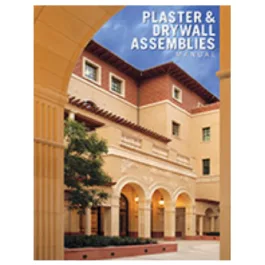
Plaster and Drywall Assemblies Manual

Plaster and Drywall Assemblies Manual

This is a comprehensive manual that goes beyond codes and standards, providing expert guidance in design, detailing, material selection and troubleshooting for plaster and drywall.

See More Products

Related Articles

  • GettyImages-1154594071-RESIZW.jpg

    Sustainable Recovery: New FEMA Policy Takes Holistic View to Sustainability and Resilience

    See More
  • Buidings.JPG

    National Labs Study Finds Updating Building Energy Codes Can Save Lives in Face of Intensifying Climate Hazards

    See More
  • mitigation study

    Study on Mitigation Finds that Updated Codes Save Lives

    See More

Related Products

See More Products
  • building codes illustated.jpg

    Building Codes Illustrated: A Guide to Understanding the 2021 International Building Code, 7th Edition

  • plaster and drywall

    Plaster and Drywall Assemblies Manual

  • buildings.jpg

    Mechanical and Electrical Equipment for Buildings, 13th Edition

See More Products
×

Enhance your expertise with unparalleled insights.

Join thousands of building professionals today. Shouldn’t you know what they know?

SUBSCRIBE TODAY!
  • RESOURCES
    • Advertise
    • Contact Us
    • Store
    • Want More
  • SIGN UP TODAY
    • Create Account
    • Newsletter
    • Customer Service
    • Manage Preferences
  • SERVICES
    • Marketing Services
    • Reprints
    • Market Research
    • List Rental
    • Survey/Respondent Access
  • STAY CONNECTED
    • LinkedIn
    • Facebook
    • Instagram
    • YouTube
    • X
  • PRIVACY
    • PRIVACY POLICY
    • TERMS & CONDITIONS
    • DO NOT SELL MY PERSONAL INFORMATION
    • PRIVACY REQUEST
    • ACCESSIBILITY

Copyright ©2026. All Rights Reserved BNP Media, Inc. and BNP Media II, LLC.

Design, CMS, Hosting & Web Development :: ePublishing