Building Enclosure logo
search
cart
facebook twitter linkedin youtube instagram Spotify Podcasts Apple Podcasts Spotify Podcasts Apple Podcasts
  • Sign In
  • Create Account
  • Sign Out
  • My Account
Building Enclosure logo
  • NEWS
    • Breaking News
  • SECTIONS
    • Columns
    • Project Profiles
    • Trade Shows
    • Sponsor Insights
  • SYSTEM DESIGNS
    • Low-Slope Roofs
    • Pitched Roofs
    • Metal Roofing Materials
    • Waterproofing
    • Sustainability
    • Insulation
    • Exterior Claddings
    • Wall Systems
    • Building Envelope
  • BLOG
    • The BE Blog
  • MEDIA
    • Podcasts
    • Webinars
    • Quiz
    • Videos
    • Polls
    • Interactive Spotlights
    • Newsletter
    • Photo Galleries
  • DIRECTORIES
    • Directory: Blue Book
    • Directory: Roofing Resource
  • PRODUCTS
  • TECHNICAL
    • Codes
      • Waterproofing
      • Roofing
    • Details
      • Waterproofing
      • Roofing
  • CONTINUING ED
  • ABOUT
    • Advertise
      • Editorial Calendar
    • Contact
    • eMag Archive Issues
  • SIGN UP!
Breaking News

KWK Architects/TKDA Wins Award for Hall Renovation
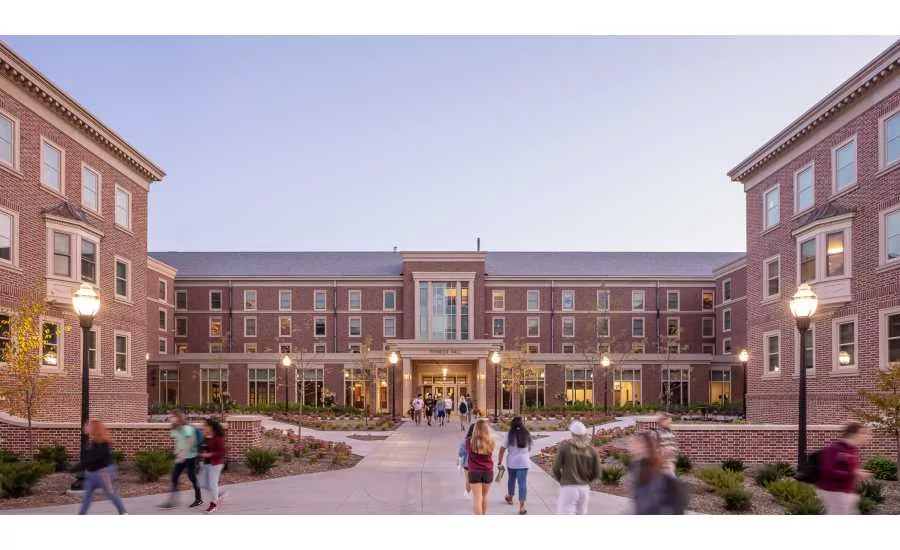
Pioneer Hall
January 29, 2020

Design architect KWK Architects, with architecture/engineering firm-of-record TKDA of St. Paul, MN, received a Grand Award from the American Council of Engineering Companies of Minnesota (ACEC/MN) for the design team’s renovation and expansion of the University of Minnesota’s historic Pioneer Hall. The award was presented at the organization’s 53rd annual Engineering Excellence Awards banquet on Jan. 24 which recognizes engineering firms and their clients for projects that demonstrate a high level of accomplishment, value to the community and ingenuity.

The newly renovated and expanded 90-year-old Pioneer Hall welcomed incoming freshmen for the fall 2019 semester. The $104.5 million project increased the number of student beds at the residence hall from 693 on four floors to 756 on five floors, while preserving a significant amount of the structure’s historic Georgian Revival-style exterior.

“This was a challenging design project on many levels,” said KWK Architects Principal Sara Koester. “We knew that the design needed to increase inclusiveness and accessibility, provide housing and dining for additional students and provide modern updates, all while maintaining a significant amount of the building’s historic character. We are proud to have been recognized by the ACEC/MN for our work on this important project for the university.”

First opened in the early 1930s, Pioneer Hall was the university’s first dormitory for men. At that time, the building consisted of a series of houses with three- and four-room suites with separate bedrooms for each student and a common study and bathroom. The two back-to-back, C-shaped buildings formed two courtyards, with each house having its own exterior entrance off the courtyard. The main dining rooms were located in the basement level extending upward through the first floor.

Over time, the building evolved with a kitchen addition in 1958 and a full-scale renovation in 1977 that introduced a corridor system to connect all houses, provided updated systems and added a small loading dock for residential life staff.

After many decades of service, Pioneer Hall was no longer meeting the needs of today’s students. The existing building lacked accessibility with no elevator, multiple floor levels to navigate, exterior stoops with stairs at entry points, inaccessible bathrooms and inadequate circulation. The dining rooms were subterranean with the only views to the exterior from high clerestory windows. Major mechanical, plumbing and electrical systems needed improvements, and the building exterior components needed restoration.

The renovation increased the hall’s total square footage from 177,000 SF to 257,000 SF, with demolition of the existing building limited to the center construction and within the courtyards, with approximately 60% of the typical upper floors being retained.

A new 42,000 SF dining facility was designed with seating for 850 students that features eight venues arranged in a Main Street configuration. Fresh food is prepared at salad/deli, grill, pasta, pizza, sauté, Mongolian stir-fry, home-cooking, and allergen-free stations, with emphasis on display cooking and a variety of food choices. An on-site bakery offers fresh baked breads, cookies and donuts, and a breakfast venue offers traditional morning fare.

A new central, sub-basement level was built to accommodate the main mechanical, electrical, and telecom rooms; the new construction was concentrated in the courtyards and center to connect the building on all levels. The center addition linking the two C-shaped existing buildings extends up vertically for a full story instead of traditional attic space framing of the existing buildings and provides additional area while giving a massing hierarchy to the center linking element.

The renovated residence hall features community-style living unit modules with a small group of residents sharing a community bathroom. These facilities are grouped with single-use private bathrooms to offer varying levels of privacy. Studies and lounges are provided for the communities, and a dedicated floor lounge allows for larger gatherings. Classroom, multipurpose, music practice, recreation rooms, large student kitchen, meditation and tech/business center provide a variety of spaces for students to gather, study or relax.

KEYWORDS: architecture firms awards renovation

Share This Story

Looking for a reprint of this article?
From high-res PDFs to custom plaques, order your copy today!


Recommended Content

JOIN TODAY
to unlock your recommendations.

Already have an account? Sign In

  • bar graph shows LEED v4/LEED v5/LEED v6 in various colors

    When Will LEED v4 / v4.1 and LEED v5 Expire?

    The latest version of the LEED rating system, LEED v5, is...
    Sustainability
    By: Daniel Overbey
  • Celebrating Women In AEC-2026

    Celebrating Women in The AEC Industry Part 1

    A round-up of women in the design, engineering and...
    Building Envelope
    By: Lindsay Lewis
  • KEE membrane application on a roof

    A Beginner’s Guide to Single-Ply Roofing Membranes

    While PVC and TPO appear extremely similar, the chemistry...
    Low-Slope Roofs
    By: Peter Gross
Manage My Account
  • Sign up for the Newsletter
  • Online Registration
  • Manage My Preferences
  • Registration Customer Service

More Videos

Sponsored Content

Sponsored Content is a special paid section where industry companies provide high quality, objective, non-commercial content around topics of interest to the Building Enclosure audience. All Sponsored Content is supplied by the advertising company and any opinions expressed in this article are those of the author and not necessarily reflect the views of Building Enclosure or its parent company, BNP Media. Interested in participating in our Sponsored Content section? Contact your local rep!

close
  • 2 construction workers and a DEXcell panel
    Sponsored byDEXcell Roof Boards

    Designing Low-Slope Roofs for Resilience

  • Bell Bank headquarters in Fargo, North Dakota
    Sponsored bySto Corp.

    Drained and Back-Ventilated Rainscreens vs Pressurized-Equalized Rainscreens

  • A construction worker using DEXcell roof boards
    Sponsored byDEXcell Roof Boards

    The Hidden Strength of Low-Slope Roof Systems: Why Roof Cover Boards Matter

Popular Stories

construction industry workers in hard hats stand around a city scape

Construction Industry Revolts Over New CSI Licensing Plan

a man wearing a mask installs insulation into a wall system

Quiet Rooms and Healthier Air: A Second Look at What Goes Inside the Wall Cavity

Canalino Elementary School and Canalino Family School exterior

Daylighting Design to Support Rapidly Growing Trend in Modular Building Construction

Building Enclosure Newsletter

BE Poll

Events

June 17, 2025

Addressing Condensation in Low-Slope Roof Assemblies

Credits: 1 AIA LU/HSW; 0.1 ICC CEU; 1 IIBEC CEH; 0.1 IACET CEU

On Demand In modern roofing systems, vapor retarders and air barriers do more than just minimize air leakage—they’re essential to maximizing performance and longevity. This engaging course dives into the next generation of moisture control: permeable vapor retarders and air barriers. Discover how these cutting-edge technologies are transforming low-slope roofing assemblies by improving energy efficiency, managing moisture, and boosting wind uplift resistance.

April 9, 2026

Strategies for High-Performance Below-Grade Waterproofing

Credits: 1 AIA LU/HSW ; 1 IIBEC CEH; 0.1 IACET CEU

On-Demand Designing a high-performance building enclosure requires more than just surface-level protection; it demands a rigorous, performance-based mastery of below-grade water and gas mitigation. This discussion will provide an expert-level analysis of below-grade waterproofing within the comprehensive framework of the high-performance building enclosure.

View All Submit An Event

Products

Plaster and Drywall Assemblies Manual

Plaster and Drywall Assemblies Manual

This is a comprehensive manual that goes beyond codes and standards, providing expert guidance in design, detailing, material selection and troubleshooting for plaster and drywall.

See More Products

Related Articles

  • Christ Church

    Western Specialty Contractors Wins Award for Church Façade Restoration

    See More
  • simpson strong-tie

    Simpson Strong-Tie Wins Award for Seismic Retrofitting

    See More
  • ACS Design

    ACS Wins Award for State-of-the-Art Acoustics Lab

    See More

Related Products

See More Products
  • 0470872616.jpg

    Sustainable Renovation: Strategies for Commercial Building Systems and Envelope

  • 978-0-7643-3022-3.jpg

    Award-winning Green Roof Designs: Green Roofs for Healthy Cities

  • 9780128207918.jpg

    Eco-efficient Materials for Reducing Cooling Needs in Buildings and Construction 1st Edition

See More Products

Events

View AllSubmit An Event
  • September 9, 2025

    The 60-Minute MBA for Architects

    Credits: 1 AIA LU/Elective; 0.1 ICC CEU; 0.1 IACET CEUOn-Demand In this session, we will learn the fundamentals of all successful AE firms and provide the basis for making well-grounded business decisions. We will learn how firms can transition from being professionals providing services, to highly tuned businesses that can identify the needs of the marketplace and create services and products that are appropriately priced and yield consistent and greater profits.
  • September 11, 2024

    Building Science for Architects

    Credits: 1 AIA LU/HSW; 1 IIBEC CEH; 0.1 IACET CEUOn-Demand The science of buildings and how they perform is not often a focus during school, but can become a specialty in practice. Topics such as vapor movement, a robust thermal envelope and condensation prevention are ones that cause issues in many buildings.
View AllSubmit An Event
×

Enhance your expertise with unparalleled insights.

Join thousands of building professionals today. Shouldn’t you know what they know?

SUBSCRIBE TODAY!
  • RESOURCES
    • Advertise
    • Contact Us
    • Store
    • Want More
  • SIGN UP TODAY
    • Create Account
    • Newsletter
    • Customer Service
    • Manage Preferences
  • SERVICES
    • Marketing Services
    • Reprints
    • Market Research
    • List Rental
    • Survey/Respondent Access
  • STAY CONNECTED
    • LinkedIn
    • Facebook
    • Instagram
    • YouTube
    • X
  • PRIVACY
    • PRIVACY POLICY
    • TERMS & CONDITIONS
    • DO NOT SELL MY PERSONAL INFORMATION
    • PRIVACY REQUEST
    • ACCESSIBILITY

Copyright ©2026. All Rights Reserved BNP Media, Inc. and BNP Media II, LLC.

Design, CMS, Hosting & Web Development :: ePublishing