The Power of Building and Energy Codes
Preparing for the Expected and Unexpected
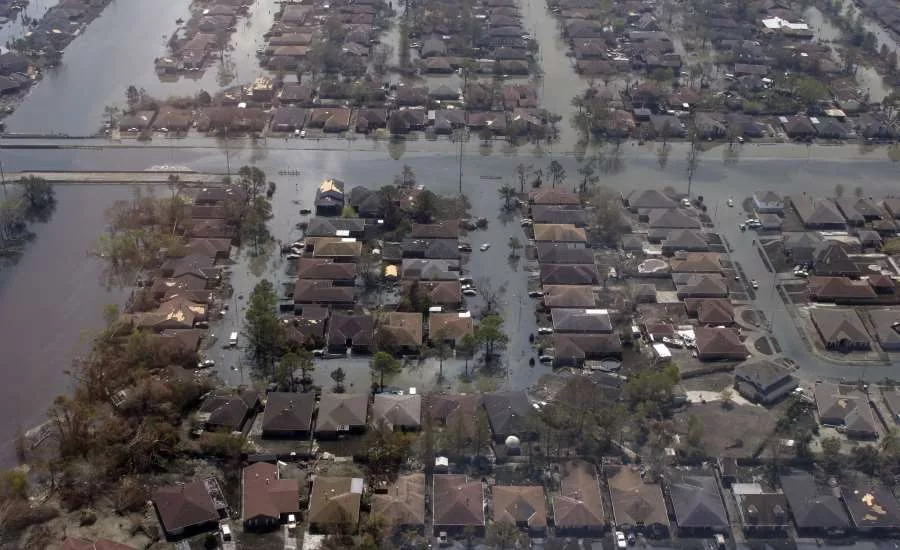
Anyone who follows current events can tell you that weather has been making headlines across the globe. Fourteen “billion-dollar” weather and climate related disasters occurred in the United States in 2018 alone, according to the National Oceanic and Atmospheric Administration (NOAA), and according to insurance broker Aon’s annual report, “Weather, Climate & Catastrophe Insight,” the total global economic cost of weather disasters reached $215 billion in 2018.
NOAA also reported that the four costliest years in terms of economic loss have all occurred within the last two decades (2018, 2017, 2012 and 2005). These numbers are not unique to the United States. Moreover, from wildfires and typhoons to hurricanes and catastrophic flooding, global losses for 2017 and 2018 totaled $653 billion—a record for back-to-back years.
The numbers detail an upward trend in the frequency of high-impact weather disasters. With this in mind, what can be done to protect human life and property in the face of these catastrophes? One key element in strengthening our communities is the development and enforcement of building codes. It is widely recognized that building codes are a crucial element in fostering construction practices that promote more resilient and durable designs for both new construction and existing buildings.
While building codes cannot prevent the occurrence of weather disasters, these requirements do help buildings and their occupants better withstand extreme conditions. Code also can reduce the severity of damage to buildings and structures, and the corresponding cleanup costs after disasters strike.
We most closely associate building codes with publications like the International Building Code. However, the International Energy Conservation Code (IECC) is a key part of determining a particular building’s capability of handling what Mother Nature delivers from years of weather to historic storms. The IECC sets the minimum energy use and conservation requirements for new and existing buildings.
This includes the opaque building envelope, lighting, HVAC equipment and ducts, doors, and windows. Importantly, as Bill Fay, director of the Energy Efficient Codes Coalition, points out in his series of articles now running in Green Builder’s “Code Watcher1,” the IECC offers many life-saving benefits. These include retaining the heat or cold in a building (office, hospital, school, or home) during extreme weather or power interruptions, preventing moisture damage and mold, and keeping polluted air out and venting indoor pollutants to the outside.
An Investment for Tomorrow
Elected officials and government agencies are looking at wide-ranging strategies to protect our towns and cities from the natural disasters that are all too common in recent years. State and local building codes are among the available strategies to safeguard life and protect property. We can improve our resiliency by regulating the design, construction practices, construction material quality, location, occupancy usage, and maintenance of buildings and structures.
In 2018, Congress enacted reforms for disaster preparedness that raise the profile and importance of building codes in planning for and recovering from disasters. The nation’s disaster relief law—the Stafford Act—was first reformed as part of the Bipartisan Budget Act and later reformed under provisions included in the FAA Reauthorization bill passed in October 2018.
Under these provisions, building code adoption and enforcement are added as eligible activities and criteria used in grant programs aimed at reducing the impact of future disasters. In other words, states that act to adopt modern building codes and standards will improve their chances of receiving pre-disaster mitigation grants and will be eligible for additional federal assistance in the event disaster strikes. Moreover, the reforms allow damaged buildings to be rebuilt with federal relief dollars to better withstand future events, rather than merely restored to their pre-disaster condition.
Adopting better building codes is more than a good idea—it’s a great investment. According to the “Natural Hazard Mitigation Saves: 2018 Interim Report2,” significant savings result from implementing mitigation strategies (such as building codes) in terms of safety, the prevention of property loss, and minimizing the disruption of day-to-day life. This report looks at the benefits of designing buildings to meet the 2018 International Residential Code (IRC) and 2018 International Building Code (IBC)—the model building codes developed by the International Code Council (ICC)—versus the prior generation of codes represented by 1990-era design and National Flood Insurance Program (NFIP) requirements. The report found a national benefit of $11 for every $1 invested.
Furthermore, the report found that adopting current codes and building to these modern requirements have added 30,000 new jobs to the construction-materials industry and generated a 3 percent annual increase in utilization of domestically produced materials in new construction (over what would have been used if buildings were designed as they were in 1990).
A Life Safety Regulation
Building energy codes are responsible for staggering savings numbers. The U.S. Department of Energy estimates that energy codes will save domestic homeowners and business $126 billion in energy costs through 2040. However, the benefits of energy codes like the IECC go beyond energy savings. As Bill Fay further highlights in his blog series3, the IECC promotes structural and safety protection by:
- Augmenting fire codes: The IECC’s tight building envelopes slow the spread of fires by sealing cracks, holes, and other draft openings, and by separating conditioned from unconditioned space.
- Improving indoor air quality: A well-sealed and purposefully ventilated building keeps pollutants outdoors and ensures healthy air flow inside.
- Providing greater durability: Moisture management prevents construction material rot and harmful mold growth; a strong building envelope reduces condensation and ice damming.
- Enhancing resiliency: Efficient buildings allow people to shelter in place longer during power outages.
- Reducing deaths and related health issues from exposure to extreme temperatures: The Centers for Disease Control and Prevention estimates that about 2,000 Americans die each year due to extreme weather conditions. More efficient buildings retain comfortable temperatures from air conditioning and heating better during heat waves and cold snaps.
Code Enforcement is King
Buildings constructed to meet or exceed modern building and energy codes can therefore play an important role in reducing the overall economic impact of natural disasters. However, the key to ensuring that building and energy codes function properly is enforcement. A code is only effective if there is enforcement and inspection to verify that construction is completed according to the code requirements. State and local governments need to make the necessary investment in code official training and inspection services to ensure in order to realize this ultimate goal.
While people, pets and certain belongings can be evacuated to safety with enough warning and resources, buildings can’t be moved to higher ground or be rebuilt overnight in preparation for an oncoming storm. Indeed, buildings are often the only things protecting people from the brutal forces of natural disasters. The fortification they offer is largely determined by the safety standards in place at the time of original construction or major renovation, so it is vitally important to build them to the highest standard from the start.
The recognition by Congress that modern building codes deliver an answer to disaster preparedness is a benefit for homeowners and businesses across the country. States now have added incentive to prepare for tomorrow by enacting and enforcing better building and energy codes today. Perhaps these steps will ensure that the next time weather makes headlines, it is accompanied by reports of the buildings and communities that withstood these disasters, protecting the people and property that contribute to our national stability and prosperity.
References
1. https://codewatcher.us/codes/the-iecc-is-a-life-safety-code-make-it-the-law/
2. https://www.nibs.org/page/mitigationsaves
3. https://codewatcher.us/codes/the-iecc-is-a-life-safety-code-make-it-the-law/
Looking for a reprint of this article?
From high-res PDFs to custom plaques, order your copy today!

.webp?height=740&t=1767036885&width=auto "Header - BE 1170x658 (002).png")

.webp?height=740&t=1755781744&width=auto "KEE(2).png")