Building Enclosure logo
search
cart
facebook twitter linkedin youtube instagram Spotify Podcasts Apple Podcasts Spotify Podcasts Apple Podcasts
  • Sign In
  • Create Account
  • Sign Out
  • My Account
Building Enclosure logo
  • NEWS
    • Breaking News
  • SECTIONS
    • Columns
    • Project Profiles
    • Trade Shows
    • Sponsor Insights
  • SYSTEM DESIGNS
    • Low-Slope Roofs
    • Pitched Roofs
    • Metal Roofing Materials
    • Waterproofing
    • Sustainability
    • Insulation
    • Exterior Claddings
    • Wall Systems
    • Building Envelope
  • BLOG
    • The BE Blog
  • MEDIA
    • Podcasts
    • Webinars
    • Quiz
    • Videos
    • Polls
    • Interactive Spotlights
    • Newsletter
    • Photo Galleries
  • DIRECTORIES
    • Directory: Blue Book
    • Directory: Roofing Resource
  • PRODUCTS
  • TECHNICAL
    • Codes
      • Waterproofing
      • Roofing
    • Details
      • Waterproofing
      • Roofing
  • CONTINUING ED
  • ABOUT
    • Advertise
      • Editorial Calendar
    • Contact
    • eMag Archive Issues
  • SIGN UP!
Metal Roofing MaterialsProject Profiles

Roof System Helps Preserve Historic School
Alexander II Magnet School
Alexander II Magnet School 2
Alexander II Magnet School
Alexander II Magnet School 2
March 28, 2018

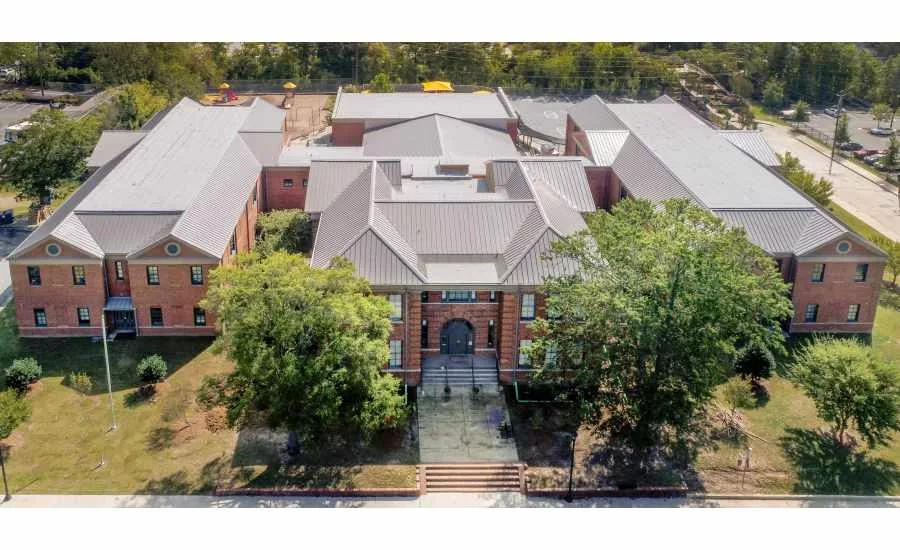
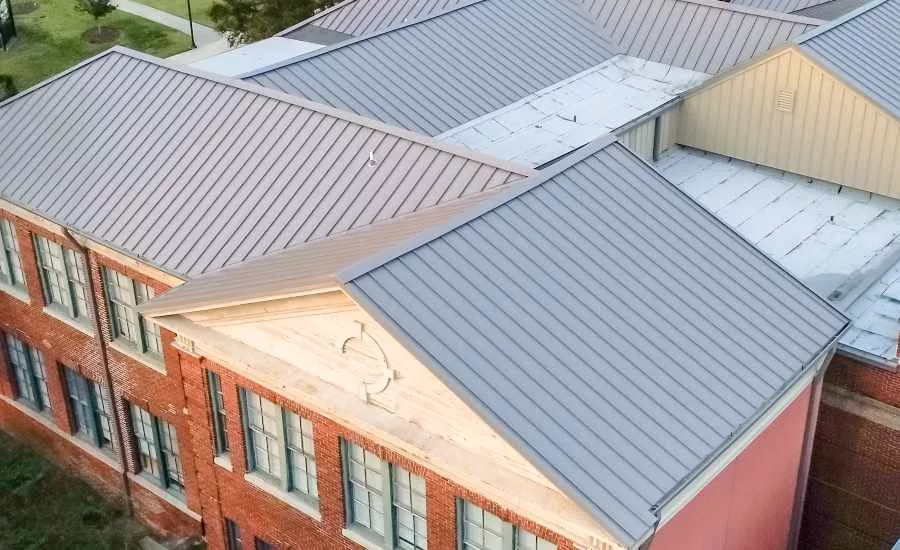
Multiple problems, including an aging structure and a failing asphalt roof, led Bibb County (Ga.) Schools to recover the roof of historic Alexander II Magnet School with the 138T symmetrical standing seam metal roof from McElroy Metal.

The original building that housed the Alexander II Magnet School in Macon, Ga., was completed in 1902. Several significant additions through the years have brought the entire facility up to 41,650 square feet. In June 2000, Alexander II was named to the list of 11 Most Endangered Historic places by the National Trust for Historic Preservation.

“During an assessment, we discovered that the asphalt shingles were installed with no ventilation and heavy insulation,” says Jody Usry of Edifice Consulting in Byron, Ga., “It was designed for metal so with no ventilation, the shingles were burning up. And there was so much expansion and contraction that the nails were backing out in spots. It was decided that the best thing to do was retrofit with metal.”

The 138T standing seam system is a quick and efficient method for installing metal roofing directly over asphalt shingles, without an underlayment and without a tear-off. The system is designed around the patented clip paired with the company’s 138T symmetrical standing seam panel. Measuring 1-3/8 inches tall, the 138T is a two-piece mechanically seamed metal roofing system.

Combine this 3/4-inch airspace with vented eave and ridge material and you get a total uninterrupted air flow between the two roofs. Known as “above sheathing ventilation,” or ASV, this idea uses airspace to help reduce heat transfer. Testing at Oak Ridge National Laboratories (Tennessee) demonstrated how a free-flowing airspace between a metal roof and shingles can reduce heat transfer by 30 to 50 percent. Reducing heat transfer greatly reduces cooling costs, a savings for the building owner. During the winter months in colder climates, insulating airspace will also reduce the chance of ice buildup caused by heat transfer up through the roof.

“There are a lot of trees around the school and the roof is subject to falling branches or trees,” Usry says. “Installing a symmetrical panel allows for the removal and replacement of individual panels that sustain any kind of damage, including falling branches. Obviously, it’s advantageous to the school to not have to tear off an entire roof for a couple of damaged panels.”

Usry says there were flat roofing areas with an internal gutter that were recovered with new decking and sloped to allow water to flow to an external gutter. All internal gutters were replaced. “Internal gutters are a detail that offers a high probability of being a problem,” Usry says.

Modified bitumen was applied over existing modified bitumen at low slope areas after thermal scans were done to identify wet insulation.

Pittman Waller Roofing of Macon, Ga., installed the modified bitumen as well as 27,500 square feet of the 138T 24-gauge panels in PVDF Ash Gray. The panels were formed at the McElroy Metal manufacturing facility in Peachtree City, Ga. Because some spots of the decking were sagging, the roofers had to “shim” the roofing with 18-gauge framing.

“There were two areas in the roofing that were sagging about seven inches,” says John Pearson, president at Pittman Waller. “We shimmed it and you can’t even tell now.”

Pearson says this project was the first for his crews with the 138T symmetrical metal roofing panels, but the installation went very well. “With the caps, there’s more pieces, but once they got rolling, it was fine,” he says. “It was pretty simple to work with.”

Managing logistics were instrumental to the success of the project. The project started in January 2017 and completed the following July, so school was in session during most of the project. The safety of students, teachers and parents was a priority. And with the eaves 25-30 feet high, Pittman Waller crews required the use of two scissor lifts, a manlift and a couple of boom trucks.

“We made sure everything was safe,” Pearson says. “We had barricades along the eaves and everyone was wearing personal fall protection. The students and teachers were really good about avoiding areas where we were working, so it went smoothly.”

KEYWORDS: academic building historic buildings metal roofing standing seam

Share This Story

Looking for a reprint of this article?
From high-res PDFs to custom plaques, order your copy today!


Recommended Content

JOIN TODAY
to unlock your recommendations.

Already have an account? Sign In

  • bar graph shows LEED v4/LEED v5/LEED v6 in various colors

    When Will LEED v4 / v4.1 and LEED v5 Expire?

    The latest version of the LEED rating system, LEED v5, is...
    Sustainability
    By: Daniel Overbey
  • Celebrating Women In AEC-2026

    Celebrating Women in The AEC Industry Part 1

    A round-up of women in the design, engineering and...
    Building Envelope
    By: Lindsay Lewis
  • KEE membrane application on a roof

    A Beginner’s Guide to Single-Ply Roofing Membranes

    While PVC and TPO appear extremely similar, the chemistry...
    Low-Slope Roofs
    By: Peter Gross
Manage My Account
  • Sign up for the Newsletter
  • Online Registration
  • Manage My Preferences
  • Registration Customer Service

More Videos

Sponsored Content

Sponsored Content is a special paid section where industry companies provide high quality, objective, non-commercial content around topics of interest to the Building Enclosure audience. All Sponsored Content is supplied by the advertising company and any opinions expressed in this article are those of the author and not necessarily reflect the views of Building Enclosure or its parent company, BNP Media. Interested in participating in our Sponsored Content section? Contact your local rep!

close
  • 2 construction workers and a DEXcell panel
    Sponsored byDEXcell Roof Boards

    Designing Low-Slope Roofs for Resilience

  • Bell Bank headquarters in Fargo, North Dakota
    Sponsored bySto Corp.

    Drained and Back-Ventilated Rainscreens vs Pressurized-Equalized Rainscreens

  • A construction worker using DEXcell roof boards
    Sponsored byDEXcell Roof Boards

    The Hidden Strength of Low-Slope Roof Systems: Why Roof Cover Boards Matter

Popular Stories

construction industry workers in hard hats stand around a city scape

Construction Industry Revolts Over New CSI Licensing Plan

a man wearing a mask installs insulation into a wall system

Quiet Rooms and Healthier Air: A Second Look at What Goes Inside the Wall Cavity

Canalino Elementary School and Canalino Family School exterior

Daylighting Design to Support Rapidly Growing Trend in Modular Building Construction

Building Enclosure Newsletter

BE Poll

Events

June 17, 2025

Addressing Condensation in Low-Slope Roof Assemblies

Credits: 1 AIA LU/HSW; 0.1 ICC CEU; 1 IIBEC CEH; 0.1 IACET CEU

On Demand In modern roofing systems, vapor retarders and air barriers do more than just minimize air leakage—they’re essential to maximizing performance and longevity. This engaging course dives into the next generation of moisture control: permeable vapor retarders and air barriers. Discover how these cutting-edge technologies are transforming low-slope roofing assemblies by improving energy efficiency, managing moisture, and boosting wind uplift resistance.

April 9, 2026

Strategies for High-Performance Below-Grade Waterproofing

Credits: 1 AIA LU/HSW ; 1 IIBEC CEH; 0.1 IACET CEU

On-Demand Designing a high-performance building enclosure requires more than just surface-level protection; it demands a rigorous, performance-based mastery of below-grade water and gas mitigation. This discussion will provide an expert-level analysis of below-grade waterproofing within the comprehensive framework of the high-performance building enclosure.

View All Submit An Event

Products

Plaster and Drywall Assemblies Manual

Plaster and Drywall Assemblies Manual

This is a comprehensive manual that goes beyond codes and standards, providing expert guidance in design, detailing, material selection and troubleshooting for plaster and drywall.

See More Products

Related Articles

  • Ouray School

    Standing Seam Roof Top Historic School Renovation

    See More
  • Keeping History Alive: Manufacturer Donation Helps Preserve Buildings on Historical Museum Site

    See More
  • Perrier Esquerre Contractors.jpg

    Historic Primary School Building Converted into Iconic Coworking Space in New Orleans

    See More

Related Products

See More Products
  • 007145828X.jpeg

    Manual of Low-Slope Roof Systems Fourth Edition

See More Products

Events

View AllSubmit An Event
  • May 5, 2026

    Roof Design Enhancements to Optimize Roof System Performance

    Credits: 1 AIA LU/HSW approval pending; 1 IIBEC CEH; 0.1 ICC CEU On-Demand In this webinar, Mark S. Graham, NRCA's vice president, technical services, will review cost effective measures than can enhance and optimize roof system performance. Topics to be addressed include roof decks, air- and vapor retarders, insulation, roof coverings and roof maintenance.
  • October 23, 2025

    Resilient and Adaptable Roof System Design

    Credits: 1 AIA/LU/HSW; 1 IIBEC CEH; 0.1 ICC CEUOn-Demand The presentation will provide designers with specific items to include on their project for a more resilient roof design to resist wind, water and keep a building operable after a storm.
View AllSubmit An Event
×

Enhance your expertise with unparalleled insights.

Join thousands of building professionals today. Shouldn’t you know what they know?

SUBSCRIBE TODAY!
  • RESOURCES
    • Advertise
    • Contact Us
    • Store
    • Want More
  • SIGN UP TODAY
    • Create Account
    • Newsletter
    • Customer Service
    • Manage Preferences
  • SERVICES
    • Marketing Services
    • Reprints
    • Market Research
    • List Rental
    • Survey/Respondent Access
  • STAY CONNECTED
    • LinkedIn
    • Facebook
    • Instagram
    • YouTube
    • X
  • PRIVACY
    • PRIVACY POLICY
    • TERMS & CONDITIONS
    • DO NOT SELL MY PERSONAL INFORMATION
    • PRIVACY REQUEST
    • ACCESSIBILITY

Copyright ©2026. All Rights Reserved BNP Media, Inc. and BNP Media II, LLC.

Design, CMS, Hosting & Web Development :: ePublishing