Building Enclosure logo
search
cart
facebook twitter linkedin youtube instagram Spotify Podcasts Apple Podcasts Spotify Podcasts Apple Podcasts
  • Sign In
  • Create Account
  • Sign Out
  • My Account
Building Enclosure logo
  • NEWS
    • Breaking News
  • SECTIONS
    • Columns
    • Project Profiles
    • Trade Shows
    • Sponsor Insights
  • SYSTEM DESIGNS
    • Low-Slope Roofs
    • Pitched Roofs
    • Metal Roofing Materials
    • Waterproofing
    • Sustainability
    • Insulation
    • Exterior Claddings
    • Wall Systems
    • Building Envelope
  • BLOG
    • The BE Blog
  • MEDIA
    • Podcasts
    • Webinars
    • Quiz
    • Videos
    • Polls
    • Interactive Spotlights
    • Newsletter
    • Photo Galleries
  • DIRECTORIES
    • Directory: Blue Book
    • Directory: Roofing Resource
  • PRODUCTS
  • TECHNICAL
    • Codes
      • Waterproofing
      • Roofing
    • Details
      • Waterproofing
      • Roofing
  • CONTINUING ED
  • ABOUT
    • Advertise
      • Editorial Calendar
    • Contact
    • eMag Archive Issues
  • SIGN UP!
Products

Water-Resistant Molded Polystyrene Insulation
polystyrene insulation
December 13, 2017

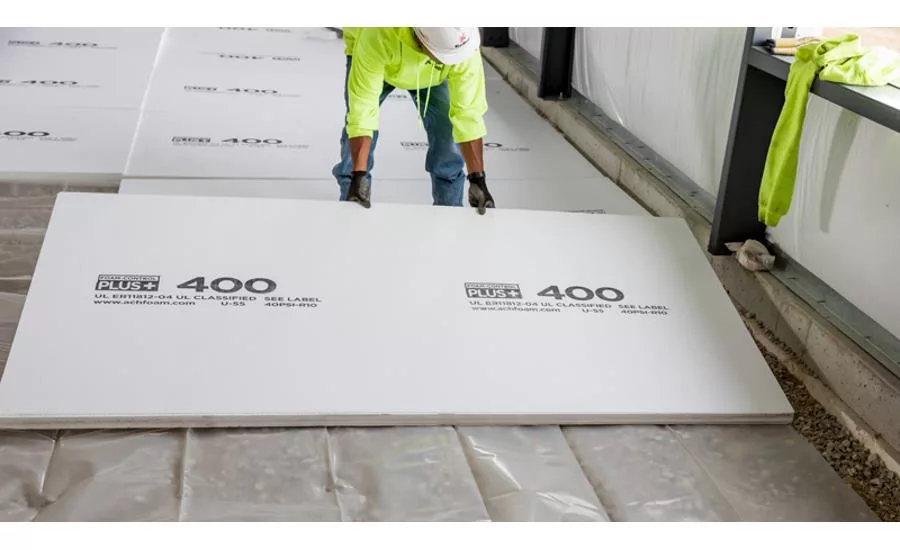
ACH Foam Technologies proudly announces Foam-Control PLUS+’s water absorption max volume results of 0.3 percent in laboratory testing proves that molded polystyrene insulation resists moisture absorption as well, or better than other rigid foam insulations on the market. Even more important is molded polystyrene’s ability to quickly dry after wetting conditions which results in R-value retention over the life of the building.

This is real-world performance! Foam-Control PLUS+ performs better, is less expensive than extruded foam insulations, is backed by ACH Foam Technologies’ 50-year R-value warranty and is available in wide range of thicknesses including very thick panel sizes. Foam-Control PLUS+ is used in many applications: perimeter, under slab, plaza decks, green roofs, commercial roofs, cavity wall, and EIFS.  Exposure to moisture could occur in any of these applications.

“All rigid foam insulations absorb water in wet conditions,” says Frank Kiesecker, Vice President of Sales & Marketing at ACH Foam Technologies. “Science; however, proves in everyday use, and now in laboratory testing that molded polystyrene dries faster and retains R-values better than XPS.”

“Previous testing methodologies didn’t account for a wetting period followed by a drying period, which is the reality,” shares Todd Bergstrom, Ph.D., of ATZ Laboratories. Bergstrom's C272 testing methodologies include air drying wet samples at 72 degrees F and 50 percent relative humidity for 24 hours before measuring water by volume.  Foam-Control PLUS+ water absorption max volume results of 0.3 percent on the drying-period test is identical to XPS' results. This testing method is indicative of what happens when buildings and infrastructure are subject to normal wet and dry weather conditions.

Foam-Control PLUS+ molded polystyrene is face labeled, is scored and has superior R value performance when exposed to moisture.  In 15, 25, 40 and 60 psi grades Foam-Control PLUS+ can be manufactured in many thicknesses and can be very thick if needed and comes with a 50 year R value warranty.

After 15 years of service as below-grade vertical wall insulation, molded polystyrene and XPS sections were removed from the exterior foundation of a building in St. Paul, Minn. and independently tested. Molded polystyrene weighed in at 4.8 percent water by volume, while the XPS materials were an astounding 18.9 percent water by volume. These results are indicative of molded polystyrene’s ability to release water after rain events and XPS’ propensity to trap moisture.  In these real-world conditions, the molded polystyrene retained 94 percent of the original published R-value. The XPS product’s R-value was 2.6 per-inch, just 52 percent of original published R value. Trapping water through diffusion is only one of the factors impacting the R-value of XPS products.

“Molded polystyrene’s permeability and drying potential have always outperformed XPS in the field,” says Kiesecker. “Today, that fact is also validated by laboratory findings.” Molded polystyrene’s ability to quickly release moisture and maintain R-values translates to better long term performance.  Along with the superior performance, molded polystyrene costs less per R and per-inch of thickness than other rigid foam insulation which results in best value for architects, contractors and building owners.


KEYWORDS: insulation products polystyrene water management

Share This Story

Looking for a reprint of this article?
From high-res PDFs to custom plaques, order your copy today!


Recommended Content

JOIN TODAY
to unlock your recommendations.

Already have an account? Sign In

  • bar graph shows LEED v4/LEED v5/LEED v6 in various colors

    When Will LEED v4 / v4.1 and LEED v5 Expire?

    The latest version of the LEED rating system, LEED v5, is...
    Sustainability
    By: Daniel Overbey
  • Celebrating Women In AEC-2026

    Celebrating Women in The AEC Industry Part 1

    A round-up of women in the design, engineering and...
    Sustainability
    By: Lindsay Lewis
  • KEE membrane application on a roof

    A Beginner’s Guide to Single-Ply Roofing Membranes

    While PVC and TPO appear extremely similar, the chemistry...
    Low-Slope Roofs
    By: Peter Gross
Manage My Account
  • Sign up for the Newsletter
  • Online Registration
  • Manage My Preferences
  • Registration Customer Service

More Videos

Sponsored Content

Sponsored Content is a special paid section where industry companies provide high quality, objective, non-commercial content around topics of interest to the Building Enclosure audience. All Sponsored Content is supplied by the advertising company and any opinions expressed in this article are those of the author and not necessarily reflect the views of Building Enclosure or its parent company, BNP Media. Interested in participating in our Sponsored Content section? Contact your local rep!

close
  • HITT Construction headquarters
    Sponsored byBuilding Composites® LLC

    Pushing the Envelope

  • 2 construction workers and a DEXcell panel
    Sponsored byDEXcell Roof Boards

    Designing Low-Slope Roofs for Resilience

  • Bell Bank headquarters in Fargo, North Dakota
    Sponsored bySto Corp.

    Drained and Back-Ventilated Rainscreens vs Pressurized-Equalized Rainscreens

Popular Stories

Open vs. closed cell foam in an attic

Open-Cell vs. Closed-Cell Spray Foam

graphic shows white arrows pointing to the right on a light green background

A Breakdown of Air Leakage Testing in LEED v5 BD+C

graphic shows a building destoryed by tornados with information on the amount of torandos in 2026 in the US

Record-Breaking Tornado Activity in Illinois Signals New Challenges for Architects

Building Enclosure Newsletter

BE Poll

Events

April 9, 2026

Strategies for High-Performance Below-Grade Waterproofing

Credits: 1 AIA LU/HSW ; 1 IIBEC CEH; 0.1 IACET CEU

On-Demand Designing a high-performance building enclosure requires more than just surface-level protection; it demands a rigorous, performance-based mastery of below-grade water and gas mitigation. This discussion will provide an expert-level analysis of below-grade waterproofing within the comprehensive framework of the high-performance building enclosure.

April 28, 2026

Roof Design Considerations That Prevent Installation Failures and Change Orders

Credit: 1 AIA LU/HSW; 1 IIBEC CEH; 0.1 ICC CEU

On-Demand This course provides visual examples of actual field conditions. Some good, some not so good; along with design suggestions that can cut installation costs and reduce construction change orders. Upon completion of this course, you will have a better understanding of the requirements the roofing contractor must meet to provide the specified roofing system warranty, and long-term value to the owner.

View All Submit An Event

Products

Plaster and Drywall Assemblies Manual

Plaster and Drywall Assemblies Manual

This is a comprehensive manual that goes beyond codes and standards, providing expert guidance in design, detailing, material selection and troubleshooting for plaster and drywall.

See More Products

Related Articles

  • XPS- Design Considerations for Extruded Polystyrene Roof Insulation

    See More
  • Using Graphite Polystyrene (GPS) Insulation

    See More
  • Q Coat

    Water-Resistant Acrylic Roof Coating System

    See More

Related Products

See More Products
  • plaster and drywall

    Plaster and Drywall Assemblies Manual

  • 0-7643-2189-7.jpg

    Green Roofs: Ecological Design and Construction

See More Products
×

Enhance your expertise with unparalleled insights.

Join thousands of building professionals today. Shouldn’t you know what they know?

SUBSCRIBE TODAY!
  • RESOURCES
    • Advertise
    • Contact Us
    • Store
    • Want More
  • SIGN UP TODAY
    • Create Account
    • Newsletter
    • Customer Service
    • Manage Preferences
  • SERVICES
    • Marketing Services
    • Reprints
    • Market Research
    • List Rental
    • Survey/Respondent Access
  • STAY CONNECTED
    • LinkedIn
    • Facebook
    • Instagram
    • YouTube
    • X
  • PRIVACY
    • PRIVACY POLICY
    • TERMS & CONDITIONS
    • DO NOT SELL MY PERSONAL INFORMATION
    • PRIVACY REQUEST
    • ACCESSIBILITY

Copyright ©2026. All Rights Reserved BNP Media, Inc. and BNP Media II, LLC.

Design, CMS, Hosting & Web Development :: ePublishing