Building Enclosure logo
search
cart
facebook twitter linkedin youtube instagram Spotify Podcasts Apple Podcasts Spotify Podcasts Apple Podcasts
  • Sign In
  • Create Account
  • Sign Out
  • My Account
Building Enclosure logo
  • NEWS
    • Breaking News
  • SECTIONS
    • Columns
    • Project Profiles
    • Trade Shows
    • Sponsor Insights
  • SYSTEM DESIGNS
    • Low-Slope Roofs
    • Pitched Roofs
    • Metal Roofing Materials
    • Waterproofing
    • Sustainability
    • Insulation
    • Exterior Claddings
    • Wall Systems
    • Building Envelope
  • BLOG
    • The BE Blog
  • MEDIA
    • Podcasts
    • Webinars
    • Quiz
    • Videos
    • Polls
    • Interactive Spotlights
    • Newsletter
    • Photo Galleries
  • DIRECTORIES
    • Directory: Blue Book
    • Directory: Roofing Resource
  • PRODUCTS
  • TECHNICAL
    • Codes
      • Waterproofing
      • Roofing
    • Details
      • Waterproofing
      • Roofing
  • CONTINUING ED
  • ABOUT
    • Advertise
      • Editorial Calendar
    • Contact
    • eMag Archive Issues
  • SIGN UP!
Products

Sustainable Concrete Innovation
CoolCure
November 22, 2017

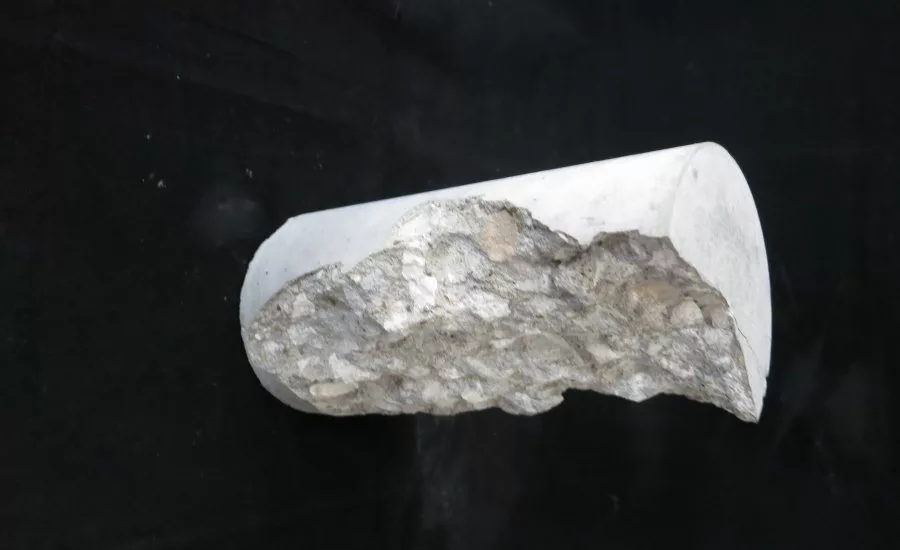
In an effort to advance sustainablity and address the environmental impact of this dilemma, New Technology Solutions LLC (A subsidiary of Silicone Solutions: Cuyahoga Falls, Ohio) has developed its patent-pending (PCT US15/11849) CoolCure − a major development that could potentially change the global environmental and productivity footprint of concrete technology.

CoolCure is a revolutionary new technology that significantly reduces/eliminates the heat of hydration. At the same time while reducing heat, major increases in compressive strength and working/placement time are enabled with CoolCure. Through the utilization of advanced technology, a more balanced stoichiometry and nanotechnology, this new technology will change the face of concrete technology today.

CoolCure works by balancing the chemistry. This minimizes by-products and results in a more efficient reaction. While creating a more efficient reaction, more bonds are created that generate more strength. Increases in strength have been realized from 40 to 100 percent. The heat is reduced by minimizing the calcium hydroxide byproduct generation. Its exotherm is well known in chemistry. The calcium hydroxide is better utilized by creating more CSH (reinforcing bonds) instead of creating troublesome heat.

Current Concrete Climate
Technology utilized in today’s mass pours of concrete, (thermally managed concrete) is where the width of concrete is > 3 foot 10” thick, requries intensive cooling plans and processes that must be employed. This is due to the gross exotherm generated as calcium hydroxide forms and is wetted out during the cure, typically described as the heat of hydration. The exotherm expands the concrete during cure and upon cooling cracks typically form.

Traditional cooling techniques employed today in mass pours are unsuccessful at mitigating all of the heat management problems. Exessive energy is utilized for cooling in many pours for bridges, dams, facilities and embankments. Concrete often is scrapped due to large cracks, as well as exceeding placement and maximum temperature designs. In the flat work concrete world today many problems are also encountered from the heat of hydration. These range from slab curls, thermal cracks, internal stresses and distortion from differential thermal cooling. CoolCure eliminates all of these as well.

Current technology utilizes silica fume and other silicas to increase strength. However, these silicas do not reduce the heat of hydration. Cure retarders are also well known to increase working time/delivery range. However, these do not increase strength or eliminate the excessive heat that causes so many problems today. CoolCure combines these benefits, eliminates the problems and so much more.

Reduction of portland usage is also often utilized to reduce exotherm, however, significant time intervals (60-120 days) are required to attain full strength. This delay is incovenient and costly for most applications. Diluents like slag and fly ash are also often used to reduce the portland level. Strength reductions, material shortages and unsuccessful thermal plans have resulted in many industry issues.

CoolCure Concrete Climate
CoolCure is ideal for large mass pours, and can be implemented in existing cement mixing facilities and trucks. Its eco-friendly composition simply balances the chemical reactions, minimizes the by-product and resultant heat generation. At the same time it increases compressive strength.

CoolCure also greatly reduces the potential for delayed alkali–silica reaction (ASR). It occurs whenever concrete pH exceeds 12.5 and some portland is not fully wetted-out in the mix. Conventional concrete pH typically varies from 12.5 to 13.5 and Cool-Cure results in a pH of 12.4. Also CoolCure fully wets out the portland.

Quite simply, reduced delayed ASR = longer usage life.

Benefits

  • Balanced Reaction = less CaOH formation
  • No cooling or thermal management plans required
  • No fly ash or slag required
  • No thermal cracking
  • Reduced concrete porosity
  • No cooling aggregate
  • Improved freeze/thaw resistance
  • No cooling coils/chiller bundles embedded the concrete
  • No adding dry ice to the wet mix
  • Reduced energy and lower construction costs
  • No skin chemical burns
  • Fire and freeze stable = no explosive spallation
  • Extended delivery and placement time
  • Less relief cutting required
  • Bleed water eliminated
  • Reduced metal corrosion
  • Increased service-life
  • Enhanced low temperature placement temperature
  • Increased delivery range
  • No lost loads

Notably, CoolCure is a much safer solution than portland cement which is caustic and can damage the skin. Workers in contact with wet Portland cement are at risk of chemical burns and developing skin problems. CoolCure does not burn the skin.

Additionally, cure speeds can be customized upon request as CoolCure offers ‘cure-on-demand’ technology variations that can speed or slower the cure speed to meet end-users specific applications needs.

Conclusion
Cement plants are a significant source of sulfur dioxide, nitrogen oxide, and carbon monoxide which are associated with a myriad of health and environmental impacts. Reducing the environmental footprint of portland cement production/usage and meeting future emissions regulations is of paramount concern to all concrete producers.

The CoolCure chemical cure system represents attaining a higher level of technology in practice, while obtaining a progressive leap forward is achieving a more environmentally-friendly cement, and increasing overall sustainability. These capabilities result in a very GREEN product needed for the future. We view CoolCure as a major step forward in technology for the 21st century.

For more detailed information, visit www.siliconesolutions.com.

KEYWORDS: concrete green building Portland Cement

Share This Story

Looking for a reprint of this article?
From high-res PDFs to custom plaques, order your copy today!


Recommended Content

JOIN TODAY
to unlock your recommendations.

Already have an account? Sign In

  • bar graph shows LEED v4/LEED v5/LEED v6 in various colors

    When Will LEED v4 / v4.1 and LEED v5 Expire?

    The latest version of the LEED rating system, LEED v5, is...
    Sustainability
    By: Daniel Overbey
  • Celebrating Women In AEC-2026

    Celebrating Women in The AEC Industry Part 1

    A round-up of women in the design, engineering and...
    Building Envelope
    By: Lindsay Lewis
  • KEE membrane application on a roof

    A Beginner’s Guide to Single-Ply Roofing Membranes

    While PVC and TPO appear extremely similar, the chemistry...
    Low-Slope Roofs
    By: Peter Gross
Manage My Account
  • Sign up for the Newsletter
  • Online Registration
  • Manage My Preferences
  • Registration Customer Service

More Videos

Sponsored Content

Sponsored Content is a special paid section where industry companies provide high quality, objective, non-commercial content around topics of interest to the Building Enclosure audience. All Sponsored Content is supplied by the advertising company and any opinions expressed in this article are those of the author and not necessarily reflect the views of Building Enclosure or its parent company, BNP Media. Interested in participating in our Sponsored Content section? Contact your local rep!

close
  • 2 construction workers and a DEXcell panel
    Sponsored byDEXcell Roof Boards

    Designing Low-Slope Roofs for Resilience

  • Bell Bank headquarters in Fargo, North Dakota
    Sponsored bySto Corp.

    Drained and Back-Ventilated Rainscreens vs Pressurized-Equalized Rainscreens

  • A construction worker using DEXcell roof boards
    Sponsored byDEXcell Roof Boards

    The Hidden Strength of Low-Slope Roof Systems: Why Roof Cover Boards Matter

Popular Stories

a man wearing a mask installs insulation into a wall system

Quiet Rooms and Healthier Air: A Second Look at What Goes Inside the Wall Cavity

Canalino Elementary School and Canalino Family School exterior

Daylighting Design to Support Rapidly Growing Trend in Modular Building Construction

construction workers on a roof, plane flies in background

Why Specifications Are Becoming the Next Critical Layer of Construction Compliance

Building Enclosure Newsletter

BE Poll

Events

June 17, 2025

Addressing Condensation in Low-Slope Roof Assemblies

Credits: 1 AIA LU/HSW; 0.1 ICC CEU; 1 IIBEC CEH; 0.1 IACET CEU

On Demand In modern roofing systems, vapor retarders and air barriers do more than just minimize air leakage—they’re essential to maximizing performance and longevity. This engaging course dives into the next generation of moisture control: permeable vapor retarders and air barriers. Discover how these cutting-edge technologies are transforming low-slope roofing assemblies by improving energy efficiency, managing moisture, and boosting wind uplift resistance.

April 9, 2026

Strategies for High-Performance Below-Grade Waterproofing

Credits: 1 AIA LU/HSW ; 1 IIBEC CEH; 0.1 IACET CEU

On-Demand Designing a high-performance building enclosure requires more than just surface-level protection; it demands a rigorous, performance-based mastery of below-grade water and gas mitigation. This discussion will provide an expert-level analysis of below-grade waterproofing within the comprehensive framework of the high-performance building enclosure.

View All Submit An Event

Products

Plaster and Drywall Assemblies Manual

Plaster and Drywall Assemblies Manual

This is a comprehensive manual that goes beyond codes and standards, providing expert guidance in design, detailing, material selection and troubleshooting for plaster and drywall.

See More Products

Related Articles

  • awards%20logo.jpg

    SCA Announces 2023 Slag Cement in Sustainable Concrete Award Winners

    See More
  • The Slag Cement Association logo

    SCA Announces 2025 Slag Cement in Sustainable Concrete Award Winners

    See More
  • Precast Concrete innovative Resilience

    CEU: Innovation and Resilience with Precast Concrete

    See More

Related Products

See More Products
  • tall building.jpg

    Tall Building Design: Steel, Concrete, and Composite Systems

  • heating cooling.jpg

    Heating, Cooling, Lighting: Sustainable Design Strategies Towards Net Zero Architecture, 5th Edition

  • 0470872616.jpg

    Sustainable Renovation: Strategies for Commercial Building Systems and Envelope

See More Products
×

Enhance your expertise with unparalleled insights.

Join thousands of building professionals today. Shouldn’t you know what they know?

SUBSCRIBE TODAY!
  • RESOURCES
    • Advertise
    • Contact Us
    • Store
    • Want More
  • SIGN UP TODAY
    • Create Account
    • Newsletter
    • Customer Service
    • Manage Preferences
  • SERVICES
    • Marketing Services
    • Reprints
    • Market Research
    • List Rental
    • Survey/Respondent Access
  • STAY CONNECTED
    • LinkedIn
    • Facebook
    • Instagram
    • YouTube
    • X
  • PRIVACY
    • PRIVACY POLICY
    • TERMS & CONDITIONS
    • DO NOT SELL MY PERSONAL INFORMATION
    • PRIVACY REQUEST
    • ACCESSIBILITY

Copyright ©2026. All Rights Reserved BNP Media, Inc. and BNP Media II, LLC.

Design, CMS, Hosting & Web Development :: ePublishing