Key Considerations in Designing for Accessibility
A Booming Aging Population: What it Means for Commercial Design
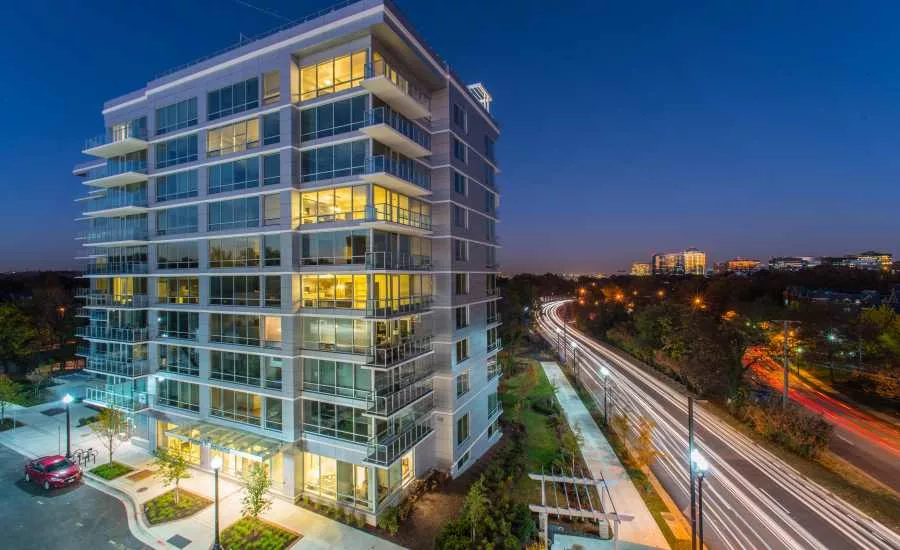

Today the U.S. is facing the largest aging population it has ever seen. According to AARP1, 10,000 baby boomers are turning 65 every single day. This means that seven baby boomers are turning 65 every minute. Combine this with the fact that the CDC states that one out of every five adults in the U.S. lives with a disability2 and the trend toward accessibility is a growing one.
Defining Accessibility
The growth of the baby boomer generation has many implications for the future of commercial architecture and design. The American Disabilities Act, also known as ADA, is a law first established in 1990 by President George H.W. Bush to “prohibit discrimination against individuals with disabilities in all areas of public life, including jobs, schools, transportation, and all public and private places that are open to the general public.3” Title III of the ADA focuses on public accommodations and commercial buildings, laying out guidelines to meet when developing a public space or a commercial facility, like a community library, government building, or retail store. These guidelines were further defined in 2010 by then Attorney General Eric Holder to better enable people with disabilities to access buildings and facilities.
Generally, ADA regulations are upheld by the Department of Justice. However, local authorities with jurisdiction can also adopt accessibility requirements. For example, the Texas Department of Aging and Disabilities Services, Chicago Public Schools, and the Chicago Mayor’s Office for People with Disabilities, as well as the New York City Building Code have adopted specific regulations for products such as operable windows. Additionally, the U.S. Department of Housing and Urban Development issued the Fair Housing Act Accessibility Guidelines in 1991 to ensure the accessibility of housing of more than four units. For the more than 25 years, architects, contractors and building owners have diligently built to comply with ADA regulations in Title III and FHA, when specified.
A Growing Movement
In recent years, due to the growing aging population, there has been a movement toward architects specifying accessibility into projects where ADA is not required. For example, private condominiums and places of worship. This evolving trend is often referred to as “universal design,” an architectural concept of bringing accessibility to people of all ages and abilities by simplifying the built environment.
While many organizations like the Center for Universal Design at North Carolina State University research and build out guidelines for universal design, there is no one governing body responsible for employing it. The building owner and architect are generally making the final decision as to whether the building meets their goals for accessibility, or universal design. This is a critical shift within the industry, and changes the dynamic around accessibility for architects, designers, contractors, engineers and building owners.
Key Considerations when Designing for Accessibility
Whether designing a building to meet ADA requirements, or a non-ADA building with the intent of providing a universal design, there are many key considerations to take into account to ensure a smooth design process.
Product is Only One Piece of the Puzzle
When constructing a building for accessibility, or universal design, it is critical to understand that a product is only one piece of a much broader building puzzle. An entrance or balcony door can enable accessibility to a building or balcony, however whether it is ADA compliant or not can depend on a multitude of factors. Products that are referred to as “ADA Windows” or “ADA Doors” make the mistake of assuming a window or door can make a building accessible.
That is not the case. Hardware, approach area, reach, forces and motion are all critical to enabling a product to provide the right level of accessibility. For example, the selection of inadequate hardware can make a door or window too heavy or tedious to open. The location of the hardware is also key. It must be at the proper height so that anyone is able to reach it, whether that person is standing or sitting down.
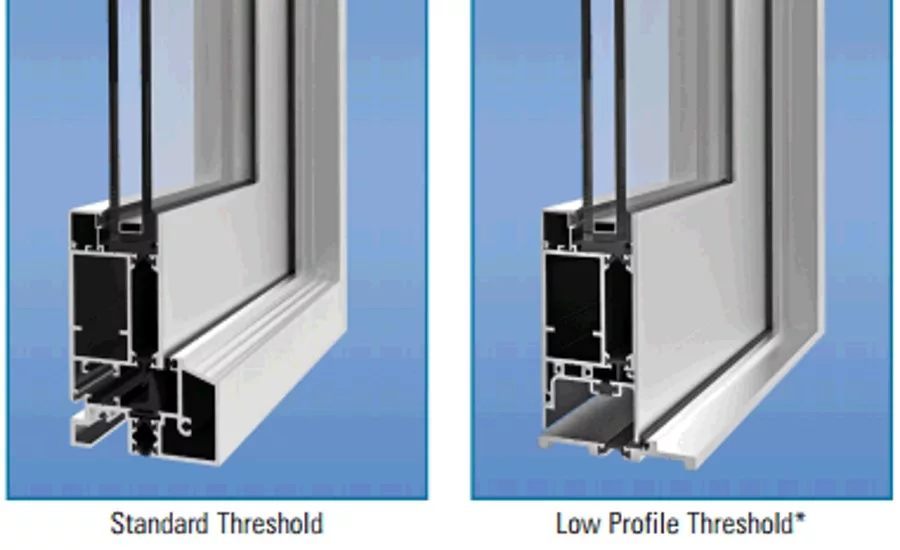
Similarly, a standard product like a terrace or balcony door must be part of a holistic design, with all integrated components properly developed and installed for accessibility to meet requirements. For example, as outlined in Title III, Section 404 of the ADA, the maneuvering clearance of a door depends on the size of the opening, as does the type of latch used. So while a specific low-threshold door may enable accessibility or universal design, it can only do so in combination with properly designed building conditions and correct installation.
Case in point: if a ramp and platform is not built wide enough so that a wheelchair can climb the ramp, then have enough space to safely maneuver a wheelchair into the correct position to enter the building, then an entrance door is rendered useless, no matter the width.
The takeaway? Products must be verified by the architectural and engineering team for each application in an accessible building. Do your homework and know what each product specified is capable of, then determine what needs to happen to make the product work as intended.
Installation: A Critical Component
Installation is core to ensuring a successful accessible design. It starts with the framing, setting up the proper width of doors and height of windows. A low threshold door is only useful if it is framed, then installed at the proper height. As stated in ADA Section 404.2.5, “thresholds if provided at doorways shall be ½-inch high maximum.” Similarly, the variability of the slab is critical. An uneven slab from interior to exterior may help to keep water out of a building, but it can make accessibility near impossible. And because the interior and exterior slab is often poured at different times, this is an extremely easy mistake to make.
Another factor to consider is that the fenestration must be installed to the finish floor. Something as simple as a shim will make accessibility difficult. General contractors must work closely with glazing contractors to ensure glass installation is done correctly.
Mapping out the entire design and measurements in detail from the conception of a project helps to ensure a smooth installation. While the ADA outlines the installation guidelines in detail, that doesn’t necessarily mean the subcontractors responsible for installation are following those guidelines. Oversight must be applied throughout all phases of a project to confirm accuracy of all accessible elements. This leads to the next key consideration - communication.
Collaboration is Paramount
In designing a building for accessibility, a holistic design amongst the many players involved in the project is critical. To ensure a project runs smoothly it is important to communicate early in the design process. This is obviously important when designing a building to ADA standards. However, it becomes even more critical when designing a non-ADA building like a condo, where the government is not the ultimate regulator.
Because the determination of what defines accessibility in these cases is often up to either the architect or the building owner, everyone should work to be on the same page from the beginning. This allows for any product customization to be designed and manufactured in a timely manner and for the installers to have an understanding of what needs to be done to what extent to ensure accessibility for the particular project.
Some best practices to consider in creating a successful project collaboration:
- The basis for an accessible design starts with thorough, well-articulated specifications. Architects must clearly communicate the critical nature of accessibility to the general contractor and ensure all subcontractors are on board with the design.
- General contractors must articulate accessibility as a key element of the design. Often times, subcontractors will value-engineer their designs in order to achieve a lower cost during the bidding process. In doing so, accessible features can be excluded. It is possible that if this happens, certain aspects of a building will then need to be retrofitted to ensure compliance.
- Close oversight must take place during each phase of the project, from framing to installation, to ensure all measurements are accurate and meet the requirements, whether it is an ADA or non-ADA project.
By collaborating and working together from the beginning, architects, building owners and contractors save time, money and ensure that the project runs on schedule.
Going Beyond ADA
As the trend toward accessibility grows, it is critical to go beyond just ADA guidelines to gain an understanding of how to best build out a building that is functional, beautiful and universal. With more knowledge of these key considerations of product, installation and collaboration, each project should be more successful in meeting the needs of every individual - now and in the future.
Sources
1. AARP
2. CDC
3. American Disabilities Act
Looking for a reprint of this article?
From high-res PDFs to custom plaques, order your copy today!

.webp?height=740&t=1767036885&width=auto "Header - BE 1170x658 (002).png")

.webp?height=740&t=1755781744&width=auto "KEE(2).png")