Building Enclosure logo
search
cart
facebook twitter linkedin youtube instagram Spotify Podcasts Apple Podcasts Spotify Podcasts Apple Podcasts
  • Sign In
  • Create Account
  • Sign Out
  • My Account
Building Enclosure logo
  • NEWS
    • Breaking News
  • SECTIONS
    • Columns
    • Project Profiles
    • Trade Shows
    • Sponsor Insights
  • SYSTEM DESIGNS
    • Low-Slope Roofs
    • Pitched Roofs
    • Metal Roofing Materials
    • Waterproofing
    • Sustainability
    • Insulation
    • Exterior Claddings
    • Wall Systems
    • Building Envelope
  • BLOG
    • The BE Blog
  • MEDIA
    • Podcasts
    • Webinars
    • Quiz
    • Videos
    • Polls
    • Interactive Spotlights
    • Newsletter
    • Photo Galleries
  • DIRECTORIES
    • Directory: Blue Book
    • Directory: Roofing Resource
  • PRODUCTS
  • TECHNICAL
    • Codes
      • Waterproofing
      • Roofing
    • Details
      • Waterproofing
      • Roofing
  • CONTINUING ED
  • ABOUT
    • Advertise
      • Editorial Calendar
    • Contact
    • eMag Archive Issues
  • SIGN UP!
Breaking News

Skylights Contribute To Home Energy Savings

January 22, 2015

A VELUX America commissioned study documents that adding venting skylights will result in energy cost savings when compared to a home without skylights.

Group14 Engineering, based in Denver, Colo., performed the study in 2014. The company specializes in energy modeling, daylighting and LEED strategy for architectural firms and building owners nationwide.

The study analyzes the energy cost, indoor air quality, and thermal comfort impacts of VELUX venting skylights, comparing them with those of whole house fans in residential homes. A vaulted ceiling 2,000 square feet two-story house located in Boston, Mass. is modeled with two levels of energy efficiency: Code Base Home and High Performance Home. The modeled house has a partial two-story high space with skylights above to investigate the stack effect impact.

EnergyPlus v8.0 along with Contam, LoopDA, and BEopt were used to analyze the coupling effects of air flow, contaminant flow, and energy flow.

Energy Costs

The study reveals that adding venting skylights will result in energy cost savings compared to a home without skylights. In the Code Base Home, the venting skylights generate $35 of annual energy cost savings from the home without skylights or natural ventilation. In the High Performance Home with reduced cooling loads, the venting skylights result in $17 of annual energy cost savings compared to the case without skylights. The savings are based on intelligent placement of the venting skylights for wind effects, a natural ventilation set point temperature of 75 degrees Fahrenheit and an integral rain sensor control.

Indoor Environmental Quality (IEQ)

In both the Code Base Home and High Performance Home, indoor air quality is significantly improved when the venting skylights are used leading to a very quick dilution of predictable indoor contaminant concentrations. (With the known physiological and psychological benefits of daylight, especially from the sky, IEQ is further enhanced).

Human Comfort

Both Fanger and Adaptive ASHRAE 55 thermal comfort models were used to analyze home comfort conditions. When the Adaptive ASHRAE 55 model is used to account for occupant's behavior and expectations adaptation during the natural ventilation mode, the study predicts slightly improved comfort conditions in both the Code Base Home and High Performance Home with venting skylights.

A whole house fan behaves similarly to venting skylights in terms of indoor air quality and thermal comfort improvements. However, contrary to claims by most whole house fan advocates, a whole house fan does not always reduce a home's energy cost. The natural ventilation savings are offset by fan energy in the study of homes located in Boston, Mass., even with an efficient fan motor.

The study was further extended to a one-story 2,000 square foot house to examine the energy cost impact of venting skylights. The analysis reveals a similar trend: in the one-story Code Base Home, adding venting skylights results in $27 of annual energy cost savings from the base case without skylights or natural ventilation; in the one-story High Performance Home, adding venting skylights results in $13 of energy cost savings for the base case without skylights or natural ventilation. The savings are also based on thoughtful placement of the venting skylights, a natural ventilation set point temperature of 75 degrees Fahrenheit, and an integral rain sensor control.

The full study report is available from VELUX America upon request. VELUX continues to study and document the role and effectiveness of skylights in providing daylighting and passive ventilation.

Further studies are under consideration that can account for shaded skylights, with both manual and automated controls, to reflect additional energy cost savings as well as glare control that may be realized at low initial added cost when specified at the time of skylight procurement.

“This study, like an earlier Group14 study on the energy impacts of residential skylights in different climates, provides additional empirical evidence that natural light and passive ventilation from skylights can contribute to the home's overall energy efficiency,” said Stephan Moyon, direct of sales for VELUX America.                   

VELUX America is an ENERGY STAR partner and has been recognized as a Partner of the Year. For more, visit www.veluxusa.com.

KEYWORDS: Colorado energy efficiency environmental impacts LEED skylight

Share This Story

Looking for a reprint of this article?
From high-res PDFs to custom plaques, order your copy today!


Recommended Content

JOIN TODAY
to unlock your recommendations.

Already have an account? Sign In

  • bar graph shows LEED v4/LEED v5/LEED v6 in various colors

    When Will LEED v4 / v4.1 and LEED v5 Expire?

    The latest version of the LEED rating system, LEED v5, is...
    Sustainability
    By: Daniel Overbey
  • Celebrating Women In AEC-2026

    Celebrating Women in The AEC Industry Part 1

    A round-up of women in the design, engineering and...
    Sustainability
    By: Lindsay Lewis
  • KEE membrane application on a roof

    A Beginner’s Guide to Single-Ply Roofing Membranes

    While PVC and TPO appear extremely similar, the chemistry...
    Low-Slope Roofs
    By: Peter Gross
Manage My Account
  • Sign up for the Newsletter
  • Online Registration
  • Manage My Preferences
  • Registration Customer Service

More Videos

Sponsored Content

Sponsored Content is a special paid section where industry companies provide high quality, objective, non-commercial content around topics of interest to the Building Enclosure audience. All Sponsored Content is supplied by the advertising company and any opinions expressed in this article are those of the author and not necessarily reflect the views of Building Enclosure or its parent company, BNP Media. Interested in participating in our Sponsored Content section? Contact your local rep!

close
  • 2 construction workers and a DEXcell panel
    Sponsored byDEXcell Roof Boards

    Designing Low-Slope Roofs for Resilience

  • Bell Bank headquarters in Fargo, North Dakota
    Sponsored bySto Corp.

    Drained and Back-Ventilated Rainscreens vs Pressurized-Equalized Rainscreens

  • A construction worker using DEXcell roof boards
    Sponsored byDEXcell Roof Boards

    The Hidden Strength of Low-Slope Roof Systems: Why Roof Cover Boards Matter

Popular Stories

a man wearing a mask installs insulation into a wall system

Quiet Rooms and Healthier Air: A Second Look at What Goes Inside the Wall Cavity

construction industry workers in hard hats stand around a city scape

Construction Industry Revolts Over New CSI Licensing Plan

Canalino Elementary School and Canalino Family School exterior

Daylighting Design to Support Rapidly Growing Trend in Modular Building Construction

Building Enclosure Newsletter

BE Poll

Events

June 17, 2025

Addressing Condensation in Low-Slope Roof Assemblies

Credits: 1 AIA LU/HSW; 0.1 ICC CEU; 1 IIBEC CEH; 0.1 IACET CEU

On Demand In modern roofing systems, vapor retarders and air barriers do more than just minimize air leakage—they’re essential to maximizing performance and longevity. This engaging course dives into the next generation of moisture control: permeable vapor retarders and air barriers. Discover how these cutting-edge technologies are transforming low-slope roofing assemblies by improving energy efficiency, managing moisture, and boosting wind uplift resistance.

April 9, 2026

Strategies for High-Performance Below-Grade Waterproofing

Credits: 1 AIA LU/HSW ; 1 IIBEC CEH; 0.1 IACET CEU

On-Demand Designing a high-performance building enclosure requires more than just surface-level protection; it demands a rigorous, performance-based mastery of below-grade water and gas mitigation. This discussion will provide an expert-level analysis of below-grade waterproofing within the comprehensive framework of the high-performance building enclosure.

View All Submit An Event

Products

Plaster and Drywall Assemblies Manual

Plaster and Drywall Assemblies Manual

This is a comprehensive manual that goes beyond codes and standards, providing expert guidance in design, detailing, material selection and troubleshooting for plaster and drywall.

See More Products

Related Articles

  • 4.jpg

    Georgia-Pacific Equipment Enhancements Lead to Energy Savings

    See More
  • insulation.JPG

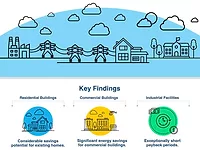
    Independent Study Confirms Insulation Upgrades are Keys to Significant Energy Savings and Emission Reductions in Existing Buildings

    See More
  • Residential Energy Retrofits Equal Big Energy Savings

    See More

Related Products

See More Products
  • bni book

    BNi Building News Home Builders Costbook 2026 (Print Edition)

  • energy modeling.jpg

    Energy Modeling and Computations in the Building Envelope

  • net zero.jpg

    Net Zero Energy Design: A Guide for Commercial Architecture

See More Products
×

Enhance your expertise with unparalleled insights.

Join thousands of building professionals today. Shouldn’t you know what they know?

SUBSCRIBE TODAY!
  • RESOURCES
    • Advertise
    • Contact Us
    • Store
    • Want More
  • SIGN UP TODAY
    • Create Account
    • Newsletter
    • Customer Service
    • Manage Preferences
  • SERVICES
    • Marketing Services
    • Reprints
    • Market Research
    • List Rental
    • Survey/Respondent Access
  • STAY CONNECTED
    • LinkedIn
    • Facebook
    • Instagram
    • YouTube
    • X
  • PRIVACY
    • PRIVACY POLICY
    • TERMS & CONDITIONS
    • DO NOT SELL MY PERSONAL INFORMATION
    • PRIVACY REQUEST
    • ACCESSIBILITY

Copyright ©2026. All Rights Reserved BNP Media, Inc. and BNP Media II, LLC.

Design, CMS, Hosting & Web Development :: ePublishing