Bringing Roofs to Life
Rooftop gardens or living roofs offer several environmental advantages. Their increased use in urban areas has been due their ability to decrease water runoff from the roof area. The primary intent of the living roof application is to filter the stormwater and minimize the stormwater runoff from reaching the underground infrastructure.

Environmental Advantages
Rooftop gardens or living roofs offer several environmental advantages. Their increased use in urban areas has been due their ability to decrease water runoff from the roof area. The primary intent of the living roof application is to filter the stormwater and minimize the stormwater runoff from reaching the underground infrastructure. This is of particular importance in areas with older infrastructures because the capacity of the runoff could exceed the capabilities of aging sewer systems. The depth of the planting medium determines the amount of water runoff. The general rule of (green) thumb is that the thicker the medium the higher the potential decrease of water runoff.
The vegetation further impacts groundwater by absorbing all of the pollutants from the rainwater prior to runoff. Studies have indicated that more than 95 percent of cadmium, copper, lead and a portion of zinc can be taken out of the rainwater, which prevents their distribution into groundwater. The vegetation also contributes to clean air by filtering and binding dust particles as well as naturally filtering airborne toxins.
The other significant environmental advantages of living roofs are that they can help to reduce urban heat island effect, and they provide habitat for diverse of wildlife.
What FMs Should Know About Living Roofs
While environmental issues and awareness have recently put these designs to the forefront, their uses have been around for more than 100 years. Rooftop garden use has become prominent in Europe and other parts of the world due to explicit governmental regulations. It is estimated that 10 million square feet of green roof systems were installed in Germany in 1989 and that some city planning authorities in Germany are now requiring that green roofs be put on all industrial buildings. Green roof systems have also been widely used in Switzerland, Italy, France, Scotland, Monaco and Scandinavia. Use in the United States has been extensive in California and New York, and more U.S. cities (Chicago, Philadelphia) are mandating their use in downtown areas.
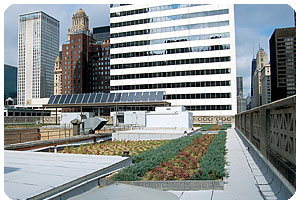
There is no denying the aesthetic values of rooftop garden construction. Rooftop gardens virtually transform the single-most mundane component of a building (the roof) by adding life, beauty and an array of colors that can be pleasing to the building occupants, and in some instances, similarly pleasing to the occupants in surrounding buildings. As the use of these constructions in the United States expands, it becomes essential that building owners and facility managers become familiar with their weatherproofing capacity.
Rooftop garden construction poses an array of circumstances that mirrors plaza waterproofing more than conventional roof systems. The constant presence of moisture in the system, always avoided in conventional roof systems, increases the reliance of a properly designed membrane system. The economical and logistical problems associated with membrane repairs, even repairs that are relatively minor in nature, further intensify the reliance of the waterproofing system in this type of construction. The rooftop garden is installed for aesthetics; the membrane is applied as a permanent waterproofing surface that must also meet the stringent requirements of the garden design.
 Waterproofing
Rooftop garden construction consists of two equally important phased applications: the waterproofing application and the garden assembly. The ultimate success of a rooftop garden depends largely on the proper design and installation of these applications.
There are three waterproofing design elements that are essential to the success of the system:
1. Support of added weight to the building. There has to be an inherent compatibility of the rooftop garden with the structure that it is applied on.
2. Integrity of the waterproofing membrane and system.
3. Location and size of the roof drains.
The waterproofing application in rooftop garden construction typically mirrors that of plaza deck waterproofing. In this context, the waterproofing membrane is applied at the bottom of the system in a protected or inverted state. It is the opinion of this author that inverted membrane application is best suited for this type of system construction. This opinion is based on findings of research conducted of rooftop garden assemblies constructed throughout the world over the past seventy years. In this configuration, the inverted membrane is protected from garden components, tools and, to some degree, plant roots.
Membrane Considerations
The time and expense associated with the repairs of the membrane prohibit the use of an “economical” 15 to 20 year membrane system. The membrane system must be durable enough to resist mechanical damage from gardening tools, the penetration of plant roots and last, without repair or replacement, for the life of the building. It is essential that the designer consider membrane systems that have worked within this configuration in previously successful applications. Membrane systems that are new to the roofing industry do not have the performance record required for these applications.
It may be advantageous to consider the use of below-grade waterproofing materials, which are typically installed in inverted plaza deck construction, as opposed to roofing materials that are applied in warm roof (insulation over deck) configurations, for these applications. There is a common misconception that roof membrane products and below-grade waterproofing products are similar. This misconception comes from a small number of materials that have achieved success in both building component areas. In reality, the requirements of these components end at their waterproofing capacity.
Roof membrane materials are constantly exposed to weathering elements, sun, wind, rain, snow, ice, etc. For the most part, water buildup is removed from these areas within 48 to 72 hours, with prolonged exposure concentrated to cold climate winter months. Roof system materials generally have a service life of 10 to 20 years prior to the institution of remedial actions. Their remedial construction, whether it is removal or replacement, can be accomplished utilizing routine construction methods with minor (in most cases) inconveniences in the building do to ease of accessibility to the roof.
Below-grade waterproofing products are not exposed to weathering elements; however, they are exposed to constant water buildup, which in garden construction could exist for two to three continual months due to saturated soil. Below-grade waterproofing systems are also continually exposed to ground and soil chemicals. Properly applied waterproofing systems can have a service life that matches the life of the building. This is an important characteristic, because unlike roofing, the waterproofing materials are inaccessible and the expenses associated with repairs and replacement are substantial, primarily due to excavation costs.
Rooftop garden membrane construction consists of three components:
1. The waterproofing membrane
2 Protection Board
3 Insulation
The Waterproofing Membrane
The waterproofing membrane is the major component in this type of construction. The membrane material must posses, as its primary characteristic, the ability to prevent moisture from entering the facility. This key element should take precedence in the system design over plant type and layout. The rooftop garden is installed for aesthetics; the membrane is applied as a permanent waterproofing surface that will also meet the stringent requirements of the garden design. It is imperative that the membrane meets the highest material standards.
Rooftop gardens require a membrane that meets the following characteristics:
• It resists root penetration.
• It resists ultraviolet rays.
• It can withstand severe temperature changes and atmospheric conditions.
• It is flexible to meet building movement at construction joints and intersections with vertical elements.
• It resists surface wear during construction.
• It can withstand attacks by insects and microorganisms, subsoil animals, and soil chemicals.
• It can stay in place over an indefinite life span without deterioration.
• It prevents water penetration.
• It can remain submerged in wet conditions for substantial periods of time.
There are materials and systems on the U.S. market that possess these properties and have performed in these configurations for 30 or more years. As with all roofing and waterproofing applications, be leery of manufacturers that provide system warranties that are longer than they have been on the U.S. market. The best way to access material performance is to visit similar projects and talk with building occupants about the waterproofing performance of the materials.
The Planting Medium & Top Dressing
There are various forms of soil composition that are suited for rooftop gardens. The success of the plantings often depends on the types and depths of the planting medium. This type of composition is above the scope of this paper. A landscape architect or consultant should be contacted for these design requirements.
Environmental Advantages
Rooftop gardens or living roofs offer several environmental advantages. Their increased use in urban areas has been due their ability to decrease water runoff from the roof area. The primary intent of the living roof application is to filter the stormwater and minimize the stormwater runoff from reaching the underground infrastructure. This is of particular importance in areas with older infrastructures because the capacity of the runoff could exceed the capabilities of aging sewer systems. The depth of the planting medium determines the amount of water runoff. The general rule of (green) thumb is that the thicker the medium the higher the potential decrease of water runoff.
The vegetation further impacts groundwater by absorbing all of the pollutants from the rainwater prior to runoff. Studies have indicated that more than 95 percent of cadmium, copper, lead and a portion of zinc can be taken out of the rainwater, which prevents their distribution into groundwater. The vegetation also contributes to clean air by filtering and binding dust particles as well as naturally filtering airborne toxins.
The other significant environmental advantages of living roofs are that they can help to reduce urban heat island effect, and they provide habitat for diverse of wildlife.
What FMs Should Know About Living Roofs
While environmental issues and awareness have recently put these designs to the forefront, their uses have been around for more than 100 years. Rooftop garden use has become prominent in Europe and other parts of the world due to explicit governmental regulations. It is estimated that 10 million square feet of green roof systems were installed in Germany in 1989 and that some city planning authorities in Germany are now requiring that green roofs be put on all industrial buildings. Green roof systems have also been widely used in Switzerland, Italy, France, Scotland, Monaco and Scandinavia. Use in the United States has been extensive in California and New York, and more U.S. cities (Chicago, Philadelphia) are mandating their use in downtown areas.
There is no denying the aesthetic values of rooftop garden construction. Rooftop gardens virtually transform the single-most mundane component of a building (the roof) by adding life, beauty and an array of colors that can be pleasing to the building occupants, and in some instances, similarly pleasing to the occupants in surrounding buildings. As the use of these constructions in the United States expands, it becomes essential that building owners and facility managers become familiar with their weatherproofing capacity.
Rooftop garden construction poses an array of circumstances that mirrors plaza waterproofing more than conventional roof systems. The constant presence of moisture in the system, always avoided in conventional roof systems, increases the reliance of a properly designed membrane system. The economical and logistical problems associated with membrane repairs, even repairs that are relatively minor in nature, further intensify the reliance of the waterproofing system in this type of construction. The rooftop garden is installed for aesthetics; the membrane is applied as a permanent waterproofing surface that must also meet the stringent requirements of the garden design.
Rooftop garden construction consists of two equally important phased applications: the waterproofing application and the garden assembly. The ultimate success of a rooftop garden depends largely on the proper design and installation of these applications.
There are three waterproofing design elements that are essential to the success of the system:
1. Support of added weight to the building. There has to be an inherent compatibility of the rooftop garden with the structure that it is applied on.
2. Integrity of the waterproofing membrane and system.
3. Location and size of the roof drains.
The waterproofing application in rooftop garden construction typically mirrors that of plaza deck waterproofing. In this context, the waterproofing membrane is applied at the bottom of the system in a protected or inverted state. It is the opinion of this author that inverted membrane application is best suited for this type of system construction. This opinion is based on findings of research conducted of rooftop garden assemblies constructed throughout the world over the past seventy years. In this configuration, the inverted membrane is protected from garden components, tools and, to some degree, plant roots.
Membrane Considerations
The time and expense associated with the repairs of the membrane prohibit the use of an “economical” 15 to 20 year membrane system. The membrane system must be durable enough to resist mechanical damage from gardening tools, the penetration of plant roots and last, without repair or replacement, for the life of the building. It is essential that the designer consider membrane systems that have worked within this configuration in previously successful applications. Membrane systems that are new to the roofing industry do not have the performance record required for these applications.
It may be advantageous to consider the use of below-grade waterproofing materials, which are typically installed in inverted plaza deck construction, as opposed to roofing materials that are applied in warm roof (insulation over deck) configurations, for these applications. There is a common misconception that roof membrane products and below-grade waterproofing products are similar. This misconception comes from a small number of materials that have achieved success in both building component areas. In reality, the requirements of these components end at their waterproofing capacity.
Roof membrane materials are constantly exposed to weathering elements, sun, wind, rain, snow, ice, etc. For the most part, water buildup is removed from these areas within 48 to 72 hours, with prolonged exposure concentrated to cold climate winter months. Roof system materials generally have a service life of 10 to 20 years prior to the institution of remedial actions. Their remedial construction, whether it is removal or replacement, can be accomplished utilizing routine construction methods with minor (in most cases) inconveniences in the building do to ease of accessibility to the roof.
Below-grade waterproofing products are not exposed to weathering elements; however, they are exposed to constant water buildup, which in garden construction could exist for two to three continual months due to saturated soil. Below-grade waterproofing systems are also continually exposed to ground and soil chemicals. Properly applied waterproofing systems can have a service life that matches the life of the building. This is an important characteristic, because unlike roofing, the waterproofing materials are inaccessible and the expenses associated with repairs and replacement are substantial, primarily due to excavation costs.
Rooftop garden membrane construction consists of three components:
1. The waterproofing membrane
2 Protection Board
3 Insulation
The Waterproofing Membrane
The waterproofing membrane is the major component in this type of construction. The membrane material must posses, as its primary characteristic, the ability to prevent moisture from entering the facility. This key element should take precedence in the system design over plant type and layout. The rooftop garden is installed for aesthetics; the membrane is applied as a permanent waterproofing surface that will also meet the stringent requirements of the garden design. It is imperative that the membrane meets the highest material standards.
Rooftop gardens require a membrane that meets the following characteristics:
• It resists root penetration.
• It resists ultraviolet rays.
• It can withstand severe temperature changes and atmospheric conditions.
• It is flexible to meet building movement at construction joints and intersections with vertical elements.
• It resists surface wear during construction.
• It can withstand attacks by insects and microorganisms, subsoil animals, and soil chemicals.
• It can stay in place over an indefinite life span without deterioration.
• It prevents water penetration.
• It can remain submerged in wet conditions for substantial periods of time.
There are materials and systems on the U.S. market that possess these properties and have performed in these configurations for 30 or more years. As with all roofing and waterproofing applications, be leery of manufacturers that provide system warranties that are longer than they have been on the U.S. market. The best way to access material performance is to visit similar projects and talk with building occupants about the waterproofing performance of the materials.
The Planting Medium & Top Dressing
There are various forms of soil composition that are suited for rooftop gardens. The success of the plantings often depends on the types and depths of the planting medium. This type of composition is above the scope of this paper. A landscape architect or consultant should be contacted for these design requirements.
Looking for a reprint of this article?
From high-res PDFs to custom plaques, order your copy today!
.webp?height=740&t=1767036885&width=auto "Header - BE 1170x658 (002).png")

.webp?height=740&t=1755781744&width=auto "KEE(2).png")