'Eco-Town' Becomes a Reality
On May 4, 2007, Greensburg, Kan., was hit by an EF5 tornado that ripped a 1.7-mile path of destruction through the town of about 800 residents. With winds that reached 205 miles per hour, the strongest tornado to hit the U.S. in eight years killed 11 people.
On May 4, 2007, Greensburg, Kan., was hit by an EF5 tornado that ripped a 1.7-mile path of destruction through the town of about 800 residents. With winds that reached 205 miles per hour, the strongest tornado to hit the U.S. in eight years killed 11 people. At least 95 percent of the town’s buildings were either destroyed or damaged beyond repair.
Town officials took this tragedy and turned it into an opportunity to rebuild all of the town’s businesses, schools and homes to meet the highest environmental standards currently available, using energy-efficient materials and technologies. A resolution was passed stating that all future municipal buildings of more than 4,000 square feet would be built to meet the U.S. Green Building Council’s LEED Platinum designation.
 A first-of-its-kind endeavor in the U.S., the move caught the attention of the media; specifically actor and eco-activist Leonardo DiCaprio, who produced and hosted a 13-part series called “Eco-Town” on the first channel completely devoted to green issues, Planet Green.
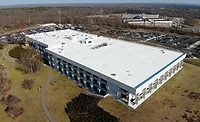
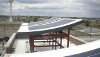
One of the many buildings destroyed in the tornado was the Kiowa County Library and Historical Museum, which has been reconstructed as the Kiowa County Commons. The new building will house the Kiowa library and museum and the Kansas State Extension Service. A community media center will house an internet radio station, an Internet TV station and a Web portal capable of delivering news and events throughout the county.
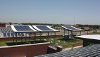
Designed by GLMV Architecture of Wichita, Kan., the building design includes high-performance lighting and controls; an enhanced mechanical system; a stormwater runoff collection system; a pair of wind turbines; and a water-efficient landscaping system. Roofing components include a vegetative roof system using native vegetation (see sidebar), and roof-mounted photovoltaic cells, which serve as a renewable energy component by providing electrical power from solar generation.
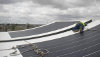
 Building-integrated photovoltaic (BIPV) systems are typically mounted directly to a low-slope roofing membrane. These solid-state modules can create temperatures as high as 190 F on adjacent roofing surfaces, which could easily damage a typical thermoplastic polyolefin (TPO) single-ply roofing membrane. For this reason, Diamond Roofing and Diamond Solar Solutions in Manhattan and Dodge City, Kan., selected a GAF EverGuard Extreme TPO for use beneath the BIPV system on the Kiowa County Commons project.
“I am one of the roofing industry’s strongest proponents of roof-integrated PV, but not at the expense of marginalizing the integrity of the roof,” says Monica Cameron, principal member, Diamond Solar Solutions and director of sustainability for Diamond Roofing. “That’s why in 2009 Diamond Roofing’s executives risked a large solar and roofing investment on one of our own buildings by installing the BIPV laminates over a variety of roofing membranes, and letting the results speak for themselves.”
An environmental activist, Cameron was also on the road for most of spring 2010 serving as a co-presenter for the National Roofing Contractors Association’s (NRCA’s) three-part educational program, Rooftop Photovoltaics: Energizing Your Business.
For example, current American Society for Testing and Materials (ASTM) testing is conducted at 240 F and requires a roofing product to survive 28 days without changes in physical properties; EverGuard Extreme TPO survived more than 180 days at 280 degrees. It has also survived the new Atlas Ultra Accelerated Weather Test Unit, which collects and concentrates sunlight producing the equivalent of 40 years of exposure in only 12 months. EverGuard Extreme TPO membranes survived 13 months under these conditions without signs of failure.
Marc A. Cameron, project manager and energy analyst for Diamond Roofing and Diamond Solar Solutions, oversaw the installation of the EverGuard Extreme 80 mil product under the photovoltaic system and found the membrane to be extremely easy to weld and to work with.
 “As the roofing contractor, our primary goal is to maintain weatherproofing and a durable roof system,” says Kevin Gwaltney, vice president of Diamond Roofing. “From my perspective, it is to GAF’s solar market advantage that they’ve positioned their product using evidence backed up by research to support a best practice solution.”
Moreover, Greensburg and Kiowa County have a unique opportunity to become a national leader in the design and construction of highly efficient and environmentally sound facilities. Projects such as Kiowa County Commons can become the model for environmental and energy-efficient design and construction. Designing and constructing public facilities to meet the most stringent environmental and energy-efficient standards will increase the sustainability of Greensburg and Kiowa County buildings and help pioneer environmentally responsible construction in other areas of the state.
Like the pioneers who turned Kansas prairie into productive farmland 150 years ago, Diamond Roofing is looking to break new ground in the PV and vegetative roof markets. “We’re not only getting a lot of architects and engineers excited about the new technologies, but we are also looking at PV and vegetative systems as a way of selling traditional roofing,” says Rick Gwaltney, president of Diamond Roofing. “Our initial solar and vegetative projects have earned us a lot of respect from specifiers, and they’ve helped keep our crews busy.”
 Fortunately, Diamond’s crew of 40 quickly adapted to working with photovoltaic roofing systems. “We warned them that working here would be a constant learning experience, and they found out soon enough when we switched a lot of work over from modified bitumen to TPO,” Kevin Gwaltney recalls. “So going green hasn’t been a big adjustment for them.”
In fact, on the Kiowa County Commons project, a change order was issued switching the spec from another single-ply membrane to EverGuard Extreme TPO. The changeover request was based on recent data from the Midwest Roofing Contractors Association’s PV research project using Diamond Roofing’s BIPV system, as well as NRCA recommendations for low-slope roof systems interfacing with adhered PV modules. The switch had no effect on the cost of the roof, and the architect quickly approved it.
The Diamond team agrees that today, architects and property owners expect professional roofing contractors to be able to offer PV, vegetative, reflective and LEED-compatible roofing systems.
“The green movement has a lot of steam behind it,” concludes Kevin Gwaltney. “We need to move with the demands of our customers.”
Owner: Kiowa County, Kan., local government
Building Type: Learning center
Project Type: New construction
Project Scope: 2-story building
Size: 14,800 square feet (1,370 square meters)
Setting: Rural
Primary Design Team Member: Todd Ford, McCluggage, Van Sickle and Perry Architect Financed by FEMA funds and donations
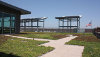
As Greensburg, Kan., rebuilds, green roofs are an essential element of efforts to promote sustainability. Thus, the Kiowa County Commons features a 5,000-square-foot green roof.
According to Matt Christenson, Kiowa County recovery manager, green roofs fit into the county’s Sustainable Comprehensive Master Plan in several ways. “Green roofs improve buildings’ energy efficiency by insulating and shading rooftops, they moderate temperatures at street level and thereby reduce the urban heat island effect, and they contribute to stormwater management by decreasing the volume and velocity of rain runoff,” he says.
Kevin Gwaltney, president, Diamond Roofing, Dodge City, Kan., the roofing contractor on the project, affirms the critical role of green roofs. “In southwest Kansas, with our very hot, very dry weather, the shading and insulating value of a green roof is among the most significant benefits.”
How significant? On a 95 F day, conventional rooftop surfaces can hit 150-175 F. Green roofs cool rooftops down to the level of ambient air temperatures.
Green Roof Considerations
GLMV Architecture, Wichita, Kan., designed the Kiowa County Commons. Matt Cortez, LEED AP, understood that rooftop aesthetics had to be an important consideration in GLMV’s recommendation and specification of a green roof solution. “County officials had seen other green roofs with little variety in plant species, color or texture. A monotone green makes a green roof look like just another standard roofing component rather than a distinct architectural element,” says Cortez. “Especially since this green roof was going to be accessible, everyone wanted an attractive appearance.”
The commons is an educational facility, and the county wanted the green roof to be a setting in which adults and children could enjoy the opportunity to learn about plants, the environment and green building. Mark Dayton, landscape architect at GLMV, envisioned a playful, inviting feeling for the green roof.
For his part, Gwaltney of Diamond Roofing emphasized the importance of sustainability in green roof selection. “It is far better, and much less risky, to establish a green roof on the ground, not try to grow one up on a roof. Pre-vegetated is the way to go,” he explains. “Plants have to be well established and ready to face the tough conditions of the rooftop environment. Otherwise, what is supposed to be a living, green roof can end up brown and dead.”
Green Roof Selection
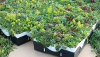
GLMV specified the LiveRoof Hybrid Green Roof System from LiveRoof LLC, Spring Lake, Mich. Designed for immediate success and lasting sustainability, it is delivered to the jobsite with modules full of plants that are already thriving, plump and mature. Instead of separate trays set out on a roof, LiveRoof modules establish a naturally functioning ecosystem with a seamless vegetative surface rooted in a layer of soil interconnected across the entire roof. This design maximizes long-term plant growth and health, rooftop aesthetics, environmental benefits, and energy savings.
Regional growers in LiveRoof’s national network apply local horticultural knowledge and experience to each project. They adapt LiveRoof plants for regional climates and fine-tune plant selection for every roof. “In consultation with GLMV, we came up with a mix of plants with green, red and yellow colors. The plant mix will highlight variations in color as the seasons change,” says Teresa Nelson, ASLA, LEED AP, sales manager, Roof Top Sedums, LLC, Davenport, Iowa. “We included 18 plant varieties, selected for diversity and extreme drought tolerance.” (Roof Top Sedums is the LiveRoof grower for Iowa and portions of Illinois, Missouri, Nebraska and Kansas.)
Incorporating many varieties of plants was also necessary because of the different microclimates on the commons roof. For example, modules installed underneath the solar panels are in the shade and therefore must include plants that are more shade-tolerant.
Roof Top Sedums kept everyone involved in the project up to date as it tended to the plants growing in the LiveRoof modules. The company sent out periodic reports with photos. Nonetheless, GLMV had one lingering concern: whether the modules could be installed so that they would express the curves in the design. “They came out a month before our installation date with a module and demonstrated that the soil and plants stay in place when a module is cut to shape and size,” says Cortez. “That was a surprise, a good surprise.”
Installation and Results
The green roof was installed on May 20, 2011. “With LiveRoof, the entire process of delivering the fully vegetated modules, getting them up on the roof in the proper order for the design plan, and then installing them is finely choreographed,” says Gwaltney.
“We are very pleased with the results - all the more so since it looked great from day one,” says Christenson. “A number of buildings in Greensburg have green roofs incorporated into their designs. The roof on the commons is the best looking so far.”
Roxanne Nagel is general manager of Davenport, Iowa-based Roof Top Sedums LLC.
Photos courtesy of LiveRoof LLC.
On May 4, 2007, Greensburg, Kan., was hit by an EF5 tornado that ripped a 1.7-mile path of destruction through the town of about 800 residents. With winds that reached 205 miles per hour, the strongest tornado to hit the U.S. in eight years killed 11 people. At least 95 percent of the town’s buildings were either destroyed or damaged beyond repair.
Town officials took this tragedy and turned it into an opportunity to rebuild all of the town’s businesses, schools and homes to meet the highest environmental standards currently available, using energy-efficient materials and technologies. A resolution was passed stating that all future municipal buildings of more than 4,000 square feet would be built to meet the U.S. Green Building Council’s LEED Platinum designation.
One of the many buildings destroyed in the tornado was the Kiowa County Library and Historical Museum, which has been reconstructed as the Kiowa County Commons. The new building will house the Kiowa library and museum and the Kansas State Extension Service. A community media center will house an internet radio station, an Internet TV station and a Web portal capable of delivering news and events throughout the county.
Designed by GLMV Architecture of Wichita, Kan., the building design includes high-performance lighting and controls; an enhanced mechanical system; a stormwater runoff collection system; a pair of wind turbines; and a water-efficient landscaping system. Roofing components include a vegetative roof system using native vegetation (see sidebar), and roof-mounted photovoltaic cells, which serve as a renewable energy component by providing electrical power from solar generation.
“I am one of the roofing industry’s strongest proponents of roof-integrated PV, but not at the expense of marginalizing the integrity of the roof,” says Monica Cameron, principal member, Diamond Solar Solutions and director of sustainability for Diamond Roofing. “That’s why in 2009 Diamond Roofing’s executives risked a large solar and roofing investment on one of our own buildings by installing the BIPV laminates over a variety of roofing membranes, and letting the results speak for themselves.”
An environmental activist, Cameron was also on the road for most of spring 2010 serving as a co-presenter for the National Roofing Contractors Association’s (NRCA’s) three-part educational program, Rooftop Photovoltaics: Energizing Your Business.
Holding Up to 'Extreme' Temperatures
The new grade of GAF TPO membrane used by Diamond Roofing is built to handle the extreme demands that new rooftop applications can place on roofing membranes. It uses proprietary stabilizers and UV absorbers to achieve weathering performance far beyond industry standards.For example, current American Society for Testing and Materials (ASTM) testing is conducted at 240 F and requires a roofing product to survive 28 days without changes in physical properties; EverGuard Extreme TPO survived more than 180 days at 280 degrees. It has also survived the new Atlas Ultra Accelerated Weather Test Unit, which collects and concentrates sunlight producing the equivalent of 40 years of exposure in only 12 months. EverGuard Extreme TPO membranes survived 13 months under these conditions without signs of failure.
Marc A. Cameron, project manager and energy analyst for Diamond Roofing and Diamond Solar Solutions, oversaw the installation of the EverGuard Extreme 80 mil product under the photovoltaic system and found the membrane to be extremely easy to weld and to work with.
Moreover, Greensburg and Kiowa County have a unique opportunity to become a national leader in the design and construction of highly efficient and environmentally sound facilities. Projects such as Kiowa County Commons can become the model for environmental and energy-efficient design and construction. Designing and constructing public facilities to meet the most stringent environmental and energy-efficient standards will increase the sustainability of Greensburg and Kiowa County buildings and help pioneer environmentally responsible construction in other areas of the state.
Like the pioneers who turned Kansas prairie into productive farmland 150 years ago, Diamond Roofing is looking to break new ground in the PV and vegetative roof markets. “We’re not only getting a lot of architects and engineers excited about the new technologies, but we are also looking at PV and vegetative systems as a way of selling traditional roofing,” says Rick Gwaltney, president of Diamond Roofing. “Our initial solar and vegetative projects have earned us a lot of respect from specifiers, and they’ve helped keep our crews busy.”
In fact, on the Kiowa County Commons project, a change order was issued switching the spec from another single-ply membrane to EverGuard Extreme TPO. The changeover request was based on recent data from the Midwest Roofing Contractors Association’s PV research project using Diamond Roofing’s BIPV system, as well as NRCA recommendations for low-slope roof systems interfacing with adhered PV modules. The switch had no effect on the cost of the roof, and the architect quickly approved it.
The Diamond team agrees that today, architects and property owners expect professional roofing contractors to be able to offer PV, vegetative, reflective and LEED-compatible roofing systems.
“The green movement has a lot of steam behind it,” concludes Kevin Gwaltney. “We need to move with the demands of our customers.”
Kiowa County Commons
Location: Greensburg, Kan.Owner: Kiowa County, Kan., local government
Building Type: Learning center
Project Type: New construction
Project Scope: 2-story building
Size: 14,800 square feet (1,370 square meters)
Setting: Rural
Primary Design Team Member: Todd Ford, McCluggage, Van Sickle and Perry Architect Financed by FEMA funds and donations
Topping Off with a Green Roof, by Roxanne Nagel
The LiveRoof Hybrid Green Roof System proves to be the right solution.As Greensburg, Kan., rebuilds, green roofs are an essential element of efforts to promote sustainability. Thus, the Kiowa County Commons features a 5,000-square-foot green roof.
According to Matt Christenson, Kiowa County recovery manager, green roofs fit into the county’s Sustainable Comprehensive Master Plan in several ways. “Green roofs improve buildings’ energy efficiency by insulating and shading rooftops, they moderate temperatures at street level and thereby reduce the urban heat island effect, and they contribute to stormwater management by decreasing the volume and velocity of rain runoff,” he says.
Kevin Gwaltney, president, Diamond Roofing, Dodge City, Kan., the roofing contractor on the project, affirms the critical role of green roofs. “In southwest Kansas, with our very hot, very dry weather, the shading and insulating value of a green roof is among the most significant benefits.”
How significant? On a 95 F day, conventional rooftop surfaces can hit 150-175 F. Green roofs cool rooftops down to the level of ambient air temperatures.
Green Roof Considerations
GLMV Architecture, Wichita, Kan., designed the Kiowa County Commons. Matt Cortez, LEED AP, understood that rooftop aesthetics had to be an important consideration in GLMV’s recommendation and specification of a green roof solution. “County officials had seen other green roofs with little variety in plant species, color or texture. A monotone green makes a green roof look like just another standard roofing component rather than a distinct architectural element,” says Cortez. “Especially since this green roof was going to be accessible, everyone wanted an attractive appearance.”
The commons is an educational facility, and the county wanted the green roof to be a setting in which adults and children could enjoy the opportunity to learn about plants, the environment and green building. Mark Dayton, landscape architect at GLMV, envisioned a playful, inviting feeling for the green roof.
For his part, Gwaltney of Diamond Roofing emphasized the importance of sustainability in green roof selection. “It is far better, and much less risky, to establish a green roof on the ground, not try to grow one up on a roof. Pre-vegetated is the way to go,” he explains. “Plants have to be well established and ready to face the tough conditions of the rooftop environment. Otherwise, what is supposed to be a living, green roof can end up brown and dead.”
Green Roof Selection
GLMV specified the LiveRoof Hybrid Green Roof System from LiveRoof LLC, Spring Lake, Mich. Designed for immediate success and lasting sustainability, it is delivered to the jobsite with modules full of plants that are already thriving, plump and mature. Instead of separate trays set out on a roof, LiveRoof modules establish a naturally functioning ecosystem with a seamless vegetative surface rooted in a layer of soil interconnected across the entire roof. This design maximizes long-term plant growth and health, rooftop aesthetics, environmental benefits, and energy savings.
Regional growers in LiveRoof’s national network apply local horticultural knowledge and experience to each project. They adapt LiveRoof plants for regional climates and fine-tune plant selection for every roof. “In consultation with GLMV, we came up with a mix of plants with green, red and yellow colors. The plant mix will highlight variations in color as the seasons change,” says Teresa Nelson, ASLA, LEED AP, sales manager, Roof Top Sedums, LLC, Davenport, Iowa. “We included 18 plant varieties, selected for diversity and extreme drought tolerance.” (Roof Top Sedums is the LiveRoof grower for Iowa and portions of Illinois, Missouri, Nebraska and Kansas.)
Incorporating many varieties of plants was also necessary because of the different microclimates on the commons roof. For example, modules installed underneath the solar panels are in the shade and therefore must include plants that are more shade-tolerant.
Roof Top Sedums kept everyone involved in the project up to date as it tended to the plants growing in the LiveRoof modules. The company sent out periodic reports with photos. Nonetheless, GLMV had one lingering concern: whether the modules could be installed so that they would express the curves in the design. “They came out a month before our installation date with a module and demonstrated that the soil and plants stay in place when a module is cut to shape and size,” says Cortez. “That was a surprise, a good surprise.”
Installation and Results
The green roof was installed on May 20, 2011. “With LiveRoof, the entire process of delivering the fully vegetated modules, getting them up on the roof in the proper order for the design plan, and then installing them is finely choreographed,” says Gwaltney.
“We are very pleased with the results - all the more so since it looked great from day one,” says Christenson. “A number of buildings in Greensburg have green roofs incorporated into their designs. The roof on the commons is the best looking so far.”
Roxanne Nagel is general manager of Davenport, Iowa-based Roof Top Sedums LLC.
Looking for a reprint of this article?
From high-res PDFs to custom plaques, order your copy today!
.webp?height=740&t=1767036885&width=auto "Header - BE 1170x658 (002).png")

.webp?height=740&t=1755781744&width=auto "KEE(2).png")