The Safe Roof Initiative
It is not uncommon for a commercial roofing contractor to have the “what to do after we leave” discussion with his building-owner client. It is not uncommon for a low-slope roofing warranty to include language that spells out what the building owner can and cannot do on top of the new membrane.
It is not uncommon for a commercial roofing contractor to have the “what to do after we leave” discussion with his building-owner client. It is not uncommon for a low-slope roofing warranty to include language that spells out what the building owner can and cannot do on top of the new membrane. It has a lot to do with where to walk and weight limitations as well as what can and cannot go on top of the roofing membrane.
 What a roofing contractor tells a building owner does not always guarantee any particular type of behavior once the roofing contractor departs the premises. After all, it is their building and if they wish to destroy it that is their prerogative. But it is always a good idea to have the conversation and even document it before the first callback.
But what do roofing contractors tell building owners about how workers should access and safely work on the roof? After all, fall hazards are not exclusive to roofing workers and on the typical roofing and construction project most forms of fall protection leave with the contractors.
A few years back, roofing professional Mike Dolci came up with an idea that would give the building owner more than just a roof, but a “safe roof.” Dolci’s initiative involved specific roof construction features but also a set of instructions on how to keep anyone accessing the roof safe from a fall.
The safe roof initiative begins in the design phase of roof (or re-roof) construction. It is possible to offer a “safe roof” to an existing building without a new roof, but the typical installation would happen during the original construction or as part of a re-roof project. The first item of the initiative is a survey of the roofing project to define the safety needs unique to the building.
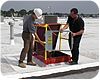
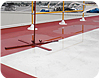 In addition to the red zone all skylights are topped with protective screens to prevent any worker from falling through. Smoke hatches are likewise fitted with fall protection and all roof hatches are fitted with guardrails and gates. A loading zone is established with a skid-proof surface to protect the membrane and to provide passive fall protection for workers to use to load materials and tools as may be required to maintain roof-mounted equipment. In order to provide a connection point for workers employing PFAS, permanent anchorage points are fitted to purlins and flashed in as part of the safe roof installation.
With all of the features of the safe roof in place, workers on the roof may still be at risk for a fall. The missing ingredient is worker training. If workers are trained to make use of safety monitors and recognize what the red zone means and how to employ the use of PFAS they should dramatically reduce the risk of injury from a fall. Further, any worker who may be required to climb to the roof should be put on notice that they are entering a zone where fall hazards exist.
 With this in mind Dolci recommends, as part of the safe roof initiative, a set of documents specific to each building site that incorporates worker training. The worker training includes the type of fall protection measures that must be taken for different kinds of work and for accessing different parts of the roof. The training will incorporate proper access, operation of roof hatches, approaching skylights and roof openings, and operating in the loading area.
For roofs with unprotected edges and PFAS anchorage points, complete instructions for the care and use of the PFAS are included. In fact, a complete full-body harness, safety rope, lanyards, and everything needed to provide one worker with personal fall protection is included as a part of the safe roof package. Workers who receive the safe roof training required for the building will be required to sign a document acknowledging their training.
So that all workers will be aware of the fact that they are entering a safe roof, warning signs will be posted as part of the safe roof installation. The signs will warn workers that only trained personnel are allowed roof access and will give contact information for facilities management.
The project shown here is on a building operated by Avidan Management, LLC, of Elizabeth, N.J. Avidan manages commercial properties, primarily warehousing and distribution centers in Northern-Central New Jersey. According to managing member, Avi Avidan, they chose the safe roof because, “We recognize that safety is a very important factor.” Avidan Management seeks not only to reduce insurance rates but to provide services that are distinctive and unique. Avidan believes that proactively moving to make buildings safer for all buildings makes good sense. He went on to tell us, “We are going to implement this on every new roof going forward.”
GAF’s Tom Kelly wrote Dolci indicating he felt that installing the red membrane around the perimeter of the roof was an outstanding safety feature. All in there is an additional cost for a safe roof over a conventional system, but it should not make a material difference to owners who buy in on the concept. The key items are the guards and anchorage points, which should be included in many situations where they are simply overlooked or eliminated as a way of cutting costs.
So, will building owners embrace the safe roof initiative? Time will tell, but as owners continue to demand a safer building environment for all workers they will look to the construction industry to provide the solutions. The safe roof initiative seems to go a long way toward meeting these demands. Arco Roofing owner Eric Baginski tells us his firm continues to promote features of the Safe Roof initiative and recently completed a project in Delaware complete with a complete permanent guardrail system on the perimeter as well as other safety features. Dolci continues in commercial roofing sales with Jottan Roofing Inc. servicing clients in the northeastern United States.
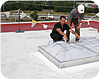
Mike Dolci and Tom Kelly check out the installation of safety features on a building operated by Avidan Management of Elizabeth, N.J.
It is not uncommon for a commercial roofing contractor to have the “what to do after we leave” discussion with his building-owner client. It is not uncommon for a low-slope roofing warranty to include language that spells out what the building owner can and cannot do on top of the new membrane. It has a lot to do with where to walk and weight limitations as well as what can and cannot go on top of the roofing membrane.
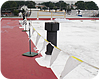
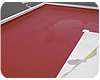
A red-colored membrane is installed around all unprotected roof edges 6 to 10 feet in from the edge to warn workers that they are nearing the edge and must employ the use of personal fall arrest systems. The project shown here features white TPO with a red TPO membrane around the edge furnished by GAF Materials Corporation. Other safety features of the program include protective screens for skylights, guardrails and gates for roof hatches, and permanent anchorage points for personal fall arrest systems. The intent of the safe roof initiative is to give the building owner a finished project that is equipped to allow workers safe access to perform maintenance work on the roof and/or roof-mounted equipment
But what do roofing contractors tell building owners about how workers should access and safely work on the roof? After all, fall hazards are not exclusive to roofing workers and on the typical roofing and construction project most forms of fall protection leave with the contractors.
A few years back, roofing professional Mike Dolci came up with an idea that would give the building owner more than just a roof, but a “safe roof.” Dolci’s initiative involved specific roof construction features but also a set of instructions on how to keep anyone accessing the roof safe from a fall.
The safe roof initiative begins in the design phase of roof (or re-roof) construction. It is possible to offer a “safe roof” to an existing building without a new roof, but the typical installation would happen during the original construction or as part of a re-roof project. The first item of the initiative is a survey of the roofing project to define the safety needs unique to the building.
The Red Zone
The intent of the safe roof initiative is to give the building owner a finished project that is equipped to allow workers safe access to perform maintenance work on the roof and/or roof-mounted equipment. The key features include a red-colored membrane around all unprotected roof edges 6 to 10 feet in from the edge. The project shown here features white TPO with a red TPO membrane around the edge furnished by GAF Materials Corporation of Wayne, N.J. This “red zone” warns workers that they are nearing the edge and must employ the use of personal fall arrest systems (PFAS) if they need to work that close to an unprotected roof edge. Mineral-surfaced modified bitumen membranes are also available in red. Other smooth-surfaced membranes and BUR may be painted red using an acrylic roof coating.With all of the features of the safe roof in place, workers on the roof may still be at risk for a fall. The missing ingredient is worker training. If workers are trained to make use of safety monitors and recognize what the red zone means and how to employ the use of PFAS they should dramatically reduce the risk of injury from a fall. Further, any worker who may be required to climb to the roof should be put on notice that they are entering a zone where fall hazards exist.
For roofs with unprotected edges and PFAS anchorage points, complete instructions for the care and use of the PFAS are included. In fact, a complete full-body harness, safety rope, lanyards, and everything needed to provide one worker with personal fall protection is included as a part of the safe roof package. Workers who receive the safe roof training required for the building will be required to sign a document acknowledging their training.
So that all workers will be aware of the fact that they are entering a safe roof, warning signs will be posted as part of the safe roof installation. The signs will warn workers that only trained personnel are allowed roof access and will give contact information for facilities management.
The project shown here is on a building operated by Avidan Management, LLC, of Elizabeth, N.J. Avidan manages commercial properties, primarily warehousing and distribution centers in Northern-Central New Jersey. According to managing member, Avi Avidan, they chose the safe roof because, “We recognize that safety is a very important factor.” Avidan Management seeks not only to reduce insurance rates but to provide services that are distinctive and unique. Avidan believes that proactively moving to make buildings safer for all buildings makes good sense. He went on to tell us, “We are going to implement this on every new roof going forward.”
GAF’s Tom Kelly wrote Dolci indicating he felt that installing the red membrane around the perimeter of the roof was an outstanding safety feature. All in there is an additional cost for a safe roof over a conventional system, but it should not make a material difference to owners who buy in on the concept. The key items are the guards and anchorage points, which should be included in many situations where they are simply overlooked or eliminated as a way of cutting costs.
So, will building owners embrace the safe roof initiative? Time will tell, but as owners continue to demand a safer building environment for all workers they will look to the construction industry to provide the solutions. The safe roof initiative seems to go a long way toward meeting these demands. Arco Roofing owner Eric Baginski tells us his firm continues to promote features of the Safe Roof initiative and recently completed a project in Delaware complete with a complete permanent guardrail system on the perimeter as well as other safety features. Dolci continues in commercial roofing sales with Jottan Roofing Inc. servicing clients in the northeastern United States.
Looking for a reprint of this article?
From high-res PDFs to custom plaques, order your copy today!
.webp?height=740&t=1767036885&width=auto "Header - BE 1170x658 (002).png")

.webp?height=740&t=1755781744&width=auto "KEE(2).png")