Building Enclosure logo
search
cart
facebook twitter linkedin youtube instagram Spotify Podcasts Apple Podcasts Spotify Podcasts Apple Podcasts
  • Sign In
  • Create Account
  • Sign Out
  • My Account
Building Enclosure logo
  • NEWS
    • Breaking News
  • SECTIONS
    • Columns
    • Project Profiles
    • Trade Shows
    • Sponsor Insights
  • SYSTEM DESIGNS
    • Low-Slope Roofs
    • Pitched Roofs
    • Metal Roofing Materials
    • Waterproofing
    • Sustainability
    • Insulation
    • Exterior Claddings
    • Wall Systems
    • Building Envelope
  • BLOG
    • The BE Blog
  • MEDIA
    • Podcasts
    • Webinars
    • Quiz
    • Videos
    • Polls
    • Interactive Spotlights
    • Newsletter
    • Photo Galleries
  • DIRECTORIES
    • Directory: Blue Book
    • Directory: Roofing Resource
  • PRODUCTS
  • TECHNICAL
    • Codes
      • Waterproofing
      • Roofing
    • Details
      • Waterproofing
      • Roofing
  • CONTINUING ED
  • ABOUT
    • Advertise
      • Editorial Calendar
    • Contact
    • eMag Archive Issues
  • SIGN UP!
Low-Slope Roofs

What Roofers Need to Know About Working Around Lightning Protection Systems
RoofersNeed6.jpg
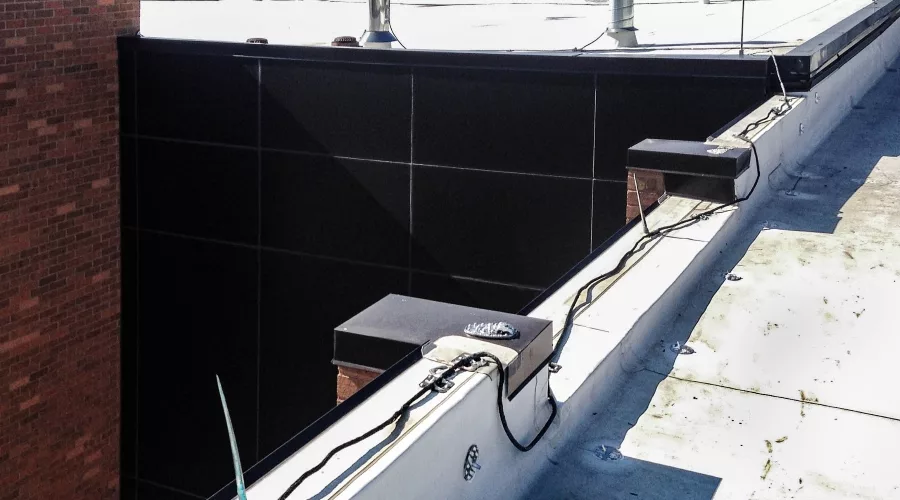
Re-installing a lightning protection system requires special attention and the knowledge of a certified installer. After completing some roofing work on this project, this system is reinstalled correctly: the conductors are straight, no sharp bends in the coil and it’s fastened correctly. All photos courtesy of East Coast Lightning Equipment
RoofersNeed1.jpg
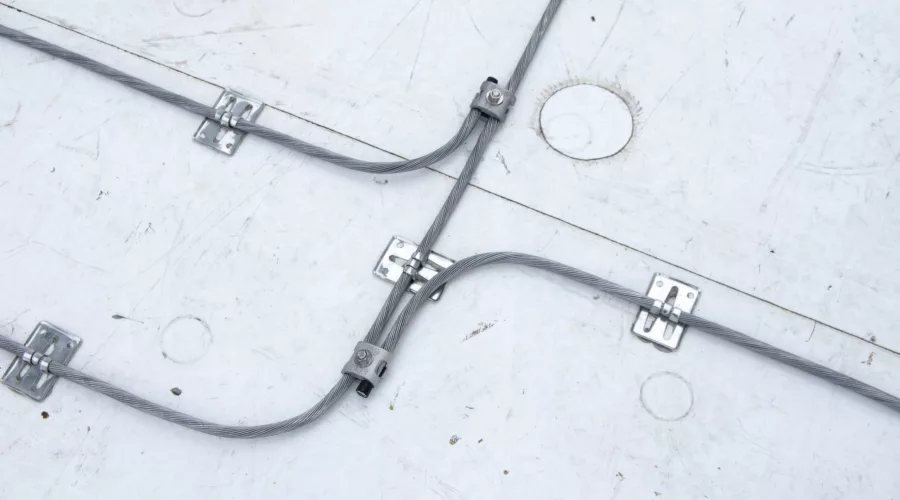
Lightning protection standards contain specific requirements for conductor coursings, fastener placement and interconnection methods for joining conductors and building systems.
RoofersNeed6.jpg
RoofersNeed1.jpg
September 29, 2023

Roofers deal with new challenges on every job. Installing a watertight roofing system requires attention to every detail from exhaust penetrations and skylights to snow retention and gutters.

No matter how good you are at providing your customers with a watertight roofing – or re-roofing – system, installing, connecting and/or disconnecting a lightning protection system is a task better left to specialists.

The greater part of any lightning protection system is actually installed below roof level, requiring plenty of cooperation and communication between those installing the roof, those installing rooftop equipment and the lightning protection systems contractor. Various components of lightning protection systems are installed before, during and after the roof installation, meaning everyone should be included in the project schedule. Lightning protection system installers are often times one of the first and last trades on the jobsite.

As with all other aspects of erecting a building there are guidelines and standards that must be followed. Installing a lightning protection system is no different. The National Fire Protection Association (NFPA) publishes a document governing lightning protection systems: NFPA 780, which is more than 100 pages. It provides lightning protection system installation requirements to safeguard people and property from the risk of fire and related hazards associated with lightning strikes and has specific requirements for the placement of fasteners, air terminals, conductors and grounding systems.

Those who install metal roofing will be familiar – or should be familiar – with problems caused by the use of dissimilar metals. It’s important to know what metal materials you’re working with to prevent galvanic corrosion. This is especially true for lightning protection systems, which utilize components constructed from either copper, aluminum or some combination of both metals. When dissimilar metals come into contact with electrolytes, including condensation, rainwater or other sources such as oil, dirt and airborne particles, it can produce an electrochemical reaction, leading to the corrosion of one or more metals. This can produce staining or even degrade the integrity of the metal itself.

The Lightning Protection Institute (LPI) promotes lightning protection education, awareness and safety, including certifying the installation of lightning protection systems. Underwriters Laboratories (UL) oversees product testing for lightning protection material components in the factory prior to shipment for listing and labeling. UL Standard 96 addresses the minimum requirements for construction of air terminals, cable conductors, fittings, connectors and fasteners used in lightning protection systems.

UL visits the East Coast Lighting Equipment manufacturing facility and other production plants quarterly to verify continued compliance.

Since lightning protection systems fall outside the scope of what is typically inspected by local officials, it is common for project specifications to call for a third-party field inspection and certification of the lightning protection system. These field inspections of completed installations can be arranged by the Lightning Protection Institute – Inspection Program (LPI-IP) through certified installing contractors.

Needless to say, requirements and standards are stringent and necessitate a specific knowledge to install, uninstall or work around a lightning protection system if you want the system to meet standards. Anyone working on the roof also must be sure not to inadvertently disconnect the lightning protection system, possibly rendering the system nonfunctional or voiding the third-party inspection.

KEYWORDS: lightning roofing roofing systems severe weather

Share This Story

Recent Comments

These are actually very helpful tips. It is...

This is the most beneficial blog for all...

This blog is a great resource for anyone...

Thank you for sharing this important information. I...

This is a very interesting subject of the...

Manage My Account
  • Sign up for the Newsletter
  • Online Registration
  • Manage My Preferences
  • Registration Customer Service

More Videos

Sponsored Content

Sponsored Content is a special paid section where industry companies provide high quality, objective, non-commercial content around topics of interest to the Building Enclosure audience. All Sponsored Content is supplied by the advertising company and any opinions expressed in this article are those of the author and not necessarily reflect the views of Building Enclosure or its parent company, BNP Media. Interested in participating in our Sponsored Content section? Contact your local rep!

close
  • HITT Construction headquarters
    Sponsored byBuilding Composites® LLC

    Pushing the Envelope

  • 2 construction workers and a DEXcell panel
    Sponsored byDEXcell Roof Boards

    Designing Low-Slope Roofs for Resilience

  • Bell Bank headquarters in Fargo, North Dakota
    Sponsored bySto Corp.

    Drained and Back-Ventilated Rainscreens vs Pressurized-Equalized Rainscreens

Popular Stories

graphic shows white arrows pointing to the right on a light green background

A Breakdown of Air Leakage Testing in LEED v5 BD+C

graphic shows a building destoryed by tornados with information on the amount of torandos in 2026 in the US

Record-Breaking Tornado Activity in Illinois Signals New Challenges for Architects

HITT Construction headquarters

Pushing the Envelope

Building Enclosure Newsletter

BE Poll

Events

April 9, 2026

Strategies for High-Performance Below-Grade Waterproofing

Credits: 1 AIA LU/HSW ; 1 IIBEC CEH; 0.1 IACET CEU

On-Demand Designing a high-performance building enclosure requires more than just surface-level protection; it demands a rigorous, performance-based mastery of below-grade water and gas mitigation. This discussion will provide an expert-level analysis of below-grade waterproofing within the comprehensive framework of the high-performance building enclosure.

April 28, 2026

Roof Design Considerations That Prevent Installation Failures and Change Orders

Credit: 1 AIA LU/HSW; 1 IIBEC CEH; 0.1 ICC CEU

On-Demand This course provides visual examples of actual field conditions. Some good, some not so good; along with design suggestions that can cut installation costs and reduce construction change orders. Upon completion of this course, you will have a better understanding of the requirements the roofing contractor must meet to provide the specified roofing system warranty, and long-term value to the owner.

View All Submit An Event

Products

Plaster and Drywall Assemblies Manual

Plaster and Drywall Assemblies Manual

This is a comprehensive manual that goes beyond codes and standards, providing expert guidance in design, detailing, material selection and troubleshooting for plaster and drywall.

See More Products
×

Enhance your expertise with unparalleled insights.

Join thousands of building professionals today. Shouldn’t you know what they know?

SUBSCRIBE TODAY!
  • RESOURCES
    • Advertise
    • Contact Us
    • Store
    • Want More
  • SIGN UP TODAY
    • Create Account
    • Newsletter
    • Customer Service
    • Manage Preferences
  • SERVICES
    • Marketing Services
    • Reprints
    • Market Research
    • List Rental
    • Survey/Respondent Access
  • STAY CONNECTED
    • LinkedIn
    • Facebook
    • Instagram
    • YouTube
    • X
  • PRIVACY
    • PRIVACY POLICY
    • TERMS & CONDITIONS
    • DO NOT SELL MY PERSONAL INFORMATION
    • PRIVACY REQUEST
    • ACCESSIBILITY

Copyright ©2026. All Rights Reserved BNP Media, Inc. and BNP Media II, LLC.

Design, CMS, Hosting & Web Development :: ePublishing